Author: Remo Aguilar

  • Redesigning the Dream: A Physician’s Journey to Reform Philippine Healthcare

    Meta Description
    Explore one Filipino orthopedic specialist’s journey to transform healthcare from the ground up—through reforms in primary and specialist care, workforce equity, and digital health. A reflective look into reshaping the physician’s role in rural Philippines.

    Introduction

    Have you ever wondered how our dreams of fixing the healthcare system evolve once we’re actually in it?

    When I was a medical student, I had a fire in my chest—a vision of how we could truly serve patients better. Medical school and clinical training in the Philippines sharpen more than just your clinical skills; they wake you up to the structural challenges in our system.

    Now, as a countryside orthopedic specialist, I find that our oath to heal often stretches beyond the hospital ward. In the provinces, that oath demands creativity, courage, and commitment to reforms that we once only spoke about in training.

    But how far have I come since those days of dreaming?

    In this edition of the #HealthXPh Chat, I invite you to reflect with me. Let’s revisit those reform ideas, ask where they’ve taken us, and look at what still stands in our way.


    T1. What Three Main Reforms Did I Envision During Medical School and Training?

    Back then, rotating between tertiary hospitals in Manila and rural clinics in far-flung barangays, I began to see three big pieces that needed fixing.

    a. Primary Care and Universal Health Coverage (UHC)

    Yes, I’m an orthopedic surgeon. But I can’t ignore the uneven health outcomes between urban centers and rural communities. That’s why I believed in building stronger primary care systems, supported by a sustainable UHC model.

    I imagined a world where barangay health workers, nurses, and doctors formed a well-supported care team—one that didn’t crumble from budget constraints or bureaucratic confusion. With the Universal Health Care Law (RA 11223), this dream is finally gaining policy traction.

    b. Equitable Health Workforce Distribution

    How do we expect rural health systems to work when many communities haven’t even seen a physician—let alone a specialist?

    I envisioned reforms inspired by programs like Doctors to the Barrios (DTTB). These would include real incentives, clear career paths, and safety nets for those who choose to serve in underdeveloped areas. Even in orthopedic care, we imagined community rotation models that go beyond token outreach.

    c. Digital Health Integration for Efficiency and Reach

    Long before “telemedicine” became a pandemic buzzword, we saw its potential. We dreamed of electronic medical records and telehealth bridging the gaps between isolated communities and the care they deserved.

    Internet penetration was increasing in rural zones, so why not ride the digital wave? We knew that digitizing the system would also streamline public health data, improving everything from maternal care to outbreak response.


    T2. Which Reforms Have I Begun or Completed at This Stage of My Career?

    Dreams are one thing—but what happens when you’re finally the one holding the scalpel?

    a. Community-Based Health Education and Screening

    After returning from orthopedic training, I brought care back to the countryside—not just in surgeries but in preventive education. We held osteoporosis screenings, trauma awareness drives, and orthopedic literacy sessions tailored to barangay-level needs.

    These weren’t large-scale interventions, but they mattered.

    b. Advocacy for Health Workforce Distribution

    Through my involvement in medical societies and NGOs, I’ve joined discussions on rural deployment strategies for orthopedic specialists. We’ve proposed improvements to residency training programs to prepare physicians for rural postings.

    This may be policy work behind the scenes, but it’s where systemic change begins.

    c. Launching a Local Telehealth Pilot

    During the pandemic, we created a telehealth model focused on remote orthopedic training and assessment. It allowed aspiring specialists in far-flung provinces to continue learning without traveling unnecessarily—cutting costs and removing barriers to advancement.

    It wasn’t perfect, but it was a start.


    T3. What Were My Biggest Challenges—And What Do I Recommend?

    Challenge 1: Fragmented Health System Governance

    Decentralization sounded empowering in theory, but in practice? It meant wildly uneven services depending on your LGU.

    Recommendation: Push for stronger inter-LGU collaboration and enforce national standards through Health Care Provider Networks (HCPNs). These are core parts of the UHC Implementing Rules and Regulations—they just need real teeth.


    Challenge 2: Burnout and Early Workforce Attrition

    Young doctors are burning out. Between heavy workloads and lack of career security, it’s no wonder so many leave public service early.

    Recommendation: Institutionalize mental health support, mentorship, and clear career pathways. According to the WHO, retention increases when healthcare workers feel supported—not just clinically, but personally.


    Challenge 3: Digital Divide and Tech Resistance

    Telemedicine won’t work if doctors and patients alike don’t know how to use the tools—or can’t even access them.

    Recommendation: Launch digital literacy programs for both providers and communities. Pair this with government-subsidized rollouts of eHealth infrastructure, as outlined in the Philippine eHealth Strategic Framework 2023–2028.


    Conclusion

    Healthcare reform doesn’t begin in Congress—it begins in our clinics, our communities, and our daily decisions.

    As a Filipino physician, I carry the belief that we are not just treating patients—we’re healing a system that still limps forward. My journey as an orthopedic specialist has only reinforced this.

    The path ahead isn’t easy. But with each surgical mission, advocacy session, and telehealth project, we take one step closer to the reforms we dreamed about in med school.

    Let’s keep walking.


    References

    1. Republic Act No. 11223 – Universal Health Care Law
    2. DOH – UHC Implementing Rules and Regulations
    3. WHO – Health Worker Retention in Rural Areas
    4. Philippine eHealth Strategic Framework 2023–2028
    5. Acta Medica Philippina

    Disclaimer: This blog reflects personal reflections and public data. It does not represent any institution. For personal medical concerns, always consult with a licensed healthcare professional.


  • Redesigning Physician/ Healthcare  Life Without Abandoning Medicine

    Redesigning Physician/ Healthcare Life Without Abandoning Medicine


    I’ll never forget what the EMT told me that night:

    “The patient died on their way to another hospital, Doc.”

    It was only thirty minutes after I received the referral—a multiply injured patient from a hit-and-run. In the chaos of emergency medicine, that moment crystallized a painful truth: in the Philippine healthcare system, Patient X—who has no one, and no resources—has alarmingly slim chances of survival.

    Even those of us within the system know how overwhelming the costs can be. I’ve heard my kin say, “Health is expensive these days,” and I’ve swallowed that frustration more times than I can count.


    Struggling Healthcare Institutions and Physician Burnout

    I’ve also witnessed the uphill battle of physician-administrators striving to keep private hospitals afloat, especially in areas where public facilities falter. These clinician-leaders labor tirelessly, hoping their administrative roles ease the burden on their teammates. But time and again:

    • Burnout
    • Frustration
    • Disillusionment

    These highs and lows too often push them out the very doors they once entered with hope.

    That’s where the real question begins to form:
    “Do I step away from medicine… or do I redesign my life within it?”


    Join the Conversation

    This isn’t just my story. It’s ours. I invite you to join our #HealthxPH Twitter chat this Saturday, June 28, 2025, at 9 PM Manila time, where we’ll dig into:

    T1: How did you realize you needed to redesign your physician life?

    “I hit that breaking point in residency…”
    “I felt empty, doing the same rounds, answering the same calls…”
    For me, every stage—from medical school to clinical practice—brought waves of self‑reflection. When the physician life starts draining more than energizing, that’s your cue.

    T2: What practical steps did you take to redesign your physician life?

    • Clarify your values and lifestyle priorities
    • Learn new skills or retrain where needed
    • Reconnect with mentors, peers, or even people outside of medicine
      These steps helped me align my career path with what truly matters to me.

    T3: Did you fully reconnect with medicine—or step away?
    I’m finding my way back to medicine—but on my own terms.
    This hybrid path is one that feels aligned, sustainable, and true to my values. For now—and likely into the foreseeable future—I’m not abandoning medicine; I’m redefining what it means to live the physician life.


    Why This Matters

    • Redesign isn’t resignation—it’s resilience.
    • It’s a path to sustainable work‑life balance, mental well‑being, and professional fulfillment.
    • It’s a chance to bring fresh energy and innovation back into a system that desperately needs it.

    Ready to join us?
    Dust off your stories, your struggles, and your strategies. Saturday’s chat is our space to redefine what it means to be a physician in the Philippines—without losing the heart of why we chose this path in the first place.


    See you this Saturday for a deep dive into redesigning healthcare careers with purpose.


  • Creating a Learning Culture: Strategies for Continuous Education

    Creating a Learning Culture: Strategies for Continuous Education


    Introduction

    In our last medical association’s meeting, a colleague asked about how are we progressing on cultivating a culture of continuous learning in our specialty’s training institution. He expressed concerns about rumors the current generations of would be doctors (his son was one of these MDs) seem to have a different notion of continuous learning and work habits despite the availability of huge amount of medical information. He added that most physicians in practice now, would jump at opportunities for continuous learning. As a student practitioner of distant education, this got me rethinking- yes how are we progressing in this area?

    In the dynamic field of healthcare, continuous education is paramount. For Filipino medical professionals, fostering a culture of lifelong learning is essential to stay abreast of medical advancements and to provide the highest quality of patient care. This pre #Healthxph chat blog post delves into the significance of continuous learning, the challenges faced within Philippine medical institutions, and strategic approaches to cultivate an environment that promotes ongoing professional development.


    I. The Importance of Continuous Learning in Healthcare

    Continuous learning in healthcare ensures that medical professionals remain updated with the latest clinical practices, technologies, and research findings. This ongoing education is crucial for:

    • Enhancing Patient Care: Up-to-date knowledge leads to improved diagnostic accuracy and treatment efficacy.
    • Professional Competency: Regular training helps maintain and elevate clinical skills.
    • Adaptability: Healthcare is ever-evolving; continuous learning enables professionals to adapt to new protocols and technologies.

    II. Challenges to Continuous Education in the Philippines

    Despite its importance, several barriers hinder the implementation of continuous learning in Philippine medical institutions:

    • Resource Limitations: Many institutions lack access to updated educational materials and training programs.
    • Time Constraints: Heavy workloads often leave little time for additional learning.
    • Financial Barriers: The costs associated with courses and seminars can be prohibitive.
    • Technological Challenges: Inadequate infrastructure for online learning, especially in remote areas, limits access to educational resources.

    III. Strategies to Foster a Learning Culture

    To overcome these challenges, institutions can implement the following strategies:

    A. Leadership and Institutional Support

    • Prioritize Education: Leadership should emphasize the importance of continuous learning.
    • Allocate Resources: Budgeting for educational initiatives demonstrates commitment.(optumhealtheducation.com)

    B. Leveraging Technology for Education

    • Online Platforms: Utilize webinars and e-learning modules to provide flexible learning opportunities.
    • Mobile Applications: Implement apps that offer accessible learning materials.

    C. Mentorship and Peer Learning

    • Mentorship Programs: Pair experienced staff with junior members to facilitate knowledge transfer.
    • Collaborative Learning: Encourage case discussions and journal clubs to promote shared learning experiences.

    D. Incentivizing Continuous Education

    • Recognition and Certifications: Acknowledge achievements to motivate staff.
    • Financial Assistance: Provide subsidies or financial support for courses and seminars.

    IV. Case Studies and Success Stories

    A. Emerging Clinical Nursing Education Series (ECNES)

    The ECNES is a program designed to enhance the quality of clinical nursing education in the Philippines. It offers targeted seminars delivered by Filipino nursing educators, equipping nurses with essential practical skills and competencies.(findnetwork.org)

    B. Optum Health Education Global (OHEG)

    OHEG provides free, self-paced continuing education courses to Filipino nurses. These courses are internationally and locally accredited, supporting nurses in maintaining active licenses and advancing their careers.(Inquirer Business)

    C. University of the Philippines College of Nursing (UPCN)

    UPCN has been redesignated as a World Health Organization Collaborating Center for Leadership in Nursing Development. This designation underscores its role in providing leadership in nursing education and development programs.(Facebook)


    V. Actionable Steps for Medical Institutions

    1. Conduct Needs Assessments: Identify specific educational gaps among staff.
    2. Develop Structured Learning Plans: Create programs tailored to address identified needs.
    3. Implement Flexible Learning Options: Offer both in-person and online courses to accommodate varying schedules.
    4. Establish Evaluation Metrics: Regularly assess the effectiveness of educational initiatives.
    5. Foster a Supportive Environment: Encourage open communication and feedback regarding learning opportunities.

    VI. Discussion Questions

    I hope to read your thoughts on fostering a learning culture at the #HealthXPh chat this Saturday, May 31, 2025 9PM Manila time.

    These are our guide questions:

    [su_box title=”Creating a Learning Culture: Strategies for Continuous Education .”][su_list icon=”icon: hand-o-right”]

    • T1. How can institutions effectively integrate technology to enhance continuous learning among healthcare professionals?
    • T2. What role does mentorship play in fostering a culture of continuous education, and how can it be effectively implemented in our institutions?
    • T3. In what ways can we address the financial and time constraints that hinder healthcare professionals from pursuing ongoing education? [/su_list] [/su_box]

      Conclusion

      Cultivating a culture of continuous learning within Philippine medical institutions is vital for the advancement of healthcare professionals and the improvement of patient care. By recognizing challenges and implementing strategic solutions, institutions can create an environment that encourages lifelong learning and professional development.


      FAQs

      1. What is a learning culture in medical institutions?
      A learning culture in medical institutions refers to an environment that encourages and supports continuous education, skill development, and knowledge sharing among healthcare professionals.

      2. Why is continuous education important for healthcare professionals?
      Continuous education ensures that healthcare professionals stay updated with the latest medical advancements, leading to improved patient care and professional growth.

      3. How can technology facilitate continuous learning in healthcare?
      Technology enables flexible learning through online courses, webinars, and mobile applications, making education more accessible and convenient for healthcare workers.

      4. What role does leadership play in fostering a learning culture?
      Leadership sets the tone by prioritizing education, allocating resources, and modeling the importance of continuous learning within the institution.

      5. Are there successful examples of continuous learning programs in the Philippines?
      Yes, programs like the Emerging Clinical Nursing Education Series (ECNES) and platforms like Optum Health Education Global (OHEG) have successfully promoted continuous learning among Filipino healthcare professionals.


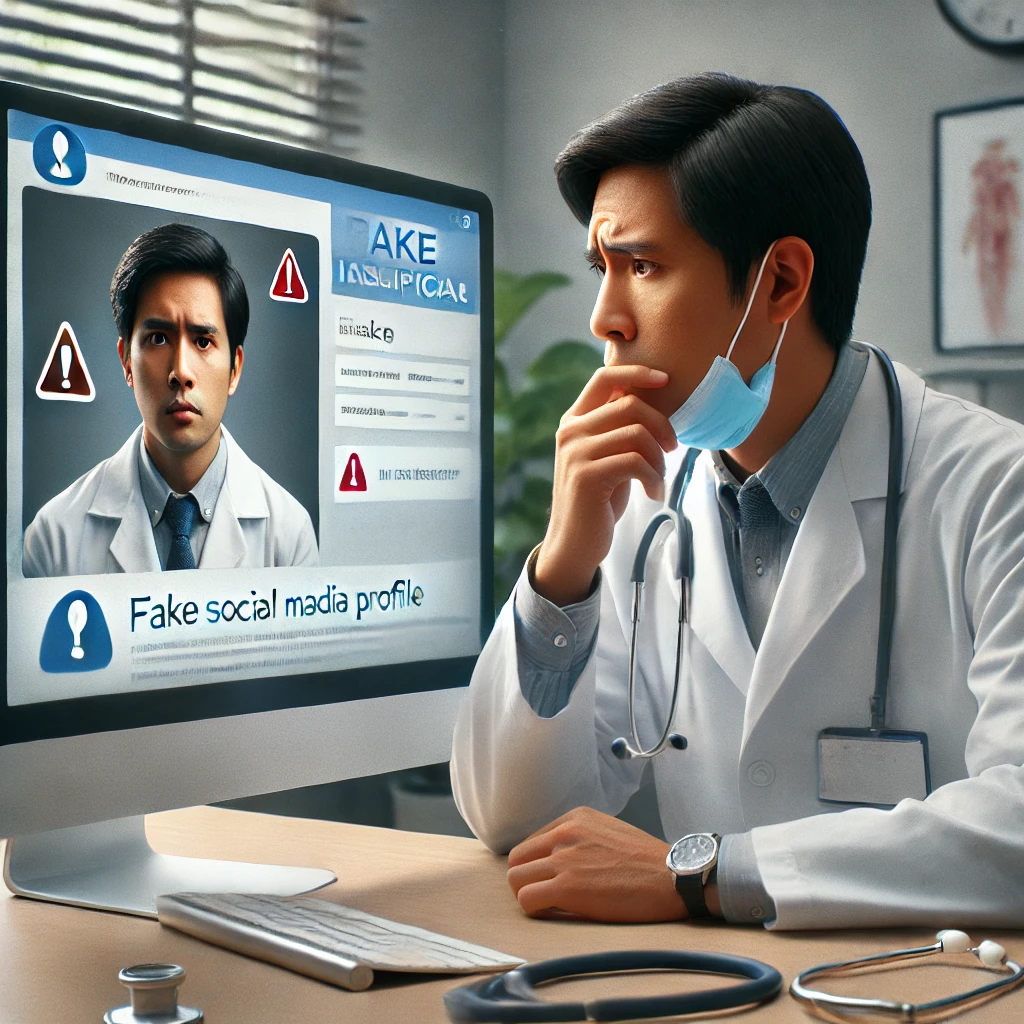
  • When Your Name Isn’t Yours: Medical Professionals Impersonated Online

    When Your Name Isn’t Yours: Medical Professionals Impersonated Online

    In an age where anyone can create a profile, post credentials, and look “official” online, more physicians are discovering something disturbing: they’ve been impersonated.

    Fake accounts posing as doctors have surfaced on social media platforms, like Facebook, and even patient-facing medical sites. Most of these fakes peddle dubious treatments. Others scam patients or organizations with fake medical certificates. And in many cases I’ve known, real physicians only find out because a colleague or patient flags it.

    More than annoying, I think it’s dangerous—to reputations, to trust in the profession, and to patient safety.

    This issue deserves real attention in medical circles. Here are three questions to open up the conversation:


    T1. How vulnerable is your digital identity, and who’s responsible for protecting it?
    Most physicians don’t have time to monitor their online presence. But that doesn’t mean the risk isn’t real. Should hospitals, clinics, or licensing boards take on some of that burden? Or is this just part of modern professional life that doctors have to manage themselves?


    T2. What damage can a fake doctor do—to patients and to the profession?
    Beyond personal reputation, impersonation can spread misinformation, promote unproven treatments, or even lead to harm. When someone poses as a doctor, they’re trading on public trust. What are the consequences when that trust is broken—and who pays the price?


    T3. What kind of response should the profession push for—from tech platforms, regulators, or internally?
    Tech companies are slow to act on impersonation reports. Should there be a unified verification system for licensed professionals? A public registry? Legal consequences for impersonators? What should physicians collectively demand?


    This isn’t just a social media problem. It’s a professional and patient safety threat that needs professional attention.

    Let’s stop pretending it’s minor. Let’s start the conversation. Join #Healthxph chat at Bluesky April 12, 2025, 9PM Manila time and share in your thoughts on this topic.


    #Physicians #MedicalProfessionals #OnlineSafety #Impersonation #MedicalEthics #DigitalIdentity

  • Practical Habits To Thrive in a volatile, uncertain, complex, ambiguous (VUCA) post pandemic healthcare industry

    Practical Habits To Thrive in a volatile, uncertain, complex, ambiguous (VUCA) post pandemic healthcare industry

    Developing practical habits can significantly contribute to a healthcare professional’s ability to thrive in a volatile, uncertain, complex, and ambiguous (VUCA) post-pandemic healthcare industry. Here are some practical habits to consider:

    1. **Stay Informed:**
    – Dedicate time each day to read industry news, research papers, and updates on healthcare trends.
    – Follow reputable healthcare blogs, journals, and online forums to keep up with the latest developments.

    2. **Prioritize Continuous Learning:**
    – Set aside regular time for continuing education, whether through online courses, webinars, workshops, or seminars.
    – Embrace a growth mindset by seeking out opportunities to expand your knowledge and skill set.

    3. **Plan and Prepare:**
    – Develop contingency plans for various scenarios to be ready for unexpected changes.
    – Anticipate potential challenges and have strategies in place to address them.

    4. **Build Resilience:**
    – Engage in stress-reducing practices such as meditation, deep breathing, exercise, and hobbies.
    – Reflect on your experiences and learn from setbacks to develop emotional resilience.

    5. **Adaptability and Flexibility:**
    – Embrace change willingly and be open to trying new approaches.
    – Regularly assess and adjust your strategies based on evolving circumstances.

    6. **Effective Time Management:**
    – Prioritize tasks and allocate time for essential activities, including patient care, administrative tasks, and self-care.
    – Use productivity techniques like time blocking to manage your schedule effectively.

    7. **Data Utilization:**
    – Regularly review patient data, outcomes, and trends to identify areas for improvement.
    – Use data-driven insights to refine your treatment plans and enhance patient care.

    8. **Networking and Collaboration:**
    – Establish relationships with colleagues within and outside your field to exchange knowledge and insights.
    – Attend conferences, workshops, and networking events to broaden your professional network.

    9. **Effective Communication:**
    – Practice active listening when interacting with patients, colleagues, and stakeholders.
    – Clearly convey complex medical information in a way that is easily understood by patients and their families.

    10. **Set Clear Goals:**
    – Define short-term and long-term goals for your professional development and patient care.
    – Regularly review and adjust your goals to align with changing circumstances.

    11. **Innovative Thinking:**
    – Allocate time for brainstorming and exploring creative solutions to healthcare challenges.
    – Encourage your team to share innovative ideas that could improve processes or patient outcomes.

    12. **Self-Care Routine:**
    – Establish a consistent self-care routine that includes exercise, proper nutrition, sleep, and relaxation.
    – Prioritize your well-being to maintain the energy and focus needed in a demanding industry.

    13. **Stay Adaptable to Technology:**
    – Embrace new healthcare technologies and software to enhance patient care and streamline administrative tasks.
    – Regularly update your digital skills to stay relevant in a tech-driven environment.

    14. **Reflect and Learn:**
    – Set aside time for self-reflection to evaluate your experiences, successes, and areas for improvement.
    – Use lessons learned to refine your approach and make informed decisions.

    15. **Stay Patient-Centered:**
    – Continuously remind yourself of the importance of patient well-being and satisfaction.
    – Tailor your care approach to meet the unique needs and preferences of each patient.

    By incorporating these practical habits into your daily routine, you can develop a strong foundation for thriving in the dynamic and challenging post-pandemic healthcare landscape.