Category: Team Building and Teamwork

  • Emotional Intelligence in Healthcare: Why It Matters for Teams.

    Emotional Intelligence in Healthcare: Why It Matters for Teams.

    Emotional intelligence (EQ) is increasingly recognized as a vital skill in healthcare. With high-pressure environments, complex patient interactions, and interdisciplinary teamwork, healthcare professionals must navigate emotions effectively to ensure quality care and workplace harmony. In #HealthXPh’s upcoming chat, we explore three critical questions: What is emotional intelligence? Why do healthcare teams need it? And how can EQ be developed within healthcare settings?


    T1. What is Emotional Intelligence (EQ) for you?

    In healthcare, EQ is the ability to recognize, manage, and utilize emotions to foster effective communication and teamwork while providing compassionate patient care.

    Emotional intelligence, as defined by psychologist Daniel Goleman, consists of five core components:

    Key Components of EQ in Healthcare:

    • Self-Awareness: Understanding one’s emotions and their impact on decision-making.
    • Self-Regulation: Managing stress, emotions, and reactions in high-pressure situations.
    • Motivation: Maintaining resilience and commitment despite challenges.
    • Empathy: Understanding patients’ and colleagues’ emotions and responding appropriately.
    • Social Skills: Communicating effectively, resolving conflicts, and fostering teamwork.

    Which among this five key components is more important than the other, I don’t know. I’m still learning all five. I had spectacular failures in my clinical and administrative practice. All attributable to lack of these core components.

    Research has shown that EQ is a better predictor of professional success in healthcare than IQ alone (Mayer, Salovey, & Caruso, 2004). Medical professionals with high EQ exhibit better clinical decision-making, interpersonal relationships, and patient satisfaction (Cherry et al., 2018).


    T2. Why Do Healthcare Teams Need Emotional Intelligence?

    Healthcare environments are emotionally demanding, and EQ plays a pivotal role in team effectiveness, patient care, and professional well-being. In my experience, here’s why EQ matters in healthcare.

    Enhancing Team Communication and Collaboration

    Effective healthcare teams rely on clear communication and collaboration. Physicians, nurses, and allied health professionals must navigate complex cases while ensuring seamless coordination. As an orthopedic surgeon, collaboration and communication within and outside our team is crucial. Breakdown in communication almost always some form of a complication. High EQ fosters an environment where team members actively listen, provide constructive feedback, and resolve conflicts efficiently (West et al., 2014).

    Improving Patient Care and Satisfaction

    Patients often experience stress, fear, or uncertainty about their health. Healthcare providers with strong empathy and communication skills can build trust, ease anxiety, and improve adherence to treatment plans. Studies suggest that physicians with higher EQ scores receive better patient satisfaction ratings (Weng et al., 2008).

    Reducing Burnout and Enhancing Well-being

    Emotional exhaustion and burnout are prevalent in healthcare. EQ helps professionals manage stress, maintain resilience, and develop coping mechanisms to sustain long-term career satisfaction. Research highlights that EQ training significantly reduces burnout symptoms among healthcare workers (Codier et al., 2010).


    T3. How Can Healthcare Teams Develop Emotional Intelligence?

    Building EQ is an ongoing process that requires self-reflection, practice (lots of ), and organizational support. Self reflection and practice is an individual “skill” to develop. In our healthcare environment and culture, finding organizational support is the hardest. Here are some strategies for enhancing EQ within healthcare teams:

    1. Encourage Self-Awareness Practices

    • Use mindfulness and self-reflection exercises to recognize emotional triggers.
    • Implement 360-degree feedback assessments to gain insight into personal strengths and weaknesses.

    2. Promote Empathy and Patient-Centered Care

    • Train healthcare professionals in active listening and compassionate communication.
    • Encourage providers to put themselves in patients’ and colleagues’ perspectives.

    3. Develop Stress Management and Resilience Skills

    • Introduce mindfulness training, meditation, or stress-reduction techniques.
    • Support peer mentoring programs to build emotional support networks.

    4. Enhance Communication and Conflict Resolution Skills

    • Provide training on de-escalation techniques for high-tension situations.
    • Foster an open, psychologically safe environment where team members can express concerns without fear.

    5. Implement EQ Training in Leadership Development

    • Equip healthcare leaders with the skills to inspire, motivate, and support their teams.
    • Encourage emotionally intelligent leadership styles that prioritize employee well-being and collaboration.

    The Future of EQ in Healthcare

    As healthcare continues to evolve, emotional intelligence will remain a crucial factor in improving patient care, team dynamics, and professional well-being. Organizations that invest in EQ training can expect better communication, reduced burnout, and more effective leadership.

    By fostering an emotionally intelligent workforce, healthcare teams can create a more compassionate, resilient, and high-functioning environment—ultimately leading to better outcomes for both patients and providers.

    Don’t forget to join #Healthxph conversation on this topic, now on bluesky at March 15, 2025 9PM Manila time. See you all!

    References:

    • Cherry, M. G., Fletcher, I., O’Sullivan, H., & Dornan, T. (2018). Emotional intelligence in medical education: A critical review. Medical Education, 52(2), 231-242.
    • Codier, E., Kooker, B. M., & Shoultz, J. (2010). Measuring the emotional intelligence of clinical staff nurses. Nursing Administration Quarterly, 34(1), 8-14.
    • Mayer, J. D., Salovey, P., & Caruso, D. R. (2004). Emotional intelligence: Theory, findings, and implications. Psychological Inquiry, 15(3), 197-215.
    • West, M. A., Lyubovnikova, J., Eckert, R., & Denis, J. L. (2014). Collective leadership for cultures of high quality health care. Journal of Organizational Effectiveness: People and Performance, 1(3), 240-260.
    • Weng, H. C., Steed, J. F., Yu, S. W., Liu, Y. T., Hsu, C. C., Yu, T. J., & Chen, W. (2008). The effect of surgeon empathy and emotional intelligence on patient satisfaction. Advances in Health Sciences Education, 13(4), 527-540.
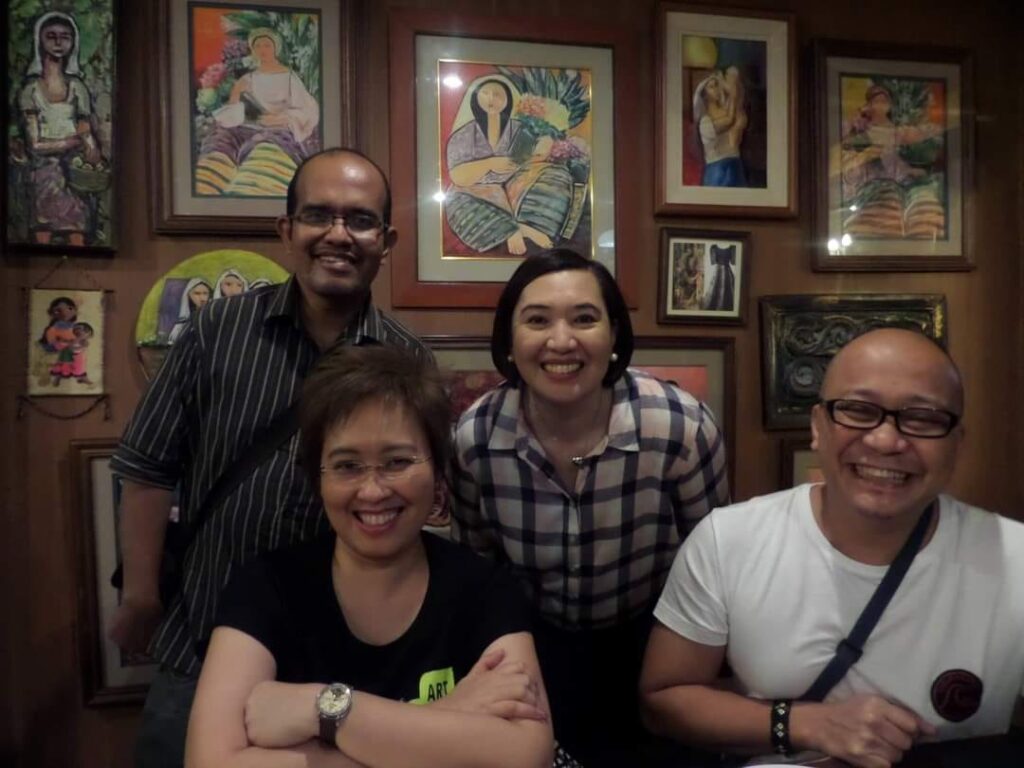
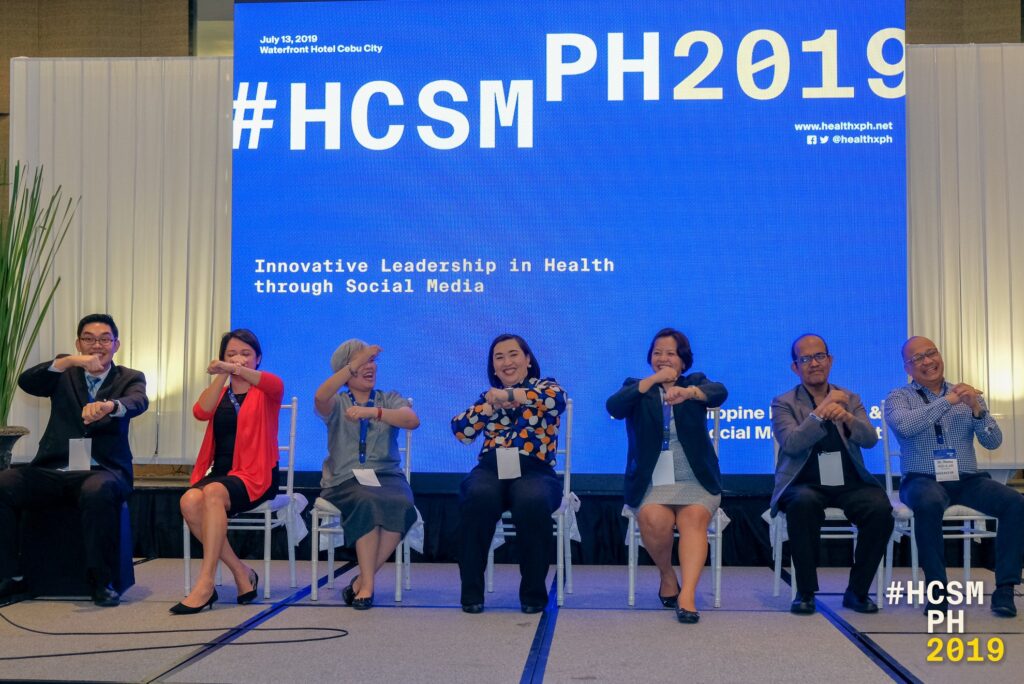
    Image by freepik

  • #HealthXPh Tribute chat for Dr. Gia Sison

    I’m moderating this Saturday’s #HealthXPh chat and drafted a pre chat post for another topic. Then, Dr. Iris, still in shock, message our group about Dr. Gia Sison’s sudden passing. I went blank all of a sudden. I was talking to a colleague when I read that message I suddenly don’t know what to say, write, talk about to anyone. As Doc Iris would say, all of us were just scrolling on the #healthxph team pictures with Gia since hearing of that news.

    The team decided to host a “tribute” chat for Gia and in all of the 10 years of making #healthxph pre chat blogpost, this was the “hardest” I made. I’ve been staring at this blank draft, for more than a day already, unable to write anything since we received the news of our beloved Ate Gia’s passing. Not that I don’t have fond memories of Gia. Quite the opposite. We have lots of Gia memories that it is “strange’ (and I felt guilty about this) that I suddenly don’t know how to write about her. With the help of the #HealthXPh team we came up with the following guide questions for our tribute chat.

    Doc Gia always had a way with people, bringing her signature charm and cheer everywhere.

    T1. Tell us how you met Doc Gia?

    I met Gia virtually when our advocacies crossed path during Typhoon Yolanda 10 plus years back. I was working with some “Googlers” back then to locate missing persons and tag areas badly affected by the typhoon. She was calling for volunteers and help for Yolanda missions. We collaborated and that was the start of so many shared advocacies, building up to the founding of #HealthXPh with Drs. Iris and Buboy. Below was our first ever #HealthXPH team meeting picture.

    Doc Gia was a kind friend, mentor and teacher, among other things.

    T2. What was your favorite memory of her? Share a tweet of hers that made an impact on you.

    This was the hardest, as I have many fond memories of Gia. I remember during our first #HealthXPh Healthcare Social Media Summit in Cebu, we were tasked to improvised or at least make a skit, sort of an impromptu entertainment to liven up a session. She just jokingly told us to follow her cheerfully sing, dance and have fun. That was it! it was super fun and we were laughing at ourselves and what we can improvise at her cheerful cajoling!

    Ate Gia has interacted with many of us in person. I lost count of Gia stories and advocacies we share. There’s even more memories that will not fit in this space. So here’s one that immediately connected with what I’m supposed to do this Saturday. I am scheduled to visit USTH Dept of Orthopedics this Saturday for their accreditation. I remember Gia welcoming me to her med school alma mater every time I posted my UST visits on socmed. So as a tribute to my our dear friend Gia, I wore UST’s colors during this accreditation. Go UsTe! says your Maroon friend Ate Gia!

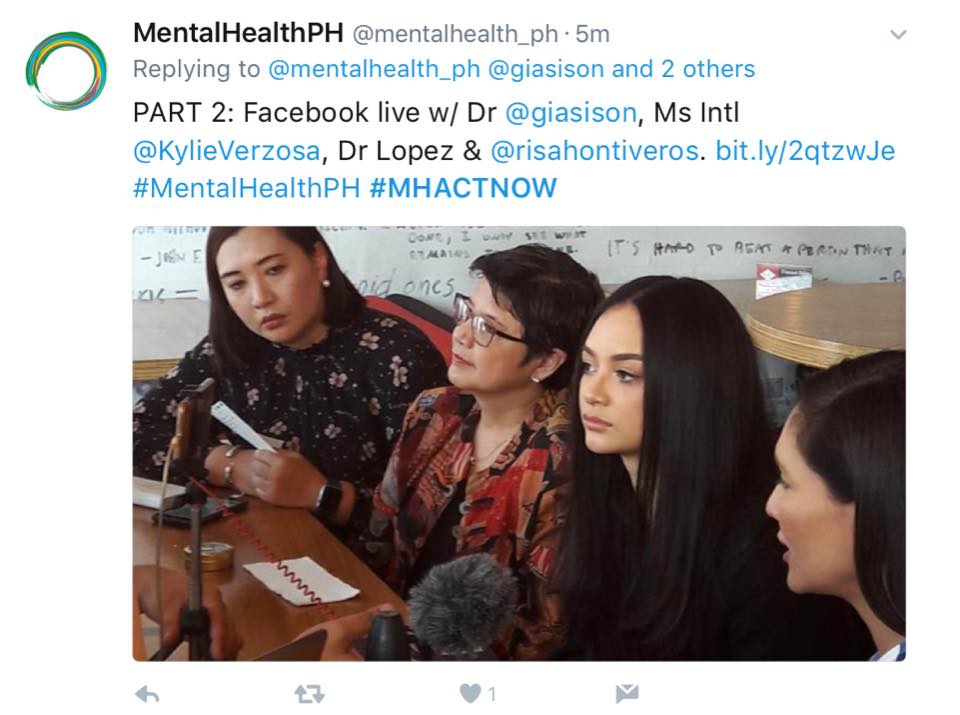
    It is an unspoken understanding amongst the #HealthXPh community that Gia relentlessly pursued a lot of advocacies. She was our soc med “maven”, the most entertaining, a global icon and relentless influencer. She is in every platform imaginable just to pursue her advocacies. No wonder like that “midas touch”, any advocacy she pursue has always been a success. The picture below is one of the rare moments where Gia is “serious” despite being surrounded with celebrities like her. Iris kiddingly posted picture on facebook with the caption “Ang serious ni Gia!” and Jim replied, “fierce!” I guess it shows how serious Ate Gia is with her advocacies.

    Let me ask then,

    T3. What is an advocacy will you take or pursue as influenced by Gia? Why?

    Please join us in this tribute chat. It will be at 9PM Manila time today March 23, 2024. Let’s celebrate Gia’s life with our fondest memories of her and all the advocacies she pursued!

  • Leading Change When “Change” Isn’t the Norm

    Leading Change When “Change” Isn’t the Norm

    “If there is one thing that will definitely change about our complex healthcare system, practices and behaviors aren’t one of these”

    One comment I get whenever I talk about “learning organization” as a way for healthcare institutions to adapt to the new normal is this- “I really like the change concepts your saying, but what else can I do if many in my organization doesn’t embrace that change philosophy?”

    Rina is a new resident physician assisting more senior residents attending and treating fractures at one healthcare institution. Yet to learn the finer details of cast application and monitoring, her team leader instructed her to apply cast on a young patient who had recently incurred a forearm fracture after a fall from a height. The senior resident added that she “read about techniques of applying and monitoring cast” from the recommended textbook. When an emergent call from ER summoned her senior to attend to another patient, Rina eagerly went on applying the cast to the patient’s forearm alone and unsupervised, with only her recently “acquired” cast application techniques, and a single experience of seeing one senior resident applying a cast in their last team duty. She sent home the patient after advising the parent about cast monitoring she learned from the book she read.

    Less than two hours after, the patient was brought back to the ER in pain and crying. “My arm hurts! like it is being squeezed and twisted! ” complained the patient. Suspecting that the cast its too tight, Rina instinctively cut the cast in half (bivalved) using a cast cutter. Patient immediately reported relief, but Rina was shaken by the experience. She felt she did what is the right for the patient and still ended up with a potential complication.

    Rina brought her experience in one group mentoring discussion with an attending consultant. “Is there a certain level of competency which a resident possess to be able to apply cast and prevent this complication from happening?” she asked. “If you are referring to how many times did the resident applied cast to the same extremity in a number of patients in the past, there’s no ballpark figure” said the consultant. “The incidence of that complication is less than a percent. What we know is that you have to have some high index of suspicion to catch the prelude to a complication” the consultant added.

    Rina then talked to several ward nurses and patient companions about their knowledge of cast monitoring and what they actually do in the wards and at home. “We write on the monitoring sheet what our clinical inspection would tell us, but I’m not quite sure about what’s the exact results do we refer to the residents on duty” said one nurse. One parent told her that although pain and tightness in the casted extremity is a danger sign, “we’re leaving”we live far away from the hospital it is usually too late when we arrive back in the hospital.

    Rina is currently doing a research on a better protocol for cast monitoring and preventing such devastating complication before it happens. Since the incidence of such devastating complication is low (as we all believe it to be based on foreign literature) and local literature about this complication is scarce, she lamented that her experience and research will just be buried in anecdotes again. I smiled. “Just keep on doing what you are doing” I said to Rina . “Maybe your research results will change behaviors, practices. Maybe it won’t, but at least you will have made things better for you, your patients, and then some”.

    “Do what Rina did” is my reply to the comment -“I really like the change concepts your saying, but what else can I do if many in my organization doesn’t embrace that change philosophy?” Start small, talk to like minded people, research, recommend a change policy, do it, even if others won’t. Maybe your new policy will change behaviors, practices. Maybe it won’t, but at least you will have made things better for you, your patients, and then some”.

    So what would a healthcare professional do when you want to change behaviors and practices in your organization yet many doesn’t espouse the change philosophy? This will be the topic of our #HealthXPh chat this Saturday May 27, 2023 9PM Manila time. Here are some guide questions:

    [su_box title=”change behaviors and practices in healthcare industry”]
    [su_list icon=”icon: hand-o-right”]

    • T1. Do you have any experience in the past urging you to change practices and behaviors in your healthcare organization?
    • T2. What healthcare change initiative did you do and what were the results?
    • T3. What advice would you give a colleague or health advocate when it comes to changing behaviors and practices in healthcare? [/su_list] [/su_box]

      Please join #HealthXPh chat Saturday May 27, 2023 9-10 PM manila time. Reply to the guide question above via twitter and append #HealthXPh to all your tweets! See you there!

      (Image by wavebreakmedia_micro on Freepik)

  • How Change is Ushered in Healthcare

    Pre pandemic, it is said that among service industries, change is predictably most difficult in the healthcare profession. There are several reason for this, but because processes in healthcare are already often complex, and sometimes ambiguous, embedding a new culture happen at a very slow pace. Take the pre pandemic research to standards of care policy change and implementation. It usually takes a decade for new promising research result to become standards of care in clinical medicine. This is even longer in the field of surgery.

    Interestingly, it took us a pandemic to change some of our long held beliefs and practices. Vaccine development and approval for public use for example, took a lightning speed compared to pre pandemic process development and implementation. The use of telemedicine as an adjunct to clinical care also took a “boost” during the pandemic. There’s a saying that necessity is the mother of all inventions, but I guess we cannot wait for another pandemic like scenario to usher change in healthcare. Thus, whatever ushered the lightning speed changes to the healthcare industry during this pandemic, is worth reflecting and replicating. This will be the topic of our tweet chat this Saturday Feb 25, 2023 9:00PM Manila time.

    [su_box title=”Ushering change in the healthcare industry”]
    [su_list icon=”icon: hand-o-right”]

    • T1. What ushered the rapid behaviour changes observed among healthcare professionals during the pandemic?
    • T2. What ushered the rapid process change observed in the healthcare industry during the pandemic?
    • T3. What leadership or management culture that ushered the rapid behavior and process change in the healthcare industry? [/su_list] [/su_box]

      To join the tweet chat, just introduce yourself, answer the above guide questions on prompt and append the hashtag #HealthXPh” to your tweets. See you!

      Image by wavebreakmedia_micro on Freepik

  • Social Media’s Role in Bridging Healthcare’s Generational Gap

    At the height of COVID-19 pandemic, a nurse posted a video of them dancing inside an empty emergency room with a big bold text caption complaining their work isn’t valued. That video went viral and although there were multiple and vastly diverse interpretations, the video posting didn’t go well with the health care organization’s (HCO) leadership and resulted to tumultuous reorganization within.

    One HCO leader complained in one conference that their “younger” HC provider seemingly had a different work ethic, behaviour, loyalty and respect for older peers. She continued that the government should mandate that the diaspora of healthcare workers be stopped immediately as our healthcare system is collapsing because of worker shortages.

    T1: Is there a generational gap in the healthcare workforce?

    The Gap.

    There’s no denying that the workforce now mostly consist of the younger generation of healthcare workers- the millennials. These young healthcare workers are adept at digital technology and would rather work and interact with their peers collaboratively. Contrast that with the existing HCO leadership and structure. Most HCO leaders are Baby Boomers whos used to running a top down, highly structured, regulated and bureaucratic organization. The above mentioned stories exemplifies the “clash” happening if this “gap” isn’t bridged. A gap that is making the shortage in our healthcare workforce- nurses in particular, worse.

    There are myriad of reasons for the continued shrinking of our healthcare workforce. Generational gap though rather correlational than a direct cause, is just one of these factors. The COVID-19 pandemic highlighted the gap even more, pressuring the already volatile and complex healthcare system, widening the generational misunderstanding between HCO’s workforce and its leaders. In the words of one famous motivational keynote speaker, this shift or gap is a “cycle”. The shift is the same as what other older generation experience during their time, when they were rebelling with their predecessor generation. Understanding this shift is key to solving this gap and communication may be the only doable course of action for now.

    T2: What is the role of social media in bridging this healthcare workforce generational gap?

    Health Is Social.

    I wasn’t surprised when our HR reported one of the more effective hiring platform we have right now is social media. Even the previously held “word of mouth” campaigns are now spread on social media. Initial hiring activities and engagements takes place on social media. Most healthcare workers keep tabs of the various HCOs social media pages as a way to scout for potential opportunities.

    The first story above highlights another generational difference often misconstrued by older generations- the young workers need for constant recognition and multiple technologies. Older HCO leaders may take this as counterproductive to work and are often suppressed in the workplace as a bad work ethic or behavior. Many HCO leaders neglect that part that the new generation needs constant feedback and communication and will be valuable assets if their team effort are reinforced and recognized.

    Internally, many millennials prefer to work in a flat organization, engaging in a more collaborative approach rather than a strictly structured system our healthcare system is built. The young healthcare leaders build networks and interact with thru social media. As many HCO leaders now knew, most “unofficial” work related discussions are happening over social media. And we’d rather look at this as a problem rather than an opportunity to engage.

    T3: What social media strategy will you recommend in bridging this healthcare generational gap?

    Strategy for an opportunity.

    Personally, social media role in bridging this gap is to connect or engage the seemingly different generations. Thus, socmed strategy primarily deals with this objective. I knew one baby boomer HCO leader say sorry to a millenial HCW via messenger, initiated a face to face meeting with the team, listened to their concerns and proactively set up a group page within the hospital socmed platform to work collaboratively and find solution to these concerns. Another multinational HCO hired an external social media manager, integrated it into its HR HCW engagement team and increase the younger generation participation in hospital patient and employees initiatives. An even more proactive baby boomer HCO leader trained himself social media tactics and used the various platform to connect and provide feedback to his peers.

    Taking on social media as a tool does have it setbacks though. In healthcare, patient information privacy should be protected. While many social media platforms are free, a deliberate attempt to harness its power needs some serious investments both in human capital and finances.

    The role of socmed in bridging generational gap now is even clearer than before. The COVID-19 pandemic highlighted this and will weigh considerably even in a post pandemic healthcare. Taking advantage of this opportunity will be the topic of this Saturday’s #HealthXPH tweetchat 9PM Manila time. Join us by live tweeting your answers to these guide questions and appending “#HealthXPh” to your tweets.

    [su_box title=”Generational Gap in Healthcare Profession”]
    [su_list icon=”icon: hand-o-right”]

    • T1. Is there a generational gap in the healthcare?
    • T2. What is the role of social media in bridging this healthcare generational gap?
    • T3. What social media strategy will you recommend in bridging this healthcare generational gap? [/su_list] [/su_box]

      See you all at the #HealthXPh chat!

      Image by Drazen Zigic on Freepik