Tag: advocacies

  • #HealthXPh Tribute chat for Dr. Gia Sison

    I’m moderating this Saturday’s #HealthXPh chat and drafted a pre chat post for another topic. Then, Dr. Iris, still in shock, message our group about Dr. Gia Sison’s sudden passing. I went blank all of a sudden. I was talking to a colleague when I read that message I suddenly don’t know what to say, write, talk about to anyone. As Doc Iris would say, all of us were just scrolling on the #healthxph team pictures with Gia since hearing of that news.

    The team decided to host a “tribute” chat for Gia and in all of the 10 years of making #healthxph pre chat blogpost, this was the “hardest” I made. I’ve been staring at this blank draft, for more than a day already, unable to write anything since we received the news of our beloved Ate Gia’s passing. Not that I don’t have fond memories of Gia. Quite the opposite. We have lots of Gia memories that it is “strange’ (and I felt guilty about this) that I suddenly don’t know how to write about her. With the help of the #HealthXPh team we came up with the following guide questions for our tribute chat.

    Doc Gia always had a way with people, bringing her signature charm and cheer everywhere.

    T1. Tell us how you met Doc Gia?

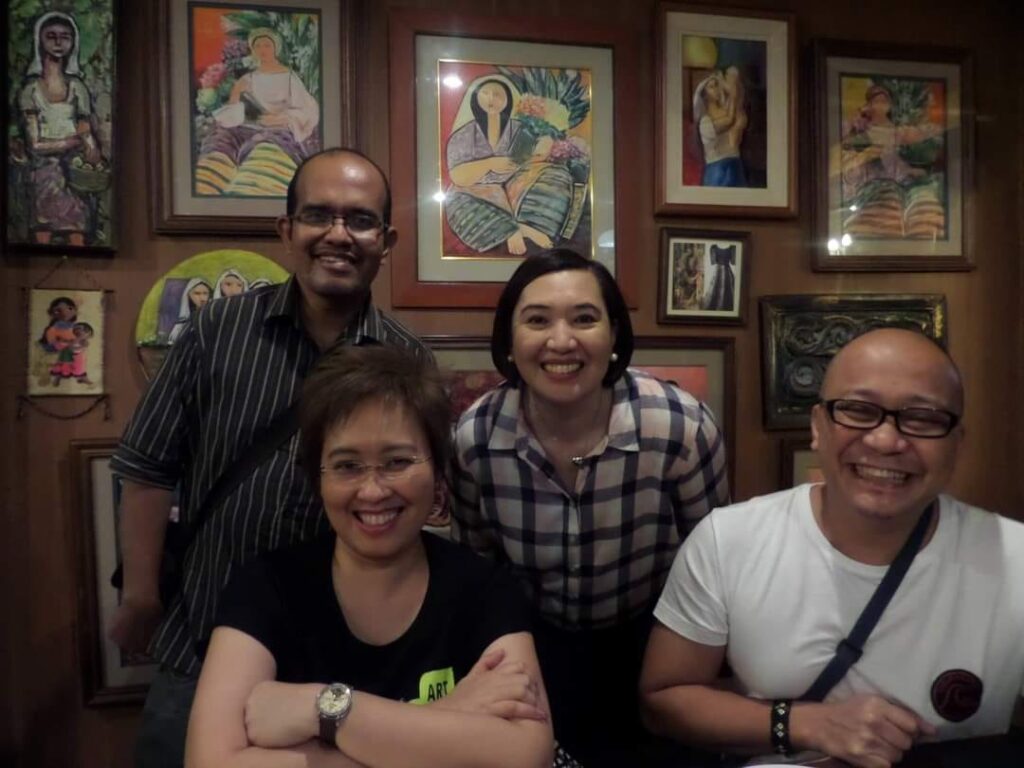
    I met Gia virtually when our advocacies crossed path during Typhoon Yolanda 10 plus years back. I was working with some “Googlers” back then to locate missing persons and tag areas badly affected by the typhoon. She was calling for volunteers and help for Yolanda missions. We collaborated and that was the start of so many shared advocacies, building up to the founding of #HealthXPh with Drs. Iris and Buboy. Below was our first ever #HealthXPH team meeting picture.
    Doc Gia was a kind friend, mentor and teacher, among other things.

    T2. What was your favorite memory of her? Share a tweet of hers that made an impact on you.

    This was the hardest, as I have many fond memories of Gia. I remember during our first #HealthXPh Healthcare Social Media Summit in Cebu, we were tasked to improvised or at least make a skit, sort of an impromptu entertainment to liven up a session. She just jokingly told us to follow her cheerfully sing, dance and have fun. That was it! it was super fun and we were laughing at ourselves and what we can improvise at her cheerful cajoling!
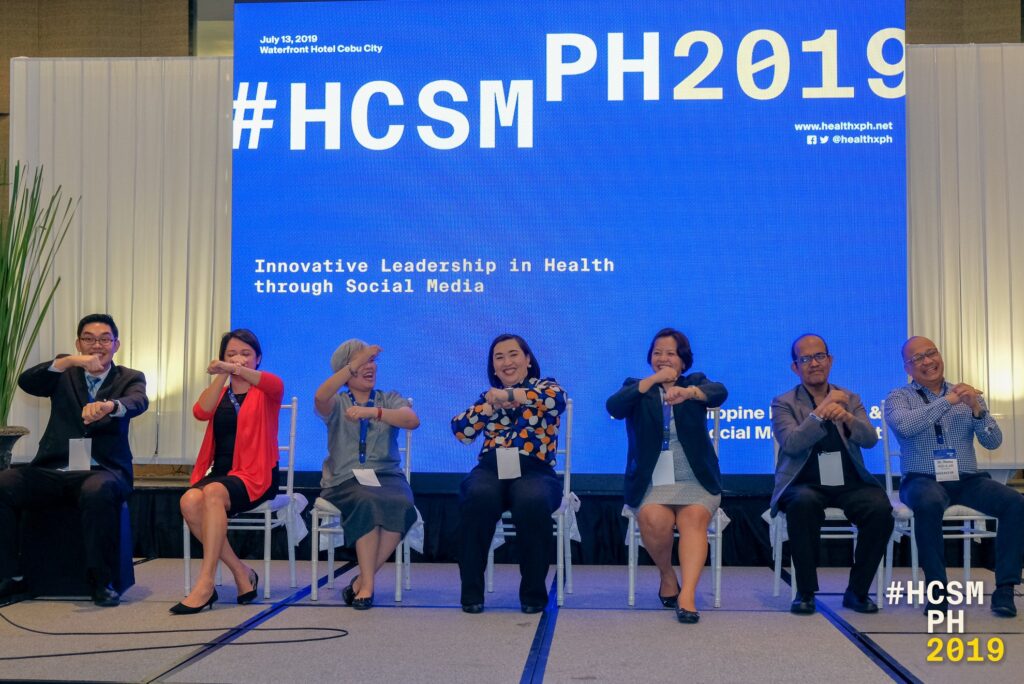
    Ate Gia has interacted with many of us in person. I lost count of Gia stories and advocacies we share. There’s even more memories that will not fit in this space. So here’s one that immediately connected with what I’m supposed to do this Saturday. I am scheduled to visit USTH Dept of Orthopedics this Saturday for their accreditation. I remember Gia welcoming me to her med school alma mater every time I posted my UST visits on socmed. So as a tribute to my our dear friend Gia, I wore UST’s colors during this accreditation. Go UsTe! says your Maroon friend Ate Gia!

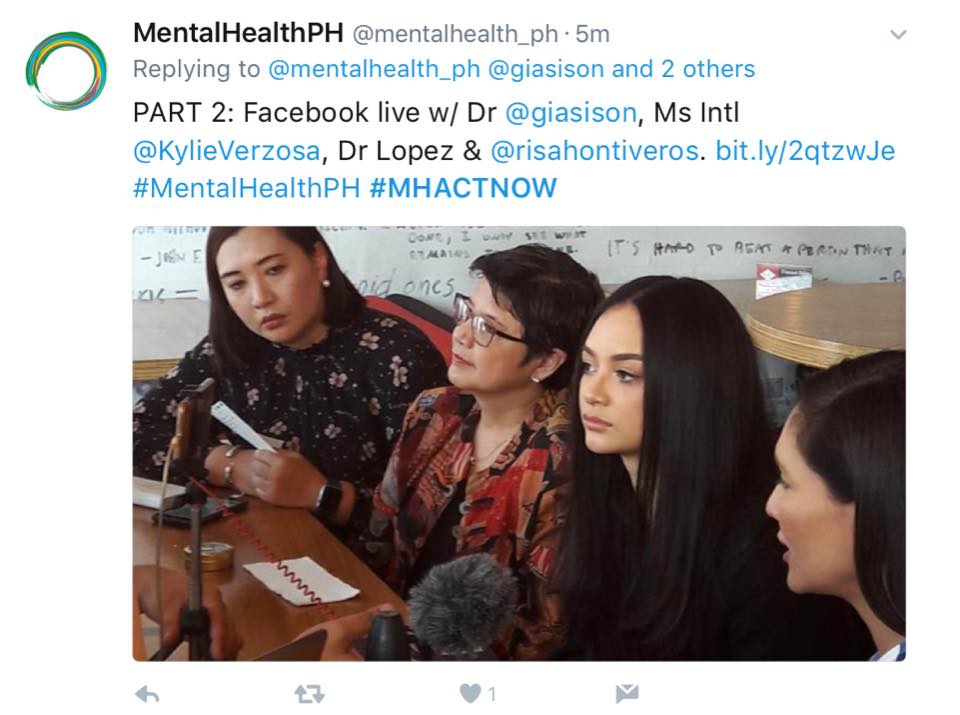
    It is an unspoken understanding amongst the #HealthXPh community that Gia relentlessly pursued a lot of advocacies. She was our soc med “maven”, the most entertaining, a global icon and relentless influencer. She is in every platform imaginable just to pursue her advocacies. No wonder like that “midas touch”, any advocacy she pursue has always been a success. The picture below is one of the rare moments where Gia is “serious” despite being surrounded with celebrities like her. Iris kiddingly posted picture on facebook with the caption “Ang serious ni Gia!” and Jim replied, “fierce!” I guess it shows how serious Ate Gia is with her advocacies.
    Let me ask then,

    T3. What is an advocacy will you take or pursue as influenced by Gia? Why?

    Please join us in this tribute chat. It will be at 9PM Manila time today March 23, 2024. Let’s celebrate Gia’s life with our fondest memories of her and all the advocacies she pursued!

  • Nudges: Motivations for Social Media Success in Healthcare.

    “Breaking down barriers to information sharing should be humanity’s collective goal, not building sand castle monuments to our achievement”- Hogan and Winter (2017)

    “Social media is just hype, a fad. It will die a natural death soon.”- Anonymous

    I’ve been blogging on five different niches since 2007. I’m advocating improving medical education, patient care, sustainable ecotourism, social innovation and research on social media. Ten years is a stretch considering how fast social media and other online tools appear on our screens. An audit of “accomplishments” with social media, should be in place right?

    “What do you get from using social media? Help people? Advance your career? Earn money?”

    Defining success in any field is never an easy task. Measuring the impact of a tool (such as social media) to that success, is even harder. If we define success as an observable change in a person or a society however, success is measurable.  It follows then that the indispensable tools impacting these changes are also measurable.

    Why am I asking these questions? Humans tend to replicate their successes and learn from their mistakes. The social, political and even economic changes we see in the 21st century occurred with the help of social media. Even healthcare, which is resistant to change, gave way to social pressures vis a vis social media.  We should be able to measure the impact of a tool to that change.  Or keep trying. 

    What’s more important to me was my motivation behind social media use.

    T1: “Did social media helped in the success of my healthcare advocacy?”

    I culled my ten years of social media practice into a series of blog post outlining how to’s of “successful social media campaigns”.  I went further with moderating chats on the impact of social media to a HCP’s clinical excellence here. The SMART metrics I outlined here seem superfluous from a healthcare professional’s perspective, but it sure did help.

    This comment by van der Linden (2017) in Nature suggest deeper engagements with both extrinsic and intrinsic motivations for social media advocacies. He suggested the reason for why advocacies last longer than viral hype.  Extrinsic motivation like the social pressures mentioned by Linden in his SMART chart below, explains the viral but short lived success of some of advocacies.

    The SMART chart by van der Linden

    This lead me to another question:

    T2: “What were my motivation(s) for using social media in a successful advocacy?”

    I looked back at some of my social media advocacies. I had varied motivations ranging from socially- desirable pledges of helping out a community, to a more intrinsic, personal ones like “learning this or that”. If I use the more extrinsic criteria like the SMART chart, I probably flunked. Medical education and patient care still needs improvement. Ecotourism is far from sustainable. Social innovations still languish and researches fail to pass even the lab doors. I can count a few more learning points from such failures but what I could not reconcile is this:

    I am still here. I’m still using social media to further advocacies- mine or someone else’s. Many of my social media friends and colleagues from the past went on to some other endeavours. Others stayed and pushed forward advocacies I can only dreamed of. This got me thinking:

    T3: “What made me/us stick to using social media for our successful advocacies?”

    Van der Linden  pointed some interesting observations. Intrinsic motivations favor more lasting and sustainable social media campaigns, along with a “yearly, recurrent event or behaviour”. I can think of the latter as akin to our weekly social media tweet chat and annual summit at #HealthXPh. The tweet chat and annual summit bound us for years.

    The intrinsic motivation is well, deeply engaging for me. “Selfish” if you think of it as pushing a personal agenda. This is however the same personal agenda, that magic that happened to many healthcare professionals I look up to professionally nowadays.

    The internet and social media made lifelong learning readily possible for me. Apart from breaking geographic, cultural and financial barriers, lifelong learning (though internet and social media) pushed both my professional and academic development, forward. I probably couldn’t quantify how much social media helped me, but I can’t imagine learning now if I have not.

    Indeed medical education needs further improvements. Social media though allowed me to expand the depth and girth of my medical knowledge beyond the halls of institutions, the paywalls of journals and the monopolies first world medicine and education. I’m learning not only from my patients but from others who share their experiences online. You help patients and colleagues beyond your limited medical/surgical skills could offer. I can name a few dozen academic and advocacy headaches that have yet to be solved even with social media around. But those I did? Those wouldn’t be possible without social media and the internet.

    Thanks to technology, we never stopped learning. To better quantify its contribution, we should have thought about success in and using social media for advocacies ten years ago. That’s the best time to adapt, in the field of medicine, healthcare and where ever applicable. The second best time is now.

    Join us this Saturday September 22 9PM Manila time for an exciting #HealthXPh tweet chat discussion on motivations for social media success in healthcare. These are our guide questions:

    • T1: “Did social media helped in the success of my healthcare advocacy?”
    • T2: “What were my motivation(s) of using social media for an advocacy?”
    • T3: “What made me/us stick to using social media for our successful advocacies?”


    References:

    Aguilar, R. (2016, April 29). Part IV: Assigning SMART metrics to social media channels [Blog post]. Retrieved from https://remomd.com/social-media/assigning-metrics-social-media-channel.html

    Aguilar, R. (2017, March 11). Metric Matrix: How should we measure the impact of social media on clinical excellence? [Blog post]. Retrieved from https://remomd.com/social-media/assigning-metrics-social-media-channel.html

    van der Linden, S. (n.d.). The future of behavioral insights: On the importance of socially situated nudges. Behavioural Public Policy, 1-11. doi:10.1017/bpp.2018.22

    van der Linden, S. (2017a), ‘The nature of viral altruism and how to make it stick’, Nature Human Behaviour, 1. 10.1038/s41562-016-0041.

    Hogan, A. M., & Winter, D. C. (2017). Changing the Rules of the Game: How Do We Measure Success in Social Media? Clinics in Colon and Rectal Surgery, 30(4), 259–263. http://doi.org/10.1055/s-0037-1604254