“Before the diagnosis, there is diagnostics. Before the diagnostics, there is the physical examination. But before anything else, there is the history”.
This algorithm is the universally accepted and scientific method of diagnosing a disease in the medical world. One process may be concurrent with the other, but the whole algorithm is useless without knowledge of each one of these processes . More importantly to treat an ailment, you have to know the history of that ailment and the person afflicted with it.
History taking by far, is often a neglected part of this clinical evaluation process. Time constraints maybe, but sometimes, disasters could be avoided by just going back to the history of the patient.
In this week’s Blog Rounds, we go back in Philippine history, take a peek at some of the most interesting (often hilarious) health related trivia, diagnose a problem and offer some treatment pundits that mean something more than fill our stomach with gas while laughing about it. Our case?! Philippines medical history made ridiculously hilarious!
And keeping with the scientific rigidity we doctors hate to love, I, Bone MD, being the lucky moderator, will stick to that protocol and blog about it more hilarious than factual of course, but minus the edema and witch hunt! So throw off that white blazer, hang those stets, give that scalpel to your resident, grab some pizza, open those PCs, sit back and relax . Let’s fire off with the “cases” presented by our MD blogging colleagues!
Case No. 1: The Tragically Comic Cholera Epidemic of the Philippines
Blogger In Charge: Prudence MD

History: The worst epidemic in the history of Philippines was said to be the
1902-1904 Cholera Epidemic. Worst, in all aspects. Read the full article by
Prudence here.
Physical Exam: Classic Cholera, yeah…by the hundreds of thousands of Filipinos! They’re dehydrating to death! Check their huts too and the dead bodies. (Their infected too?!!!)
Diagnostics: It’s the pooh Uncle Sam, bloody pooh in the Pasig River
Diagnosis: Cholera in epidemic proportions, from water source; but spread cannot be controlled expeditiously by our health authorities.
Treatment: Burn their huts, burn dead bodies , burn cholera with fire! Or throw them off Pasig River!!!Let’s infect fishes!
Comments: “If you don’t know whats killing your patient, might as well treat every possible diagnosis in your patient” Hence the “shotgun approach” of treating a disease. And yes if everything fails, burn them. Quite interesting though, this outbreak demystified the all knowing liberators we had before! Fire treatment?What gives?
Case No. 2: Cause of Death
Blogger In Charge: Merry Cherry

History: Ever wondered how Philippine presidents die?Or why they died?More importantly, aren’t you interested why some presidents don’t die early when they’re supposed to?? Merry Cherry enumerates the cause of death of presidents , that might be of interest to the National Epidemiology Center of the Philippines, DOH, DOTC, Department of Agriculture and Philippine Congress (where pork is regulated, literally) and the Presidential Security Group. It may also interest the revolutionary strategist, the coup plotters and the TRAPOs aiming for the most powerful (and lucrative) seat in the land.
Physical Exam: I guess this is confidential, unless the president’s physicians share these data. Or if the PSG will allow us their charts. Part of EO 464 I believe
Diagnostics: You can ask all the Presidents and presidents- to-be to undergo stress tests, or stress 2D Echo. Pass a bill that will ban all politicians from taking any pork barrels and see which among them will have a heart attack. Ask for the services of an orthopod to open up any congressmen and see if their heart (if any) is fat laden. I believe some are harder than calcar. Don’t ask for PPD or sputum smear. If the president is negative, he is not Filipino.
Diagnosis: Dead Presidents; COD: As Described.
Treatment and Recommendations:If you’re into the political solutions for our health concern, take a look at how these presidents die. Perhaps our Department of Justice and health epidemiologists should not be worried. Cardiac and cerebrovascular disease ranks as the top two killers of presidents- not coup de etat, revolutions nor assassinations! These may have to be included in the security protocols of the PSG. No pork (barrels) for any congressmen or even for presidents!
Case No. 3: The Filipina Doctor Coming in Full Circle
Blogger In Charge: Dr. ClaireBear: In the Middle of Nowhere
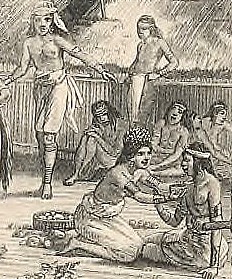
History: Dr. Clairebear narrates the colorful and often heroic women in medicine, from the Baybaylans of the pre hispanic era to the present modern day Filipina doctors standing equal or even better than their male colleagues.
Physical Exam: Gender differences not significant! The fact that the patriarchal society relegates them to the household and kitchen doesn’t mean they couldn’t and will not excel as healers.
Diagnosis: Filipina Doctors coming in full circle-Long, arduous battle against a patriarchal colonial system.
Comments: The babaylans– “seer, healer, community worker” of the pre-hispanic period were central to the healing of an ailing community. The role of women as healers in the Philippines has unfortunately been suppressed by the splurge of patriarchal colonizers of this country previously. The long and ardous battle is not against the opposite gender. It’s the pervading patriarchal colonial mentality that engulfs not only the medical world but also the entire nation.
Case No. 4. P.D.A. (Public Display of Anesthesia)
Blogger In Charge: Doc Ness @Random Ness
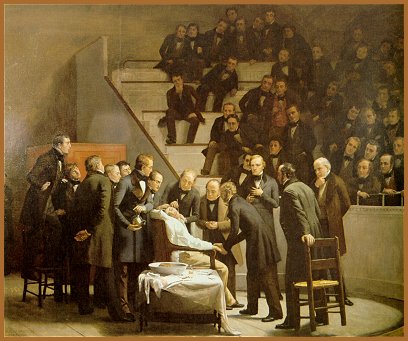
History: Doc Ness tells us the horrific history of anesthesia and how it came about silencing these howls. Or at least, tame them. The Filipino version of these “anesthetic” is virtually inexpensive and often mind boggling.
Physical Examination: Doc Ness, said, ” before, they die anyway. Why bother?”
Diagnostics: “Try a more volatile or a stronger gas. Let’s see who’s going to feel the pain while asleep” Try vocal anesthesia.
Impression: “If there is pain, gas him and hope he’d wake up after!”
Comments: While the howling success of PDA heralded painless surgeries worldwide, Philippines has our own brand of gas anesthetic, one that helps us survive the pains of living in an ailing healthcare system. No, not that gas pioneered in the chambers of the Nazi concentration camps. Jolly and ever humorous citizens of this country, we laugh-till-we-fart at the craziness of things going on around us, even if it slapped alarming trends in our health care system. Doc Ness calls it LA or “laway anesthesia” and believed this will ease pains of those who cannot afford the anesthetic even if the anesthesiologist is free! Or the words of politicians when they promise a treatment to a Juan in pain?Where did we get this trait? Cats and dogs lick their wounds to ease pain and heal it! I’m not sure this what Doc Ness is referring to.
Case No. 5 : Sleep and Chocos
Blogger In Charge: Doc Hey: An eye doctor i the third world country

History: The classic story of unsung heroes in the medical field-less glamorous, often ill compensated physicians trying to cut their living while doing service to their countrymen. Doc Hey recants how she goes through her normal (20/20?) opthalmologic life, balancing her precious time with her family and the ever busy medical life.It graphically depicted some reasons for the continuing extinction of MDs in the provinces.
Physical Exam: May actually be a physical fitness feat rather than a physical exam. Or Sleep disorder in the making. For example, trying to sleep inside a car on your way to your son’s school. Doc Hey that early?Or maybe running around and racing stairways for OPD consults?
Diagnostics: Don’t ever try what Dr. Rizal (an opthalmologist) did as a diagnostic procedure in his time. He knew our country were run by rotten eggs at that time. He tried to prove this by being killed in Luneta.
Impression: Not all in history of Philippine medicine is misery. The fact is, most stories are heroic. Undaunted by the meager income and technological retrogression, the men and women of medicine survive each day with a smile on their face, seeing patients recovered and comforted. For Doc Hey even chocolates and cards are just bonuses.
Summary of Findings: The history of medicine in the Philippines, is undoubtedly, one of the more interesting and sometimes annoying time
lines this world has ever witnessed. Dumb as some of this historical events maybe but we Filipinos laugh even in the worst of our lives. Our qualities as healers- empathy, kawang-gawa, meticulousness and loving care to name a few, remained the very reason why we are truly loved as healers in this world!
Epilogue:
So, that’s all about this first edition of The Blog Rounds. I hope you find some interesting tidbits that painted smiles in your face.I would like to mention some contributors who submitted articles, but was not include in this edition because of technicalities in the guidelines. I will definitely forward your articles to future hosts when the theme is already apt for your articles.
I call on the other blogger MDs (Bubbleman, Doc Ian, Pinay Megamom, Dak, Tetel) who promised to join TBR but have not submitted their posts yet, for one reason or another. Submit them. And for those who are interested to join, please do so and read the updates and guidelines in my blog The Orthopedic Logbook.
Due credits is also given to the owner of the pictures used in this posts!
The next T.B.R. will be up on Tuesday next week and will be hosted by Prudence MD.
Thank you all!


