Tag: doctors

  • Managing Your Doctor Self

    Managing Your Doctor Self

    I’m having a conversation with a colleague when our talk drifted to how are we managing our lives. “How are you managing your physician life?” I asked. I am in the middle of pivoting professional directions, easing out on one an aspect of my physician life. So, maybe I could get an insight into how they balance all these amidst their very busy practice and learn something I could apply in my own life context.

    “You mean our academic, clinical and administrative life as a doctor? or all of that plus our family??!” She jokingly scoffed. The couple are surgeons, both taking masters degree, both professors at a school of medicine, have very vibrant surgical practice spanning several hospitals in the locality. “Plus,” she added, ” we have two adolescents who often ask about their whereabouts but eventually understood their professional and family “routines”. “We’re juggling, surviving and giving up something for another thing ! ” she continued. “How?”, I asked. While we were engaging in a lively discussion about how we manage our physician lives, it hit me. “Did they teach us managing ourselves in med school or training??” “No” was the unanimous answer. It was all a trial and error sort of learning. Imagine a physician, a noble profession, trained to treat, lead and managed people wasn’t trained to manage themselves.

    T1. Should physicians be “taught” how to manage themselves?

    The five star physician goal of WHO for any medical curriculum comes to mind. But nowhere you can find “manage self”. I mean sure, we’re clinical expert when managing our patients. Ironically, we were taught not to manage our own afflictions for fear of bias! Academic? thru some self directed learning maybe. How about administrative? like leaders or managers? Partly yes, but this is more on managing our patients or the community. What about formally managing our doctor self? Nada. Nitz. I went though my formal arts, humanities and social science courses in pre and med proper and that was the closes thing I could imagine to “managing oneself” I could remember. Art appreciation, really? a long shot yes.

    T2. Is there a negative impact to doctors who couldn’t manage themselves?

    Times have changed. The suicide rates for physicians is one of the highest among all professions. Apart from that, the mental health concerns among healthcare professionals are also, at all time high. Career shifts which was often unheard of in the profession, is becoming a commonality. Training institutions begrudgingly complain of resident burn out and low retention rate. This impact physician and patient relations as well as their communities of practice or training institutions. While it is rare that these would bring down the whole healthcare industry, it is disconcerting why such noble profession trained at managing others, wasn’t trained at managing their own, self. Not one physician ever thought of shifting, quitting or worst, committing suicide after med school, just because they weren’t able to “manage themselves” as doctors, academics and leaders and a family person.

    T3. What advice can you give a colleagues about managing our doctor self?

    Teach yourself how to manage your doctor self now! Learn from colleagues and mentors who went through the tough times. Take a coach, a mentor, a formal course if there are. Read a book about managing yourself even if that book is non medically related book. There’s parallelism and nuggets you can take from any other profession. If you can afford, get an assistant to manage some facets of your physicians life.

    Peter Drucker and Clayton Christensen mentioned one key ingredient of a successful professional career is that persons ability to manage oneself. I think that applies to physicians too. No amount of “field expertise” could cover up for someone’s ability to manage all facets of his or her professional and personal life.

    Join #healthxph chat on X/Twitter this Saturday April 20, 2024 PM Manila time. Don’t forget to append the hashtag #HealthXPh to you tweets during convo. See you!
  • #HealthXPh Tribute chat for Dr. Gia Sison

    I’m moderating this Saturday’s #HealthXPh chat and drafted a pre chat post for another topic. Then, Dr. Iris, still in shock, message our group about Dr. Gia Sison’s sudden passing. I went blank all of a sudden. I was talking to a colleague when I read that message I suddenly don’t know what to say, write, talk about to anyone. As Doc Iris would say, all of us were just scrolling on the #healthxph team pictures with Gia since hearing of that news.

    The team decided to host a “tribute” chat for Gia and in all of the 10 years of making #healthxph pre chat blogpost, this was the “hardest” I made. I’ve been staring at this blank draft, for more than a day already, unable to write anything since we received the news of our beloved Ate Gia’s passing. Not that I don’t have fond memories of Gia. Quite the opposite. We have lots of Gia memories that it is “strange’ (and I felt guilty about this) that I suddenly don’t know how to write about her. With the help of the #HealthXPh team we came up with the following guide questions for our tribute chat.

    Doc Gia always had a way with people, bringing her signature charm and cheer everywhere.

    T1. Tell us how you met Doc Gia?

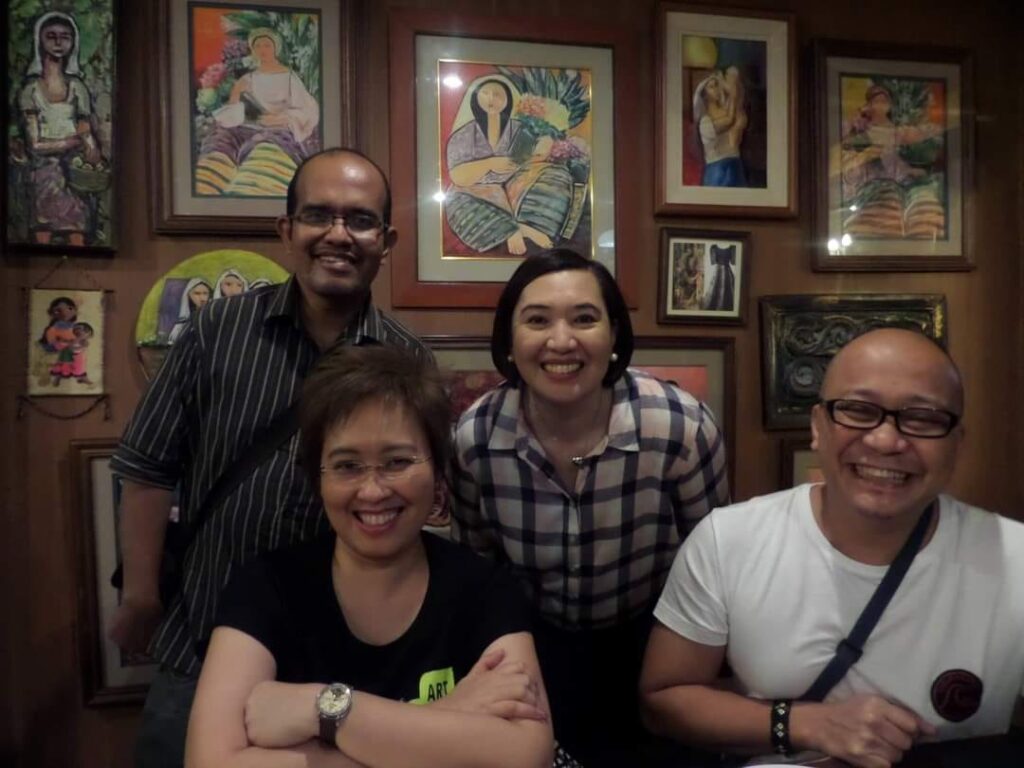
    I met Gia virtually when our advocacies crossed path during Typhoon Yolanda 10 plus years back. I was working with some “Googlers” back then to locate missing persons and tag areas badly affected by the typhoon. She was calling for volunteers and help for Yolanda missions. We collaborated and that was the start of so many shared advocacies, building up to the founding of #HealthXPh with Drs. Iris and Buboy. Below was our first ever #HealthXPH team meeting picture.

    Doc Gia was a kind friend, mentor and teacher, among other things.

    T2. What was your favorite memory of her? Share a tweet of hers that made an impact on you.

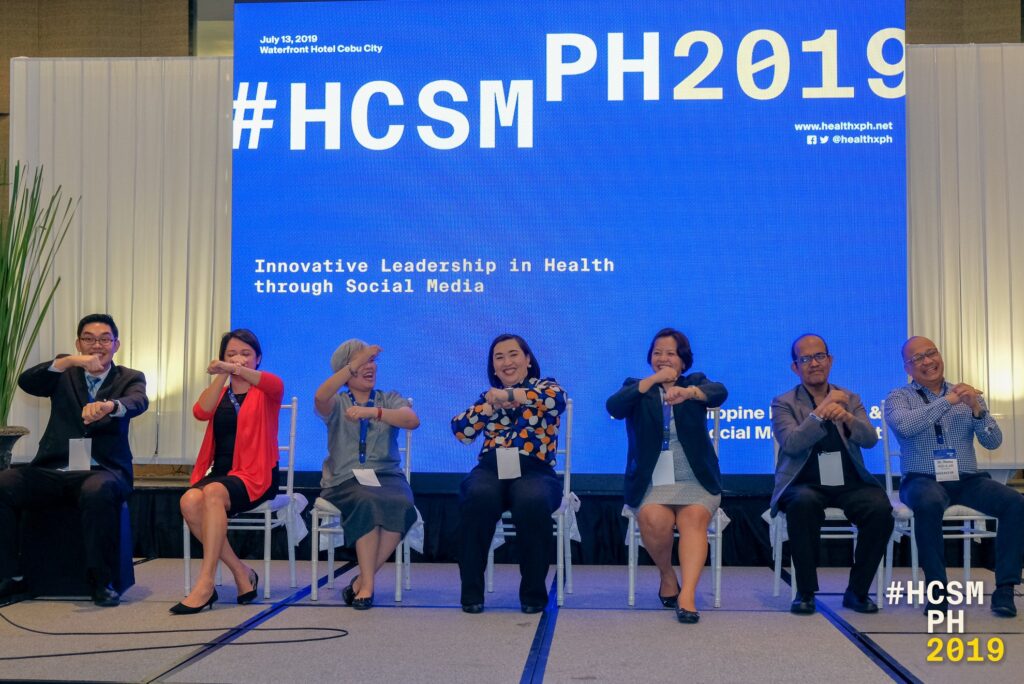
    This was the hardest, as I have many fond memories of Gia. I remember during our first #HealthXPh Healthcare Social Media Summit in Cebu, we were tasked to improvised or at least make a skit, sort of an impromptu entertainment to liven up a session. She just jokingly told us to follow her cheerfully sing, dance and have fun. That was it! it was super fun and we were laughing at ourselves and what we can improvise at her cheerful cajoling!

    Ate Gia has interacted with many of us in person. I lost count of Gia stories and advocacies we share. There’s even more memories that will not fit in this space. So here’s one that immediately connected with what I’m supposed to do this Saturday. I am scheduled to visit USTH Dept of Orthopedics this Saturday for their accreditation. I remember Gia welcoming me to her med school alma mater every time I posted my UST visits on socmed. So as a tribute to my our dear friend Gia, I wore UST’s colors during this accreditation. Go UsTe! says your Maroon friend Ate Gia!

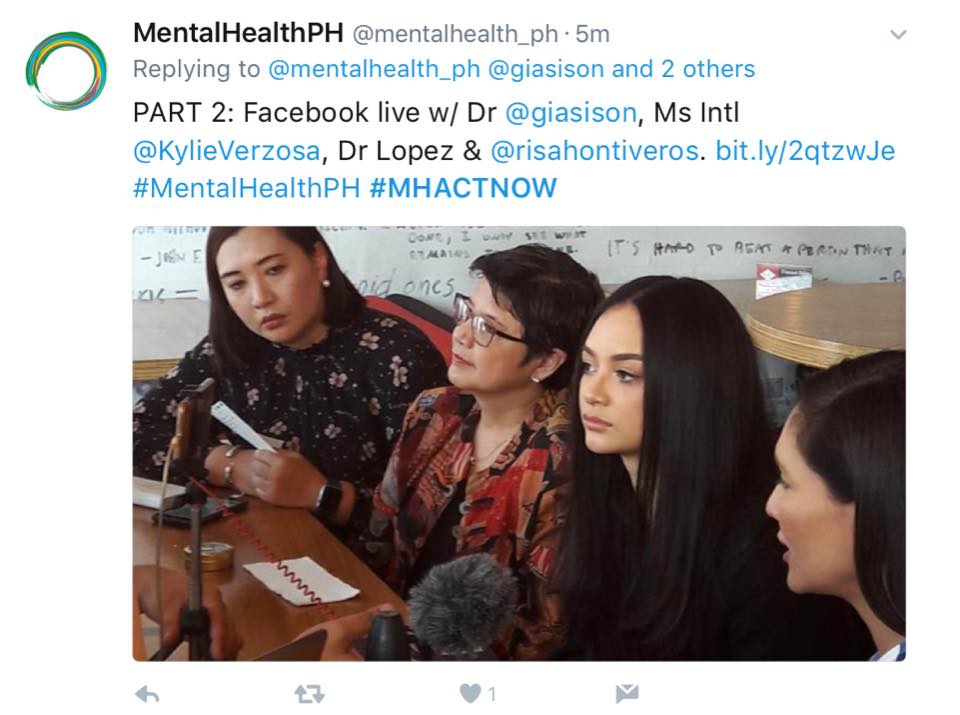
    It is an unspoken understanding amongst the #HealthXPh community that Gia relentlessly pursued a lot of advocacies. She was our soc med “maven”, the most entertaining, a global icon and relentless influencer. She is in every platform imaginable just to pursue her advocacies. No wonder like that “midas touch”, any advocacy she pursue has always been a success. The picture below is one of the rare moments where Gia is “serious” despite being surrounded with celebrities like her. Iris kiddingly posted picture on facebook with the caption “Ang serious ni Gia!” and Jim replied, “fierce!” I guess it shows how serious Ate Gia is with her advocacies.

    Let me ask then,

    T3. What is an advocacy will you take or pursue as influenced by Gia? Why?

    Please join us in this tribute chat. It will be at 9PM Manila time today March 23, 2024. Let’s celebrate Gia’s life with our fondest memories of her and all the advocacies she pursued!

  • Gratitude: The Art of Savoring.

    I was stressed this past past few weeks I finally figured in a sports injury which was supposed to be a way to de-stress my body. The many roles I acquired during the pandemic finally took its toll after almost all required physical presence and face to face activities.

    Face to face tasks demand full attention and physical presence. You cannot attend two conferences at the same time anymore or listen to two lectures on two different gadgets. It seems that, the technology enabled “always present, always available” does not hold true anymore post pandemic. It came to a frustrating point that I decided to give up one of the “roles” I took on during the pandemic. The reason? I couldn’t handle that many roles anymore, not in this post pandemic, physical presence demanding work environment. I just want to go back see and treat patients, nothing else.

    One mentor I consulted said “instead of lingering on the many difficulties this pandemic brought us, try savoring on the ones you survived- the small wins. You may have downplayed many of these wins because of the negative experience we had in this pandemic!” “You journal right? I’m sure there is a lot you can write on the gratitude corner”. He was absolutely right!

    Gratitude! I can certainly count many but why is it easier to linger on a negative experience? Medical professionals are often taught to spot uncomfortable experiences like pain, decrease range of motion or difficulty breathing. When was the last time you asked a patient “Did you have a good night sleep?” Somehow we relegated that gratitude to that small corner of our planner. We lost that art of savoring the small wins.

    “Savoring” said Daniela Ramirez Duran, is “intentionally placing our attention on positive events and prolonging the positive feelings that arise”. Duran further enumerated the many benefits of increasing savoring ability. I first encountered the word “savoring” in Christopher Peterson’s Pursuing the Good Life: 100 Reflections on Positive Psychology. Savoring: A New Model of Positive Experience by Fred B. Bryant and Joseph Veroff dug deeper into this “art” and gave practical tips applying it on our daily life. Dr. Hayley Lewis enumerated some of these tips in a sketch note below.

    I’m asking my fellow healthcare providers about the art of savoring in their daily life and how they practice gratitude in spite of the challenging grinds of the medical life. This will be the topic of our #HealthXPh chat this Saturday July 1, 2023 9PM Manila time. Here are the guide questions:

    [su_box title=”Art of Savoring among Healthcare Professionals”]
    [su_list icon=”icon: hand-o-right”]

    • T1. What are the benefits of savoring/ gratitude?
    • T2. How do you practice savoring/ gratitude?
    • T3. Do you recommend/ prescribe gratitude exercise? [/su_list] [/su_box]

      See you all this Saturday 9PM for the #HealthXPh Tweetchat!

      Image by partystock on Freepik

  • Nurturing Safe and Braves Spaces on Social Media

    Social media has been a “comfortable” space ever since I joined most of these platforms. This is not just because I’m comfortable with computers and the internet, but mainly because I tend to gravitate and collaborate with people that allow me to grow in this space. In other words, I felt psychologically safe to grow in some groups I am with in social media.

    Two presidential elections and a pandemic drastically changed that “comfortable, safe” social media space. Sometimes, social media is so toxic I had to belabor curating my feed. Add to the difficulty is the changing algorithm of social media feeds, which is getting out of our control more than ever. Now I have to really do social media sabbaticals just to save my sanity from the milee.

    I (and I guess a number of others) wanted at east to reclaim this safe space on social media. And we cannot do it alone. I remember my coach telling me, “if you want a safe space, make one for others first”. This is the topic of our #HealthXPh chat this Saturday June 11, 2022 9PM Manila time.

    Psychological safety is defined as the

    belief that one will not be punished or humiliated for speaking up with ideas, questions, concerns, or mistakes. A shared belief held by members of a team that the team is safe for interpersonal risk taking

    -Edmonson 1999

    Today we will be revisiting the safe and brave spaces #HealthXPH as well as other #HCSM group started for other healthcare professionals to grow their networks on social media. We would seek advice from our colleagues on social media how they did make “safe and brave’ spaces t grow on social media.

    According to Clarke (2020) there are four stages of psychological safety in an environment- Inclusion Safety, Learner safety, Contributor safety and Challenger Safety. Let’s discuss how you can contribute to creating these stages of safe spaces.

    T1. How can you promote inclusion safety on social media?

    This stage simply meant all people in your social media group felt welcomed and included. I remember when we first formed #Healthxph, it was so informal and I felt very much welcomed even though we’re miles apart and very diverse persons at that. Some of us don’t know a thing about social media platforms. We included them first then helped them along the way. And we tried all platforms first to see what worked for all of us!

    T2. How can you promote learner safety on social media?

    Learner safety means “being able to ask questions, give and receive feedback, experiment, and make mistakes”. #HealthXPh is a very learning group. We assured each other we’ll help in everyone’s learning “the ropes” in social media. We have been doing this with our various summits and workshops since 2015. Here every time I speak in front of summit attendees, I often ask “what if I’m wrong”? One would answer, well we will know and learn together. Just go and do it”

    T3. How can you promote Contributor safety on social media?

    Contributor safety means “being able to participate as a member of the team, contribute ideas and suggestions, and raise threats and risks using members’ individual talents and abilities to contribute to the team without fear”. At #HealthXPh, each one contributes his or her best abilities. And even in areas where you have very minimal abilities, your contribution builds the overall program of the group. And since none were mainly an expert on everything in social media, we tried to contribute what we learned along our journey.

    T4. How can you promote challenger safety on social media?

    Challenger safety meant “being able to challenge the way the team works, come up with new ways of working, behaviours, and challenge the ideas of others – even the ideas of senior members” . We had some very controversial discussions at #HealthXPh, and even on twitter. We provide and hosted topics that were rather unpopular or divisive. #HealthXPh in some ways been able to diffuse the tension and made the discussion safe for everyone to contribute or challenge. This is what I later learned as increasing the ” academic tension but decreasing the social tension”. Social media feedbacking is very important here and we have tackled that in so many tweetchats before.

    Psychologically safe space is the “underpinning of high performing teams, bringing out creativity and innovation in teams” says Amy Edmonson in Fearless Organization. In one recent workshop I attended I heard one speaker mention ‘bravespace” for safe space. Indeed, if in the last stage of Psychological safety meant we are “safe” to challenge status quo in social media, then “brave space” would be an apt term.

    I am inviting you once again to join #HealthXPh tweetchat this Saturday June 11, 2022 9PM Manila time. See you all!

  • Jan 4, 2014 #HealthXPh Tweet Chat and Hangout on Air Topic Responses

    It was a happy day of surprises for the #HealthXPh community as it officially launched the tweet chat and Google Hangout as platforms for health collaboration. For a community less than a month old, #HealthXPh’s tweet chat’s upsurge of activity (we hit 560+ impressions!) delighted us to no end. Big thanks to our friends and colleagues at #hcldr and the Filipino physicians for supporting the launching of tweet chat.

    The live tweet chat started on time while a hangout (instead of the scheduled Hangout on Air) started some 45 minutes after because of technical difficulties. Once the conversations on hangout rolled however, it snowballed into one live, highly interactive discussion on emerging technologies. We actually went into overtime by some 30minutes or so!

    Since we’re utilizing all medium as a platform for collaboration,  I’m answering the questions/topics in a blog post, here in my blog.

    [box style=”yellow question shadow” ]

    T1. What is #HealhXPh for core collaborators?[/box]

    HealthXPh is an enabling platform of collaboration for all the healthcare stakeholders -physicians, patients, healthcare institutions, academe and policy makers in the Philippines. It will engage all of these stakeholders to take a more active role in owning issues that affect their health. It aims to give stakeholders a new tool to increase reach beyond what mainstream media can in the discussions about health.

    [box style=”yellow question shadow” ]

    T2. What emerging technologies do you find important and relevant in healthcare?[/box]

    The mobile sms because of its reach and widespread use in the Philippines is still on top of these emerging technologies. With adaptation and maximization of its use to further healthcare programs and discussions is of great potential for an archipelagic country like the Philippines. I currently use sms to remind some of my distantly located patients of their follow -up schedule and specialist referrals.

    Social media also plays an important role for me in my clinical practice. This is mainly for patient education and collaboration with fellow physicians. I get queries from potential patients on facebook, twitter and sometimes Google+. All my social media interactions are aimed at encouraging patients to see a physician personally for their health questions and concerns.  While facebook and twitter may have the farthest reach,  I’m particularly interested with Google+ and all the app services attached to it. It’s potential as a platform for use to health is enormous. Most of these services, is free. Of course, blogging is an effective social media platform to further healthcare discussions and raise awareness. I’ve been blogging since 2006 and that spurred my interest into social media as a platform for collaboration in health!

    I do not consider email as an emerging technology nowadays but for the past decade, it has been a great tool for me in health. Research, training, discussions, updates, and lately to communicate with patients has all been quite a success.

    [box style=”yellow question shadow” ]

    T3 What do you think are the obstacles to the use of emerging technologies in healthcare?[/box]

    Many healthcare stakeholders in the Philippines adapt slowly to emerging technologies when it comes to health. Technical knowhow seem to be an apparent stumbling block. However, if you observe the use of emerging technologies in other segments of our society- business, entertainment and politics, this stumbling block seem negligible. Socially this is can be tied up to a bigger, more fundamental reality to Filipino’s priorities. Health and all other services attached to it, remains low on our priority scale. This is the behavior we wanted to change. With social media as a platform, #HealthXPh could hopefully effect a positive behavioral change to all stakeholders for a collaboration on health.

    Closing Thought (CT): What’s one thing you’ve learned in todays discussion that you can take to your place of influence to help a patient or colleague tomorrow?

    Foremost in my intention is to enlighten interested colleagues and patients regarding social media use in healthcare. Enlighten primarily mean allaying fears of physicians regarding social media usage and issues. The other is to come up with simpler “1-2-3  how to steps” for adapting to some social media tools they can use.

    Thanks to all those who joined and supported #HealthXPh tweetchat and Hangout on Air launch. See you again next week!

    [box style=”green info shadow” ]#HealthXPh tweet chat and Google Hangout on Air happens every Saturday 10 am Manila time (UTC +8 hours). Join the #HealthXPh community on Google Plus, facebook group, like our FB page and on twitter discussions using #HealthXPh hashtag. Subscribe to the HealthXPh blog (www.healthxph.net)  for more updates on email  and your RSS feeds.[/box]