Tag: healthcare

  • Social Media’s Role in Bridging Healthcare’s Generational Gap

    At the height of COVID-19 pandemic, a nurse posted a video of them dancing inside an empty emergency room with a big bold text caption complaining their work isn’t valued. That video went viral and although there were multiple and vastly diverse interpretations, the video posting didn’t go well with the health care organization’s (HCO) leadership and resulted to tumultuous reorganization within.

    One HCO leader complained in one conference that their “younger” HC provider seemingly had a different work ethic, behaviour, loyalty and respect for older peers. She continued that the government should mandate that the diaspora of healthcare workers be stopped immediately as our healthcare system is collapsing because of worker shortages.

    T1: Is there a generational gap in the healthcare workforce?

    The Gap.

    There’s no denying that the workforce now mostly consist of the younger generation of healthcare workers- the millennials. These young healthcare workers are adept at digital technology and would rather work and interact with their peers collaboratively. Contrast that with the existing HCO leadership and structure. Most HCO leaders are Baby Boomers whos used to running a top down, highly structured, regulated and bureaucratic organization. The above mentioned stories exemplifies the “clash” happening if this “gap” isn’t bridged. A gap that is making the shortage in our healthcare workforce- nurses in particular, worse.

    There are myriad of reasons for the continued shrinking of our healthcare workforce. Generational gap though rather correlational than a direct cause, is just one of these factors. The COVID-19 pandemic highlighted the gap even more, pressuring the already volatile and complex healthcare system, widening the generational misunderstanding between HCO’s workforce and its leaders. In the words of one famous motivational keynote speaker, this shift or gap is a “cycle”. The shift is the same as what other older generation experience during their time, when they were rebelling with their predecessor generation. Understanding this shift is key to solving this gap and communication may be the only doable course of action for now.

    T2: What is the role of social media in bridging this healthcare workforce generational gap?

    Health Is Social.

    I wasn’t surprised when our HR reported one of the more effective hiring platform we have right now is social media. Even the previously held “word of mouth” campaigns are now spread on social media. Initial hiring activities and engagements takes place on social media. Most healthcare workers keep tabs of the various HCOs social media pages as a way to scout for potential opportunities.

    The first story above highlights another generational difference often misconstrued by older generations- the young workers need for constant recognition and multiple technologies. Older HCO leaders may take this as counterproductive to work and are often suppressed in the workplace as a bad work ethic or behavior. Many HCO leaders neglect that part that the new generation needs constant feedback and communication and will be valuable assets if their team effort are reinforced and recognized.

    Internally, many millennials prefer to work in a flat organization, engaging in a more collaborative approach rather than a strictly structured system our healthcare system is built. The young healthcare leaders build networks and interact with thru social media. As many HCO leaders now knew, most “unofficial” work related discussions are happening over social media. And we’d rather look at this as a problem rather than an opportunity to engage.

    T3: What social media strategy will you recommend in bridging this healthcare generational gap?

    Strategy for an opportunity.

    Personally, social media role in bridging this gap is to connect or engage the seemingly different generations. Thus, socmed strategy primarily deals with this objective. I knew one baby boomer HCO leader say sorry to a millenial HCW via messenger, initiated a face to face meeting with the team, listened to their concerns and proactively set up a group page within the hospital socmed platform to work collaboratively and find solution to these concerns. Another multinational HCO hired an external social media manager, integrated it into its HR HCW engagement team and increase the younger generation participation in hospital patient and employees initiatives. An even more proactive baby boomer HCO leader trained himself social media tactics and used the various platform to connect and provide feedback to his peers.

    Taking on social media as a tool does have it setbacks though. In healthcare, patient information privacy should be protected. While many social media platforms are free, a deliberate attempt to harness its power needs some serious investments both in human capital and finances.

    The role of socmed in bridging generational gap now is even clearer than before. The COVID-19 pandemic highlighted this and will weigh considerably even in a post pandemic healthcare. Taking advantage of this opportunity will be the topic of this Saturday’s #HealthXPH tweetchat 9PM Manila time. Join us by live tweeting your answers to these guide questions and appending “#HealthXPh” to your tweets.

    [su_box title=”Generational Gap in Healthcare Profession”]
    [su_list icon=”icon: hand-o-right”]

    • T1. Is there a generational gap in the healthcare?
    • T2. What is the role of social media in bridging this healthcare generational gap?
    • T3. What social media strategy will you recommend in bridging this healthcare generational gap? [/su_list] [/su_box]

      See you all at the #HealthXPh chat!

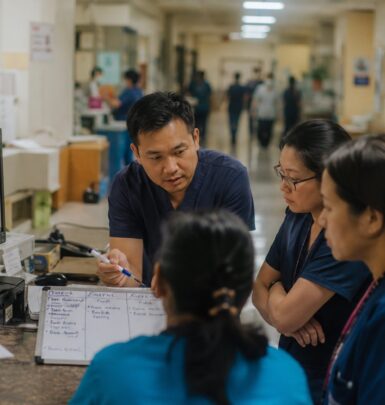
      Image by Drazen Zigic on Freepik

  • Future of Healthcare Work and Learning

    Future of Healthcare Work and Learning

    It was never easy for healthcare professionals shifting to online learning and hybrid work during the pandemic. I never imagined though, that going back to pre pandemic set up, is equally challenging.

    I am one of those who wish we’d go back to pre pandemic healthcare work and learning once this pandemic is over. Alas, we’re two (2) and a half pandemic years and the end isn’t in the horizon. Something tells me we ain’t going back to where we used to be, no matter how hard we try.

    When our COVID cases went down in one institution for example, we tried face to face conferences again. Our OPD also resumed (albeit slower) seeing patients. Our OR also slowly reverted back to its old routine. Despite all the requisite precautions and vaccinations, some medical staff contracted COVID-19 two weeks into the resumption, prompting us to go back to online learning and hybrid work again.

    Trying to go back to an old routine should be easy, I thought. I’m one of those who once profess adaptability and flexibility as my strongest point. But the two years of traumatic, pandemic struggle probably ingrained an aversion to change in many of us, me included. And I am discovering how hard it is to go back now. Is it the design? Strategy of going back? Perhaps, before we can strategize going back or adapt we need to forecast what part of healthcare work and learning is here to stay, fade away or will be in demand in the future.

    Share your thoughts on the Future of Healthcare Work and Learning by joining the #HealthXPh tweetchat this Saturday July 23, 2022 9:00 PM Manila time. The guide questions are as follow:

    • T1. What will FUTURE healthcare work and learning HAVE that doesn’t exist today?
    • T2. What will FUTURE healthcare work and learning NOT HAVE that is common today?
    • T3 Is there a specific part of healthcare work and learning that will become more common in the future? ( e.g Zoom/ Hybrid learning, conferences, remote guided surgeries?)
    • T4. Where should healthcare look for inspiration in adapting to the future healthcare work and learning?

    (Note: This post is inspired by the #HCLDR chat on Future of Healthcare Facilities)

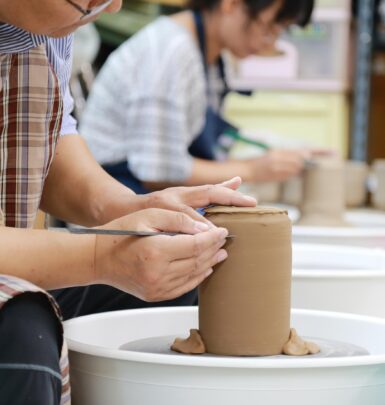
    Image by Freepik

  • Nurturing Safe and Braves Spaces on Social Media

    Social media has been a “comfortable” space ever since I joined most of these platforms. This is not just because I’m comfortable with computers and the internet, but mainly because I tend to gravitate and collaborate with people that allow me to grow in this space. In other words, I felt psychologically safe to grow in some groups I am with in social media.

    Two presidential elections and a pandemic drastically changed that “comfortable, safe” social media space. Sometimes, social media is so toxic I had to belabor curating my feed. Add to the difficulty is the changing algorithm of social media feeds, which is getting out of our control more than ever. Now I have to really do social media sabbaticals just to save my sanity from the milee.

    I (and I guess a number of others) wanted at east to reclaim this safe space on social media. And we cannot do it alone. I remember my coach telling me, “if you want a safe space, make one for others first”. This is the topic of our #HealthXPh chat this Saturday June 11, 2022 9PM Manila time.

    Psychological safety is defined as the

    belief that one will not be punished or humiliated for speaking up with ideas, questions, concerns, or mistakes. A shared belief held by members of a team that the team is safe for interpersonal risk taking

    -Edmonson 1999

    Today we will be revisiting the safe and brave spaces #HealthXPH as well as other #HCSM group started for other healthcare professionals to grow their networks on social media. We would seek advice from our colleagues on social media how they did make “safe and brave’ spaces t grow on social media.

    According to Clarke (2020) there are four stages of psychological safety in an environment- Inclusion Safety, Learner safety, Contributor safety and Challenger Safety. Let’s discuss how you can contribute to creating these stages of safe spaces.

    T1. How can you promote inclusion safety on social media?

    This stage simply meant all people in your social media group felt welcomed and included. I remember when we first formed #Healthxph, it was so informal and I felt very much welcomed even though we’re miles apart and very diverse persons at that. Some of us don’t know a thing about social media platforms. We included them first then helped them along the way. And we tried all platforms first to see what worked for all of us!

    T2. How can you promote learner safety on social media?

    Learner safety means “being able to ask questions, give and receive feedback, experiment, and make mistakes”. #HealthXPh is a very learning group. We assured each other we’ll help in everyone’s learning “the ropes” in social media. We have been doing this with our various summits and workshops since 2015. Here every time I speak in front of summit attendees, I often ask “what if I’m wrong”? One would answer, well we will know and learn together. Just go and do it”

    T3. How can you promote Contributor safety on social media?

    Contributor safety means “being able to participate as a member of the team, contribute ideas and suggestions, and raise threats and risks using members’ individual talents and abilities to contribute to the team without fear”. At #HealthXPh, each one contributes his or her best abilities. And even in areas where you have very minimal abilities, your contribution builds the overall program of the group. And since none were mainly an expert on everything in social media, we tried to contribute what we learned along our journey.

    T4. How can you promote challenger safety on social media?

    Challenger safety meant “being able to challenge the way the team works, come up with new ways of working, behaviours, and challenge the ideas of others – even the ideas of senior members” . We had some very controversial discussions at #HealthXPh, and even on twitter. We provide and hosted topics that were rather unpopular or divisive. #HealthXPh in some ways been able to diffuse the tension and made the discussion safe for everyone to contribute or challenge. This is what I later learned as increasing the ” academic tension but decreasing the social tension”. Social media feedbacking is very important here and we have tackled that in so many tweetchats before.

    Psychologically safe space is the “underpinning of high performing teams, bringing out creativity and innovation in teams” says Amy Edmonson in Fearless Organization. In one recent workshop I attended I heard one speaker mention ‘bravespace” for safe space. Indeed, if in the last stage of Psychological safety meant we are “safe” to challenge status quo in social media, then “brave space” would be an apt term.

    I am inviting you once again to join #HealthXPh tweetchat this Saturday June 11, 2022 9PM Manila time. See you all!

  • Helping Givers Thrive in the Healthcare Environment

    Mrs. H is a 54 year old single parent of four and a volunteer rural health worker in a community. She logs in before seven at the baranggay health station, checks her tasks for the day, then proceed checking the families she has worked with the past days.  Her daily routine consist of home visits, doing health teaching and family counselling until five in the afternoon. Then Mrs H goes back to the health station to do a quick summing up meeting with fellow volunteers  and get home before 7 PM. Mrs. H has been doing this for 20 +  years, surviving on community donations to run the rural health unit. “I am happy for the opportunity to help my community.” she said. As the community health indicators- maternal and infant mortality rates and malnutrition improved, the ranks of community health workers like Mrs. H dwindled. At the age of 65, Mrs. H had hypertension, type II diabetes, survived two cancer surgeries and had a string of hospital admissions from countless systemic and infectious diseases. After surviving each of these personal struggles, her lament is still ” I wish I could get out of this sickbed and do more!”

    There’s a self assessment tool by Adam Grant to help identify if you are a giver or taker. That’s a self assessment tool though. How would you identify a giver in your health team?

    T1: What’s your best qauge for identifying a giver?

    Dr. N graduated at the top of his class and trained in one prestigious center for his specialty. He went back to his home province and built one of the most caring physician practice ever built around the area. He sees patients the whole day and is known to revisit admitted patients at night before going home.  He instructs floor nurses to call him anytime, for any updates on his patients.  He refuses any other engagements if it meant leaving his patients behind. ” I just want to give patients the care they deserved. That is the standard right?” he once told a colleague. Dr. N also made it his personal advocacy to help care givers survive a health system filled with stress and grief.  One night Dr. N collapsed inside his apartment’s bathroom and suffered a myocardial infarction. A colleague noticed he wasn’t answering calls and sent a hospital’s emergency response team to his apartment. He survived that event and slowed down for a while in his practice.

    T2. How would you cultivate an environment supportive of a giver?

    “Code! Bed 4!”  The floor nurse just called. The ward team on duty sprang into action, initiating ACLS with clockwork precision and reviving B4 within minutes from the call.  Besides patient Bed 4 is a grief stricken and apologetic Ms. R, the 45 year old companion of patient bed 4. “I’m sorry doctor, I fell asleep”. Ms. R has been manually “ambubagging” patient B4 for more than 24 hours already. “My husband drives a pedicab to earn and take cares of our 4 children. My siblings went home to raise money for my father’s hospitalization. I left my work as a house help to take care of my father”.  Unfortunately Mrs. R husband left her and their kids. She had to take care of her dad and left her children with their neighbours. “At least I still have my dad and children.” She told me. Not a single word came out of my mouth…

    T3. How would you avoid or resolve giver fatigue in your team?

    Mrs. H, Dr. N and Ms R are examples of what many call “givers”.  Givers help institutions, communities or families thrive, in the long run. The healthcare industry is full of giver stories that exemplifies the caring and giving characteristic of the profession. Whatever motivate givers is the subject of studies nowadays but for the most part, it is virtually unknown. Motivation is also the least of giver’s concern. Most givers are so consumed by the act of giving even their personal lives suffer in the short run.

    Since givers are desirable part of any team, how do we help them thrive in the healthcare environment? Join #HealthXPh chat this Saturday November 25, 2017 9PM Manila Time to discuss ways on helping givers thrive in the healthcare industry. Here are our guide questions for the chat:

    T1: What’s your best qauge for identifying a giver?
    T2: How would you cultivate an environment supportive of a giver?
    T3: How would you avoid or resolve giver fatigue in your team?

  • How healthcare social media campaigns may improve provisions of health in a devolved health system

    The lack or ineffective social marketing strategy (supply side barrier) and lack of information on benefits and availment process (demand side barrier) are a few of the identified restrictions to the use of health services in complex decentralised health systems such as the Philippines.

    The Department of Health (DOH) is the lead agency responsible for the regulation and supervision of the country’s health system. It manages national policies, develops national plans and establishes health technical standards and guidelines to regulate the country’s health sector.

    The Local Government Code of 1991 devolved the provision of health services, particularly at the primary and secondary levels, through the local government units (LGUs). Hence, health service in the Philippines is managed through provincial, municipal and barangay local government offices. Provincial and district hospitals are the responsibility of provincial governments while the Rural Health Units (RHUs) and Barangay Health Stations (BHS) are managed by municipal government units.

    Complex internal developmental differences among geopolitical regions hamper provisions of health two decades after the implementation of the local government code. Less developed regions usually suffers most of the negative effects of institutional fragmentation. These least developed regions also is the least likely to recover or lags behind because it lack or poorly manages resources and is usually inefficient in allocating health resources.

    Cetrángolo et al identified supply and demand side barriers that restrict the use of health provisions in the Philippines. The lack or ineffective social marketing strategy and lack of information on benefits availment process are included in these restrictions. Grundy’s echoed the same observations in a local study.

    This author has practiced for more than ten years in areas with health units ran by local governments and in urban center with health institutions ran by DOH. While there are LGUs with efficient and effective local health councils who clearly benefitted from the devolution of health, other regions aren’t as fortunate. Case in point,  the WHO Safe Surgical Checklist.

    The WHO Safe Surgical Checklist 2009
    The WHO Safe Surgical Checklist 2009

    The WHO Safe Surgical Checklist is the single most cost effective way of minimising post operative complications reducing death and morbidity by at least 36% on the average. No other cheap, readily and sustainably implementable guideline (except maybe the handwashing guide) had so much impact on health as this checklist.  It has been incorporated into standard DOH standards operating room “toolset”, requiring every hospitals with operating rooms to incorporate such checklist in their standard operating room manuals. Yet many hospitals who have operating rooms rarely take advantage of this readily available and cheap guideline. Why is that?

    Cognisant of these complex problems, efforts has been made in the past two decades to either strengthen  or amend the local government code that devolved health provisions to LGUs. Bills calling for returning provisions of health back to the national lead agency (DOH) are now pending in the House of Representatives. It is not the purpose of this article to weigh the complex pros and cons of such amendments. Until such amendments or repeals are enacted into law, we have to deal with effectively delivering health down to grassroots level in the context of a decentralised health system.

    An effective social media campaign may narrow regional differences in the provisions of health and address the two barriers I mentioned at the start of this article.

    Join #HealthXPh this Saturday August 26, 2017 9pm Manila time as we discuss how a social media campaign may improve provisions of health in the context of a devolved health and regional developmental differences.

    • T1. Is there a role for social media as social marketing strategy for effective provisions of health in a decentralised health system?
    • T2. If you are the chief social media strategist what will your primary strategy be?Targeted? Regional? National?
    • T3. How would you measure the effectiveness of such healthcare social media strategy? Indicators? 

    Please give your final thoughts on ways by which social media could be a part (or not) of the social marketing strategy for health units or agencies in a decentralised health system like the Philippines.

    References:

      1. Cetrángolo,O., Mesa-Lago,C., Lazaro,G., Carisma,S. Health Care in the Philippines: Challenges and Ways Forward. 2013
      2. Grundy J1, Healy V, Gorgolon L, Sandig E. Overview of devolution of health services in the Philippines. Rural Remote Health. 2003 Jul-Sep;3(2):220. Epub 2003 Jul 1.
      3. Haynes, A.B., Weiser, T.G., Berry, W.R., Lipsitz, S.R., Breizat, A.H.S., Dellinger, E.P., Herbosa, T., Joseph, S., Kibatala, P.L., Lapitan, M.C.M., Merry, A.F.: A surgical safety checklist to reduce morbidity and mortality in a global population. N. Engl. J. Med. 360(5), 491–499 (2009)
      4. Atienza, Maria Ela L. 2004. “The Politics of Health Devolution in the Philippines: Experiences of Municipalities in a Devolved Set-up.” Philippine Political Science Journal 25 (48): 25–54.10.1080/01154451.2004.9754256