Tag: patients

  • Remembering and Honoring Lives Lost, To Heal the Living.

    Remembering and Honoring Lives Lost, To Heal the Living.

    On the evening of October 31, as we approached All Saints’ Day, my family and I gathered at the memorial park to celebrate my mom’s life on her third death anniversary. We held a simple Bible service, and the layperson leading the ceremony praised us for honoring our loved ones by visiting, praying, and caring for their resting places. He noted how some people seem to have lost the essence of this day, turning it into an occasion for socializing, rather than for reflection and remembrance. That observation stayed with me.

    In previous years, I’ve marked this time by traveling or hiking—finding solace in quiet places to remember family members who have passed. This personal ritual has been a way for me to reflect, especially as I continue my journey in medicine. I’ve come to see this as part of my process for managing loss—not only of loved ones but also of patients.

    As we come together on All Souls’ Day to honor those we’ve lost, I invite healthcare colleagues to reflect on the personal ways we remember our patients and cope with loss in our profession. Here are some questions we’ll explore during our #Healthxph chat on November 4, Saturday at 9 PM (Manila Time).

    T1. Was there a time in your medical career when you struggled to cope with the death of a patient?

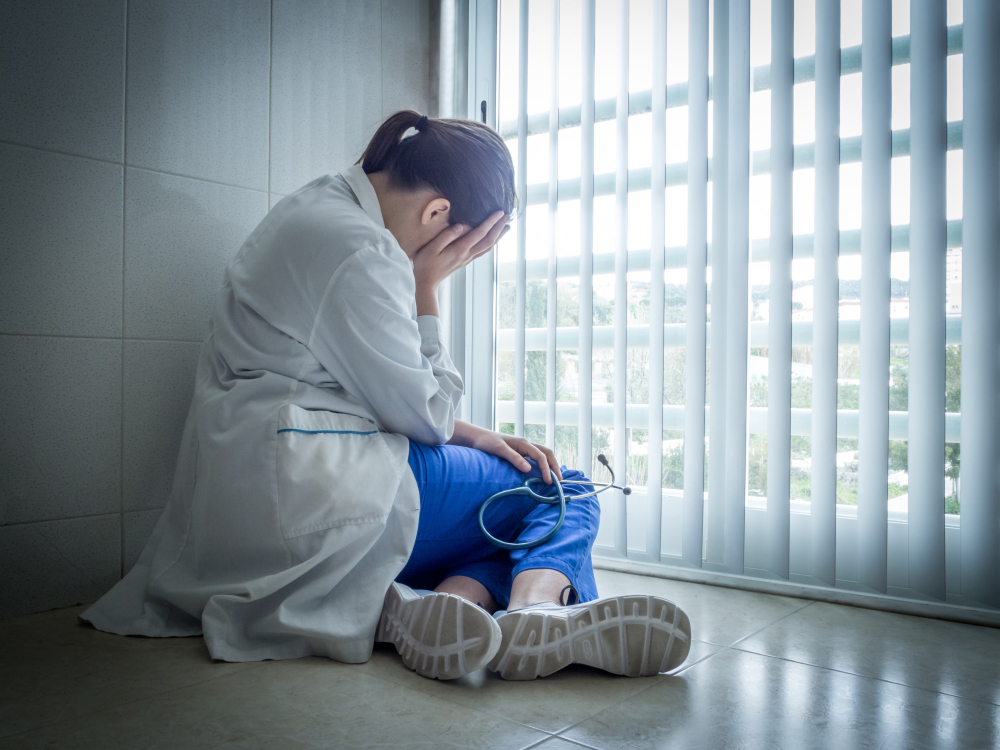
    Death is something healthcare workers face regularly, yet it never becomes easy. Each loss is significant, and it can be challenging to process while continuing to provide compassionate, respectful care. There are moments when the emotional weight feels overwhelming, and we have to find ways to grieve—whether quietly in a call room, through shared stories, or in private moments of reflection.

    Like many, I have had moments of sadness and tears even years later, remembering some of the patients I felt closest to, especially my mom.

    T2. What practices, rituals, or personal traditions help you honor and remember deceased patients?

    Over my years in medicine, I’ve seen many colleagues and institutions adopt meaningful ways to remember patients. I recall a patient, a 60-year-old woman in a charity ward with metastatic cancer. Her family couldn’t afford a ventilator, so her grandson and I took turns manually bagging her. On her last night, I held her hand one final time before stepping back to let her family grieve. Afterward, I returned to the call room to collect myself, still teary, and wrote a note of condolence for her family. These small acts help us to honor our patients, even as we move on to care for others.

    T3. Have these practices helped you in your journey as a healthcare professional?

    While we gain skills and knowledge from each patient, it’s the personal moments—the ones we carry with us—that help us cope with the mental and emotional demands of this work. For many of us, honoring our patients offers a way to remember them and manage our feelings, even if it doesn’t completely ease the sadness.


    Please join us on November 2, Saturday at 9 PM (Manila Time) for this #Healthxph chat to share, reflect, and remember together. We look forward to hearing your stories and insights.

  • What’s your manifesto as a patient on Social Media? #HealthXPh Feb 22 Tweetchat and HOA

    One request I often get from tech and social media savvy patients is this, “Doc, can I add you as my friend on Facebook?”.

    My reply is something like this : “ No, I don’t add patients as friends on facebook, but you can communicate with me on my professional facebook page”.  I sometimes draw flak on this social media policy but as I’ve mentioned in our last #HealthXPh tweet chat and Hangout On Air (Social Media and Medical Professionalism: A manifesto from #HealthXPh) this is the best setup for me and my patients so far.

    I do realize though that patients probably wanted a  social media manifesto of their own, just like their physicians. This manifesto empowers patient to “own up” their health and bring health care conversations to their level.

    To refresh, a manifesto as defined by Merriam-Webster.com, is :

    a written statement that describes the policies, goals, and opinions of a person or group.

    A social media manifesto self commits an individual- a patient or a healthcare professional, how he/she intends to behave on the different social media platforms.  We at #HealthXPh believe a manifesto is different from a guideline. A guideline  is enforced by a governing body based on existing laws and policies. In the Philippines, we don’t have healthcare social media laws or governing bodies yet. A manifesto is more powerful because it’s an expression of what an individual or group’s  intends to do on social media.

    If you are a patient and wanted to join the conversation on patient’s social media manifesto, join us this Saturday February 22, 2014 10:00 AM Philippine Standard Time (UTC + 8 ) on #HealthXPh tweet chat and Hangout On Air.

  • Prison break

    Today, one of the longest overstaying patient I had finally went out of the hospital.

    Everyone gonna miss this jolly, friendly guy for sure.

    But he seem not happy.

    He’s being escorted out of the hospital and into a jail, for a crime he committed before he was admitted.

    Guess, he liked the ambiance of this hospital than the place he’s going to live in for some time.

    If I was in his place, I’d be sad too.


  • Of headaches and coughs

    Once in a while I get a break from purely orthopedic stuff and wield a stethoscope as a “general practitioner”. I used to like the general medicine as a student but when clerkship bombarded me at least fifty patients a day giving nothing but prescriptions and prayers as “medicines”, I resigned myself to cutting it out in the surgical field.  In my place of practice though, there are times when you’re the only doctor within 1 kilometer of a medical emergency and every other medical practitioner is busy handling other medical emergencies somewhere else. God knows what happens if the patient’s relatives find out you don’t know what atrial fibrillation looks on ECG. So when push comes to shove,  I welcome instances where I can re-learn my rustic general medical skills. Or at least mount an attempt to re-learn.

    Two days ago I started seeing patients for routine medical physical examination. The sheer volume of patients made me think I’d get bored or get tired sooner. Surprisingly, I found myself enjoying the “routine” job simply because its something not routine for orthopods like me. “A break in the monotony of bone breaking, hammering and screwing..” perhaps.  The same fun feeling and excitement when you had your first few patients as a medical student. This routine physical examination also gives me the opportunity to look at the depth and effectiveness of my patient communication skills, especially in medical topics way beyond the orthopedic cram space.

    The sheer volume of patients also brought in funny experiences and encounters you’d probably die of laughing out loud in the washroom.

    Here are some of my (funny) encounters;

    Patients chart says: Chief complaint: “occasional headaches”.
    Me: “Masakit po ba ulo ninyo ngayun?” (Do you have a headache now?)
    Patient: “Wala po”. (None)
    Me to self: (Right, this encounter must not be an occasion for his headache to come out)

    Here’s another:

    Me: “May “cough” po ba kayo ngayon??” (Do you have coughs right now?)
    Patient: “Wala po. Ubo meron” (None, but coughs I have.)

    and another:

    Me:” Sino po ba nag bigay reseta ng “salbutamol” sa inyo?”(Who gave the prescription for your medicine, Salbutamol?)
    Patient: “Tatay ko po” (My dad.)
    Me: “Doctor po ba cya?”(Is he a doctor?)
    Patient: “Opo, doctor po apilyedo nya!” (Yes, this patient’s last name is “Doctor”)

    You couldn’t hide snickers whenever a patient answered like this:

    Me: “Kelan po ba sumasakit ulo nyo?” (When does your headache usually occur?)
    Patient: “Tuwing nag tatanggal kami ng damo sa school” (Everytime we’re tasked to weed out grass in the school grounds!)

    Believe me I couldn’t contain my heart laughing out loud during these light moments. I don’t know if its because of the many misunderstood and trivial complaints you get whenever its an ambulatory clinic you’re conducting (or that I was just too confined with more serious, trauma patients). One thing though,  we all needed the laugh just so we can finish some two hundred plus patients each day.

    Who said my specialist life is too constricted and boring? If there are instances like this where you can find time to re learn your medical skills as a general practitioner, why not? Especially, when there are plentiful of laughs you can make out of the “routine-ss” of the situation. I can surely wield some stethoscope.

  • Close call on rehabilitation

    In the past, I work closely with rehabilitation physician in the course of treating my patients.  Since I went into private practice  in the province though the lack of a Rehab physician in my area pushed me to learn and give rehabilitation regimens to my post op patients. What i discovered first was not really about the nitty gritty of giving exact instructions on physical rehab regimens. The necessity to communicate clearly and cultural sensitivity plays an important role and could save you from embarrassment or worst, the barking look of your own patient.

    Mrs. Cruz (not her real name) is a 56 year old soon to be retiring school teacher I operated on after she sustained an bi malleolar ankle fracture from a vehicular accident. She was a stern looking bespectacled woman, barely smiling but very sharp with her unending probing questions. She claimed to know me when I was still an elementary grade pupil (although, I couldn’t remember exactly if she was one of my teacher), but I suspect she isn’t the type of teacher you and your nasty classmates could play jokes on. Anyhow, I operated on her uneventfully and she is on her first week of follow up post op. Time for rehab I said.

    She was accompanied by her equally stern looking husband, a former military man from the looks of his eyes when she came in my clinic.One of her son was waiting outside the clinic and was I guess an added “assist” should the need arises. I just came from two succeeding ORs, barely had any sleep and was pretty tired from whole day of running around the hospital seeing patients. I am in my usual cool emphatic composure, but it was 4PM and my energy is almost spent since 7 am that day.

    “Good morning Mrs. Cruz,.. Sir!” I said. Greetings which was met by a querying look from both persons. “Hows your operative wound madam?” “Have you been dressing this daily?” I continued. “Yes” she said. I went through the routine of checking her post op wounds, examining it and then removing the sutures after seeing the wounds are all healed already. I then checked her ankle joint’s range of motion. It was a bit stiff even if I did one good operative job and has checked the range of motion intra op to be “full”.

    Time for a “rehab” I said nonchalantly to Mrs. Cruz.

    I was skimming her chart and fumbling on my phonebook at the same time for the cell number of our in house physical therapist. I noticed the couple looked stunned and was looking at me squarely liked I said something really awful.

    “Rehab, doc?”. Mrs Cruz didn’t blink to ask me again. Half stunned, half in disbelief.

    “Yes, Rehab” I replied a bit annoyed and spent.

    Then Mr. Cruz, face red in embarrassment, looking more serious and agitated now,  butted in “Doc, my wife is a teacher, she doen’t have any vice at all, at this age, I really find it hard to believe she is using any drugs!!!” in Tagalog.

    “Ugh!Oh no, no..that’s not what I meant! Her ankle needs physical therapy so she can walk painlessly again on that foot!”

    The rest of this story brought back the adrenaline in me that day. I was totally insensitive, perhaps because I was so spent with toxicity. In a provincial community where I practice, social stigma for drug addicts and sensitivity towards implying one is using any addictive substance may cost you your life. In this part of the country (and in some other parts too), “Rehabilitation” means drug rehabilitation. Many believe its derogatory and I guess, I learned my lessons that day.

    Perhaps clarifying things out, being socially sensitive and a bit more of patience, will save you from your own “close calls” with ‘rehabilitation”.