Tag: social media healthcare

  • #HealthXPh Tribute chat for Dr. Gia Sison

    I’m moderating this Saturday’s #HealthXPh chat and drafted a pre chat post for another topic. Then, Dr. Iris, still in shock, message our group about Dr. Gia Sison’s sudden passing. I went blank all of a sudden. I was talking to a colleague when I read that message I suddenly don’t know what to say, write, talk about to anyone. As Doc Iris would say, all of us were just scrolling on the #healthxph team pictures with Gia since hearing of that news.

    The team decided to host a “tribute” chat for Gia and in all of the 10 years of making #healthxph pre chat blogpost, this was the “hardest” I made. I’ve been staring at this blank draft, for more than a day already, unable to write anything since we received the news of our beloved Ate Gia’s passing. Not that I don’t have fond memories of Gia. Quite the opposite. We have lots of Gia memories that it is “strange’ (and I felt guilty about this) that I suddenly don’t know how to write about her. With the help of the #HealthXPh team we came up with the following guide questions for our tribute chat.

    Doc Gia always had a way with people, bringing her signature charm and cheer everywhere.

    T1. Tell us how you met Doc Gia?

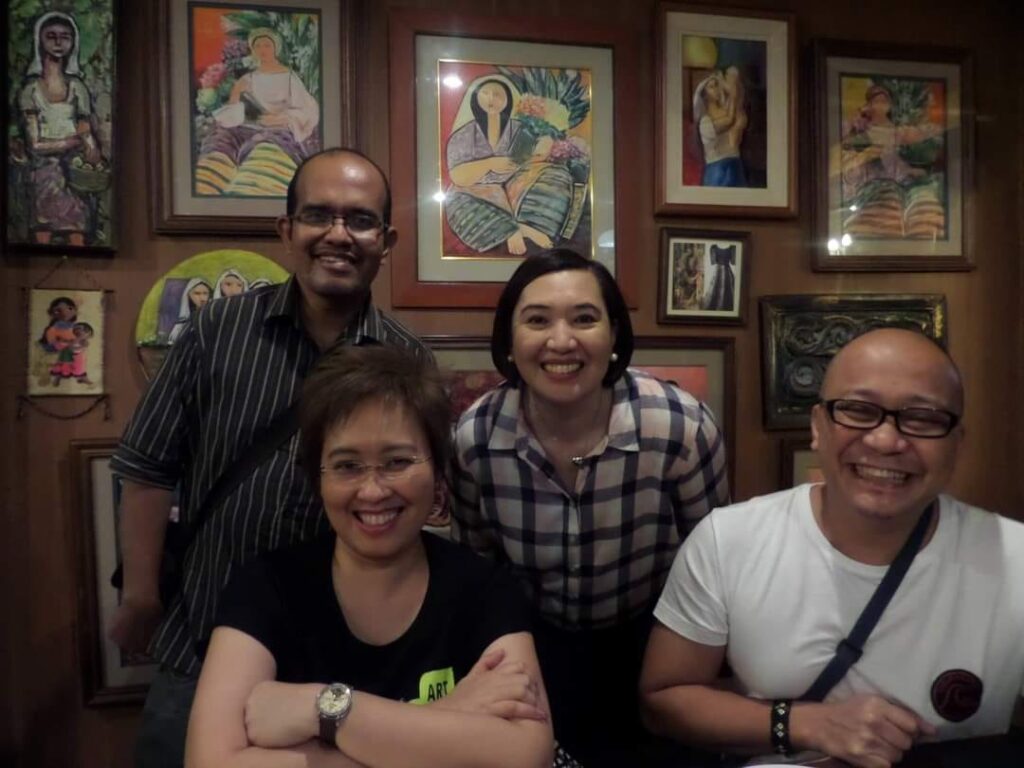
    I met Gia virtually when our advocacies crossed path during Typhoon Yolanda 10 plus years back. I was working with some “Googlers” back then to locate missing persons and tag areas badly affected by the typhoon. She was calling for volunteers and help for Yolanda missions. We collaborated and that was the start of so many shared advocacies, building up to the founding of #HealthXPh with Drs. Iris and Buboy. Below was our first ever #HealthXPH team meeting picture.
    Doc Gia was a kind friend, mentor and teacher, among other things.

    T2. What was your favorite memory of her? Share a tweet of hers that made an impact on you.

    This was the hardest, as I have many fond memories of Gia. I remember during our first #HealthXPh Healthcare Social Media Summit in Cebu, we were tasked to improvised or at least make a skit, sort of an impromptu entertainment to liven up a session. She just jokingly told us to follow her cheerfully sing, dance and have fun. That was it! it was super fun and we were laughing at ourselves and what we can improvise at her cheerful cajoling!
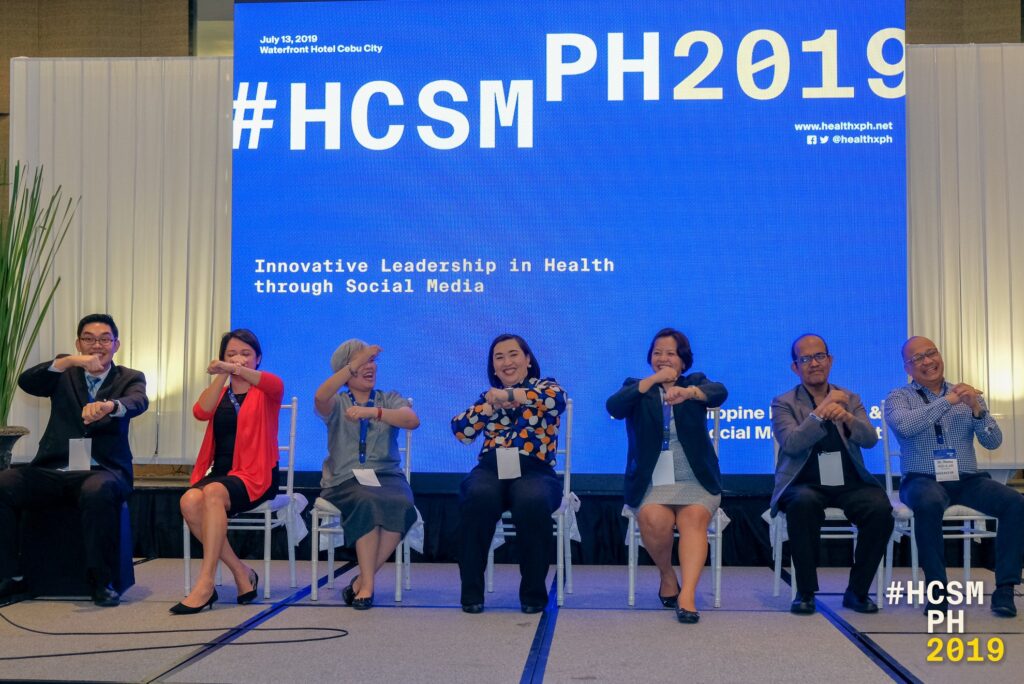
    Ate Gia has interacted with many of us in person. I lost count of Gia stories and advocacies we share. There’s even more memories that will not fit in this space. So here’s one that immediately connected with what I’m supposed to do this Saturday. I am scheduled to visit USTH Dept of Orthopedics this Saturday for their accreditation. I remember Gia welcoming me to her med school alma mater every time I posted my UST visits on socmed. So as a tribute to my our dear friend Gia, I wore UST’s colors during this accreditation. Go UsTe! says your Maroon friend Ate Gia!

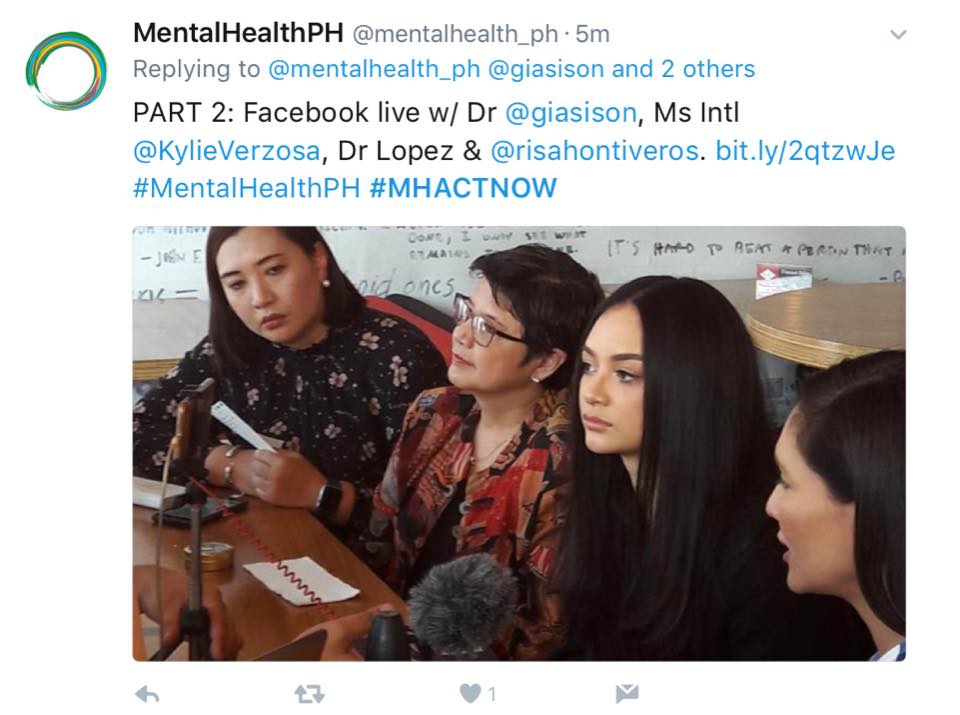
    It is an unspoken understanding amongst the #HealthXPh community that Gia relentlessly pursued a lot of advocacies. She was our soc med “maven”, the most entertaining, a global icon and relentless influencer. She is in every platform imaginable just to pursue her advocacies. No wonder like that “midas touch”, any advocacy she pursue has always been a success. The picture below is one of the rare moments where Gia is “serious” despite being surrounded with celebrities like her. Iris kiddingly posted picture on facebook with the caption “Ang serious ni Gia!” and Jim replied, “fierce!” I guess it shows how serious Ate Gia is with her advocacies.
    Let me ask then,

    T3. What is an advocacy will you take or pursue as influenced by Gia? Why?

    Please join us in this tribute chat. It will be at 9PM Manila time today March 23, 2024. Let’s celebrate Gia’s life with our fondest memories of her and all the advocacies she pursued!

  • Social Media’s Role in Bridging Healthcare’s Generational Gap

    At the height of COVID-19 pandemic, a nurse posted a video of them dancing inside an empty emergency room with a big bold text caption complaining their work isn’t valued. That video went viral and although there were multiple and vastly diverse interpretations, the video posting didn’t go well with the health care organization’s (HCO) leadership and resulted to tumultuous reorganization within.

    One HCO leader complained in one conference that their “younger” HC provider seemingly had a different work ethic, behaviour, loyalty and respect for older peers. She continued that the government should mandate that the diaspora of healthcare workers be stopped immediately as our healthcare system is collapsing because of worker shortages.

    T1: Is there a generational gap in the healthcare workforce?

    The Gap.

    There’s no denying that the workforce now mostly consist of the younger generation of healthcare workers- the millennials. These young healthcare workers are adept at digital technology and would rather work and interact with their peers collaboratively. Contrast that with the existing HCO leadership and structure. Most HCO leaders are Baby Boomers whos used to running a top down, highly structured, regulated and bureaucratic organization. The above mentioned stories exemplifies the “clash” happening if this “gap” isn’t bridged. A gap that is making the shortage in our healthcare workforce- nurses in particular, worse.

    There are myriad of reasons for the continued shrinking of our healthcare workforce. Generational gap though rather correlational than a direct cause, is just one of these factors. The COVID-19 pandemic highlighted the gap even more, pressuring the already volatile and complex healthcare system, widening the generational misunderstanding between HCO’s workforce and its leaders. In the words of one famous motivational keynote speaker, this shift or gap is a “cycle”. The shift is the same as what other older generation experience during their time, when they were rebelling with their predecessor generation. Understanding this shift is key to solving this gap and communication may be the only doable course of action for now.

    T2: What is the role of social media in bridging this healthcare workforce generational gap?

    Health Is Social.

    I wasn’t surprised when our HR reported one of the more effective hiring platform we have right now is social media. Even the previously held “word of mouth” campaigns are now spread on social media. Initial hiring activities and engagements takes place on social media. Most healthcare workers keep tabs of the various HCOs social media pages as a way to scout for potential opportunities.

    The first story above highlights another generational difference often misconstrued by older generations- the young workers need for constant recognition and multiple technologies. Older HCO leaders may take this as counterproductive to work and are often suppressed in the workplace as a bad work ethic or behavior. Many HCO leaders neglect that part that the new generation needs constant feedback and communication and will be valuable assets if their team effort are reinforced and recognized.

    Internally, many millennials prefer to work in a flat organization, engaging in a more collaborative approach rather than a strictly structured system our healthcare system is built. The young healthcare leaders build networks and interact with thru social media. As many HCO leaders now knew, most “unofficial” work related discussions are happening over social media. And we’d rather look at this as a problem rather than an opportunity to engage.

    T3: What social media strategy will you recommend in bridging this healthcare generational gap?

    Strategy for an opportunity.

    Personally, social media role in bridging this gap is to connect or engage the seemingly different generations. Thus, socmed strategy primarily deals with this objective. I knew one baby boomer HCO leader say sorry to a millenial HCW via messenger, initiated a face to face meeting with the team, listened to their concerns and proactively set up a group page within the hospital socmed platform to work collaboratively and find solution to these concerns. Another multinational HCO hired an external social media manager, integrated it into its HR HCW engagement team and increase the younger generation participation in hospital patient and employees initiatives. An even more proactive baby boomer HCO leader trained himself social media tactics and used the various platform to connect and provide feedback to his peers.

    Taking on social media as a tool does have it setbacks though. In healthcare, patient information privacy should be protected. While many social media platforms are free, a deliberate attempt to harness its power needs some serious investments both in human capital and finances.

    The role of socmed in bridging generational gap now is even clearer than before. The COVID-19 pandemic highlighted this and will weigh considerably even in a post pandemic healthcare. Taking advantage of this opportunity will be the topic of this Saturday’s #HealthXPH tweetchat 9PM Manila time. Join us by live tweeting your answers to these guide questions and appending “#HealthXPh” to your tweets.

    [su_box title=”Generational Gap in Healthcare Profession”]
    [su_list icon=”icon: hand-o-right”]

    • T1. Is there a generational gap in the healthcare?
    • T2. What is the role of social media in bridging this healthcare generational gap?
    • T3. What social media strategy will you recommend in bridging this healthcare generational gap? [/su_list] [/su_box]

      See you all at the #HealthXPh chat!

      Image by Drazen Zigic on Freepik

  • Nurturing Safe and Braves Spaces on Social Media

    Social media has been a “comfortable” space ever since I joined most of these platforms. This is not just because I’m comfortable with computers and the internet, but mainly because I tend to gravitate and collaborate with people that allow me to grow in this space. In other words, I felt psychologically safe to grow in some groups I am with in social media.

    Two presidential elections and a pandemic drastically changed that “comfortable, safe” social media space. Sometimes, social media is so toxic I had to belabor curating my feed. Add to the difficulty is the changing algorithm of social media feeds, which is getting out of our control more than ever. Now I have to really do social media sabbaticals just to save my sanity from the milee.

    I (and I guess a number of others) wanted at east to reclaim this safe space on social media. And we cannot do it alone. I remember my coach telling me, “if you want a safe space, make one for others first”. This is the topic of our #HealthXPh chat this Saturday June 11, 2022 9PM Manila time.

    Psychological safety is defined as the

    belief that one will not be punished or humiliated for speaking up with ideas, questions, concerns, or mistakes. A shared belief held by members of a team that the team is safe for interpersonal risk taking

    -Edmonson 1999

    Today we will be revisiting the safe and brave spaces #HealthXPH as well as other #HCSM group started for other healthcare professionals to grow their networks on social media. We would seek advice from our colleagues on social media how they did make “safe and brave’ spaces t grow on social media.

    According to Clarke (2020) there are four stages of psychological safety in an environment- Inclusion Safety, Learner safety, Contributor safety and Challenger Safety. Let’s discuss how you can contribute to creating these stages of safe spaces.

    T1. How can you promote inclusion safety on social media?

    This stage simply meant all people in your social media group felt welcomed and included. I remember when we first formed #Healthxph, it was so informal and I felt very much welcomed even though we’re miles apart and very diverse persons at that. Some of us don’t know a thing about social media platforms. We included them first then helped them along the way. And we tried all platforms first to see what worked for all of us!

    T2. How can you promote learner safety on social media?

    Learner safety means “being able to ask questions, give and receive feedback, experiment, and make mistakes”. #HealthXPh is a very learning group. We assured each other we’ll help in everyone’s learning “the ropes” in social media. We have been doing this with our various summits and workshops since 2015. Here every time I speak in front of summit attendees, I often ask “what if I’m wrong”? One would answer, well we will know and learn together. Just go and do it”

    T3. How can you promote Contributor safety on social media?

    Contributor safety means “being able to participate as a member of the team, contribute ideas and suggestions, and raise threats and risks using members’ individual talents and abilities to contribute to the team without fear”. At #HealthXPh, each one contributes his or her best abilities. And even in areas where you have very minimal abilities, your contribution builds the overall program of the group. And since none were mainly an expert on everything in social media, we tried to contribute what we learned along our journey.

    T4. How can you promote challenger safety on social media?

    Challenger safety meant “being able to challenge the way the team works, come up with new ways of working, behaviours, and challenge the ideas of others – even the ideas of senior members” . We had some very controversial discussions at #HealthXPh, and even on twitter. We provide and hosted topics that were rather unpopular or divisive. #HealthXPh in some ways been able to diffuse the tension and made the discussion safe for everyone to contribute or challenge. This is what I later learned as increasing the ” academic tension but decreasing the social tension”. Social media feedbacking is very important here and we have tackled that in so many tweetchats before.

    Psychologically safe space is the “underpinning of high performing teams, bringing out creativity and innovation in teams” says Amy Edmonson in Fearless Organization. In one recent workshop I attended I heard one speaker mention ‘bravespace” for safe space. Indeed, if in the last stage of Psychological safety meant we are “safe” to challenge status quo in social media, then “brave space” would be an apt term.

    I am inviting you once again to join #HealthXPh tweetchat this Saturday June 11, 2022 9PM Manila time. See you all!

  • Five important reasons why health leaders need social media

    Like it or not, internet and social media are part of today’s health environment. Understanding social media is key to surviving this environment. Flexible leaders harness social media to meet better health care experience for patients. Here are the five important reasons why health leaders need to learn and harness social media:

    1. A social media post made you or your institution (in)famous.

    Most unfortunate route to learning the ropes of social media. Many health leaders stumbled social media this way. Its never too late though. Stay calm. Plan a prompt, well thought out social media response strategy.

    2. You’re not health information’s sole gatekeepers anymore thanks to internet and social media.

    Gatekeepers hold the key to information and provisions of care in the 20th century. That’s not the case in this generation. Health information is accessible to many people. Some patients wants greater participation in managing their health. Fortunately, a health professional- patient partnership is not only feasible via social media. The partnership showed better health outcomes in some areas, while lowering cost of delivery in others.

    3. Your value system is in conflict with the new value system arising from internet and social media empowered generation.

    New value system with internet and social media

    We’ve hone our leadership skills and toolboxes before internet and social media. Radical transparency a value the current generation espouse, annoys many leaders. Understanding this new value system is key to providing better health care outcomes, at a reduced cost for this generation.

    4. New and social media amplified health expectations is different from what existing system provides.

    Patients expect better healthcare experience

    With readily available information and new value system comes new health care expectations. Unmet health expectations lead to clashes and divorce in health partnerships. Fragmented health systems called silos, provide irrelevant care at skyrocketing cost.

    5. Patients and their support group wanted greater participation in managing their health.

    Internet and social media made health information accessible to everyone. Providing care though, is still in the hands of trained professionals. This may not be the case for long as many patients including their family and support groups, wanted greater participation in managing their health. It’s no surprise that social media is the platform of choice. The sooner we accept this, the better prepared we are in harnessing social media for better health care.

    Social media is here to stay. I may have painted a bleak picture but there’s a way to harness social media for better health. Leaders should be flexible enough to partner with patients in this regard. It is their health after all.

  • For using Facebook and other social media platforms, how much of your personal privacy are you willing to give away?

    It blew right in our face.

    The “Facebook Scandal” (FB data breach with The Cambridge Analytica) shook many industries using  this social media platform to “influence” a particular interest.

    “We exploited Facebook to harvest millions of people’s profiles. And built models to exploit what we knew about them and target their inner demons…” Christopher Wylie, the whistleblower who worked with a Cambridge University academic to obtain these data using third party app, told the Observer.

    Mark Zuckerberg & Co built Facebook to fill its users’ need for socialising, online. We all knew however, that Facebook was also created to harvest data in the first place. This is in the fine print of FB’s terms of use you’ve agreed to, when you started using Facebook.   Although the company publicly admitted using data for their own regulated and targeted advertising algorithm alone,  it may have “unknowingly” provided  “limited data” to third party companies thru the various apps. Zuckerberg apologised for the “break of trust” given to them by their users because of this. What those “third party entities” do ( or did) with these data remains a mystery to the public.

    Remember how Target “snooped” on its customers and figured out a teen girls is pregnant before her father found out? By harvesting its customers’ shopping habits and using  predictive analysis, it was able to predict the most likely “next buys” of its customers and “structured” their stores to capture that buying intention. This pregnancy prediction model predicted with 87% accuracy that a lady would soon be delivering a baby if it buys vitamins, supplements, diapers or a blue rug!  We can only hypothesise about the staggering scenarios of “what ifs” if these breached data reached a not so well intentioned party. Elections, politics or buying habits are but to name three.

    In healthcare, privacy breaches are not only considered scandalous. It is  “deadly” as well for it may cost lives.

    To be fair to Facebook, healthcare (willingly or unwillingly) benefitted from some of the platforms “allure”. The relatively inexpensive, easy, accessible and wider user base are very good reasons for educating the masses about health  issues. It is also a very good alternative to ( or in fact dismantling) more traditional, expensive media platforms for getting across messages to a wide range of users.  There are probably thousands if not millions of patient support groups in FB.  Advocacy campaigns aimed at improving healthcare abound in this platform. There are also healthcare professionals who use FB as a listening and or speaking platforms for many well intentioned campaigns. In short, the healthcare industry through its stakeholders, are also benefitting from FB’s social media clout while knowingly giving away part of its privacy. Here’s where the conundrum begin and why this breach opened a  pandora’s box in healthcare.

    Imagine, if user profiles and data went into the hands of not so well intentioned healthcare industry player. What if this data is used “shape”, influence or manipulate minds to buy a particular product? Or tinkered, to accept or debunk certain healthcare issue without the benefit of validated research and recommended protocols by the medical community? What if the data are “manipulated’ to “influence” the medical community itself? This may or may not happen and regulations are something we- the healthcare stakeholders,  have to really look at in so many different ways.

    While social media regulation is still being debated, most rely on “self regulation” on what, when or how they do things on Facebook, to prevent data from falling into the “wrong hands”. Self regulation on social media  is though balancing act itself and remains a huge challenge to many of its users. #HealthXPh believe that educating the masses about health uses of these social media platforms’ plays a key role in this balancing act. This is what #HealthXPh is discussing (on Tweetchat) this Saturday March 24, 2018 9:00PM Manila Time .

    As a patient, healthcare professional, student, policy maker, or advocate, how much of your personal privacy are you willing to “give away” for using Facebook?

    • T1. Why would you or would you not deactivate your Facebook account?
      T2. For using FB, what kind “data” are you willing to give away and why?
      T3. What are your parameters for absolutely stopping Facebook use?

    We are inviting you to a lively discussion thru a twitter chat , this coming Saturday March 24, 2018 9:00PM Manila time. Join discussion!