Blog

  • Teaching the “right” attitude and values to would be doctors

    There are several methods of curriculum development in medical education. I’m familiar with Kern’s Six Step Approach to Curriculum Development which I discussed  briefly in this post. This approach is far from perfect but components of medical education ( knowledge, skills, attitudes and values) may be effectively taught using this approach.

    Kern's 6 Step Approach
    Kern’s 6 Step Approach to Curriculum Development

    On top of of this Six Step Approach is a well conducted general needs assessment of the community where health professionals are to be deployed. This needs assessment also determines the context that wrap health issues in that specific community. Implementing a health education program without prior contextual needs assessment is like running a car without a definite destination. Resources are spread thin across multiple objectives, draining resources and produce graduates who are “misfits”- physicians who just don’t fit the target community’s context of health issues. A misfit health professional so to speak.

    For years I believe, our goals for educating health professionals didn’t change much and remained true to the ideals of health profession. We still want to train ethical and moral health professionals serving our country in the most excellent and conscientious way. Our instruments in achieving these goals however have changed dramatically in todays digital age. Access to information greatly improved but processing these information lags behind. We have access to western health research but such data just don’t fit especially in the countryside where the context of health issues is radically different. We train our would be physicians that western medical knowledge and skills is the way to go in medicine but what is in the books and journals are vastly different from what we have here on the ground. The stark difference is even more palpable in the attitude and values being taught at healthcare academe. We have forgotten the socio cultural context of our health issues. We train highly skilled and knowledgeable physicians yet they don’t seem to fit the community they’re placed in. Most of them just gravitate towards the urban tertiary centers where western medicine, the context of how we train them, resides.

    Teaching medical knowledge and skills has evolved so much in recent decades.  Attitudes and values however remains the hardest, most elusive component teach and assess. Thus we hear of health professionals who’s attitudes and values are way off what’s expected of a health professional. Whispers of “lazy, easily discouraged, whiner, scum” health professionals  can sometimes be heard on performance evaluations.  The lack of a clear context and need assessments predisposes a program to produce such health professionals.  The lack of validated instruments to impart and assess our methods of teaching attitudes and values in our health education programs remains challenge to the medical academe. We’ve tried teaching methods like “fellowships” or paired didactic/clinical exposures, increasing patient exposures, community immersions  and other but we yet to figure out exactly how to teach and assess desirable attitudes and values to our health professionals.  We knew teaching methods are customised  on the context of the community and cannot be standardized across regional difference. Perhaps a basic framework to work on and modified regionally according to context would be a good way to start.

    So far, a standard method of evaluating attitudes of health professionals needs to be implemented and validated widely.  The closest we can get after going through the rigodon of trying to each time, is the multi peer assessment. This is an assessment method wherein everyone in the health professionals working environment gives an assessment as to the attitude of that health professional.   The assessment is quite comprehensive and is reflective  the working atmosphere of that health professionals. It is however tedious. Categorising components of this assessment tool and making sure everyone in the working environment uniformly understand its content requires training.

    In summary, our goals in teaching the “right” attitude for health professionals, hasn’t changed much in the past decades. The lack of clear context and needs assessment plus the scarcity of teaching and assessing ” attitudes and values ” among our health professionals is contributing much to “misfits” in the health community. A multi peer assessment is the closest tool we can use but is tedious and time consuming. A basic framework for training should be created on a national level but modified regionally according to the specific context of health issues present in that region.

  • Addressing generational medical learning stereotypes

    Does generational learning stereotypes affect  graduate medical education?

    Consider these medical educator- medical student thoughts:

    Medical Educator: Some of this generation’s medical students lack interest and commitment to their medical training. With all the health information inside their laptops and tablets, they find it hard to answer my questions confidently.

    Gen X student: I hate professor A! He expects us to read chapters in our textbook, do research on the side, while simultaneously go on clinical duty 48 hours a week!
    First observation is common among medical educators, although local documented research on this is lacking. Observation number two is a common complaint among medical students, often perceived as lack of interest by many health educators.

    Meyer and Weiner in 2002 Journal of American Medical Education pointed this out:

    Empirical evidence shows that college students are becoming less interested in attending medical school. The number of applicants to medical schools in the United States has dropped approximately 20% during the last 10 years.

    In short, unless new research would point to otherwise, generational stereotypes do (negatively?) affect learning in graduate medical education.

    There are many ways to develop and improve a medical curriculum. I am only familiar with Kern’s Six Step approach(in picture below) to curriculum development for medical education. (Here’s a link to the book at Amazon. See disclosure).

    Kern's 6 Step Approach
    Kern’s 6 Step Approach to Curriculum Development

    A health educations study applying Kern’s six step is discussed in this article. Here is a more detailed presentation of Kern’s Six Step to developing med ed curriculum by Joanne Lynn, MD, MPH Department of Neurology, Associate Dean of Student Life Ohio State University Wexner Medical Center. Suffice to say, there are hundred of ways to address the generational learning stereotypes in medical education. It’s never easy, but it can be done says. Dr. Lynn.

    Natalie May of St. Emelyn’s Emergency Medicine #FOAMed sums up beautifully in post, the generational stereotypes ( she called “challenges in medical curriculum”) and the corresponding learning environment adjustments we can make to address these challenges.

    Yes, of course it’s exhausting and hard work to rethink our education strategies – it’s much easier to stick up a two hundred slide lecture and read it from the screen but we owe the next generation of doctors more than this. And if we stick to teaching the way that worked for us, we are forcing them to do the hard work of trying to fit into our schema – and isn’t that against the very essence of education?

    In one tweetchat episode (Residency Training in a Millenial World) hosted by Dr. Helen Madamba, a medical educator herself, we also tackled generational learner stereotypes among residents of a training program. In this Saturday’s edition of #HealthXPh chat, we dig deeper into the medical curriculum and discuss possible solutions to this challenge. Our guiding questions are:

    • T1.  As a healthcare student or healthcare professional, do you believe generational stereotypes affect learning in medical education? Why?
    • T2. Does your institution’s medical curriculum acknowledge these generational stereotypes exist and have done steps to address it? How?
    • T3. Which of Kern’s Six Step approach do you think is the best step to intervene and address this challenge? Least? Why?

    Please give your final thoughts after discussing these Qs.

    Join us this Saturday July 8, 2017 9PM Manila time as #HealthXPh discuss generational learner stereotypes on #healthXPh twitter chat!

    #meded #healthed #healthprofed #medicaleducation

    ( Disclosure: The author used an Amazon affiliate link for one of the book cited in this post.)

    References:

    1. Meyer AA, Weiner TM. The Generation GapPerspectives of a Program DirectorArch Surg. 2002;137(3):268-270. doi:10.1001/archsurg.137.3.268
    2. Kern DE, Thomas PA, Hughes MT. Curriculum Development for Medical Education: A Six‑Step Approach. 2nd ed. Baltimore, MD: The John’s Hopkins University Press; 2009.
    3. Sweet LR, Palazzi DL. Application of Kern’s Six-step approach to curriculum development by global health residents. Educ Health 2015;28:138-41.
    4. Natalie May.”Generation Why – Challenges in Medical Education at #NSWMET”. August 10, 2016. Blog : St.Emlyn’s Emergency Medicine #FOAMed

    If you haven’t subscribe to this blog yet, please do so here: Cast and Curious values your privacy.


  • How I live multiverses in one (bonedoc) life

    “Did you know that Benjamin Franklin was a comedy writer (wrote the famed Poor Richards Almanac) before he discovered electricity and became one of the founding fathers of the United States of America?”

    “Not until now that you said it to me. He was?! Interesting!..”

    Two hour laters, I bade my travel friend goodbye, pick my 30 liter backpack and I got off the back of a pick up truck. “Thank you” I said to the driver.

    “I am tito, vagabound”

    Dusting off an inch thick of dust off my cargo shorts and shirt, I am now standing in front of wooden house- a port just on the edge of the Amazon River Basin. One local sitting on a bench on the side of entrance stood up and headed my way. Long grey hair with a cowboy hat and puffing cigarette, he waived at me to come near him. He was limping, a bit.
    “You Tito?” He asked.
    “Yes, I am”. I replied. Then I saw that stoic grin in his face.
    “I’m Ricardo” There’s a scar an inch long just below his right cheek.
    “You really a travel writer photographer?” He quipped .

    Travel photographer on a motorcycle…I wish.

    I said “Yeah, sort of. I wash dishes too, do a bit of carpentry, tend a garden, till the soil, plant maize corn and sometimes do stand up comedy. I could even stitch up  wounds over extremities. “ I volunteered.

    “Really?” He said. And take photos too of me? with that small camera?” I said yes. “I want many pictures of me”. Said the grinning Ricardo.
    Half fish Not Ricardo.

    Ricardo is a Tupian local and will be my foster brother in my months long stay in the Amazonia. I will work part time (2-3 days, 4 hour daily work/week) in his local refreshment canteen. He will help arrange trips  for me to some of the lesser known tribes in the Amazon rainforest.

    “You came from a very far country-Philippines eh?” he said, the wrinkles in his forehead seemingly squeezing a better answer from me. “Yeah!” I answered. “Why would you leave that place? Why go here?!”
    widelakematutum
    Asik Asik Falls Alamada
    “I’m not leaving my place. I’m just here to really really explore what the world is outside of my comfort zone” I replied.
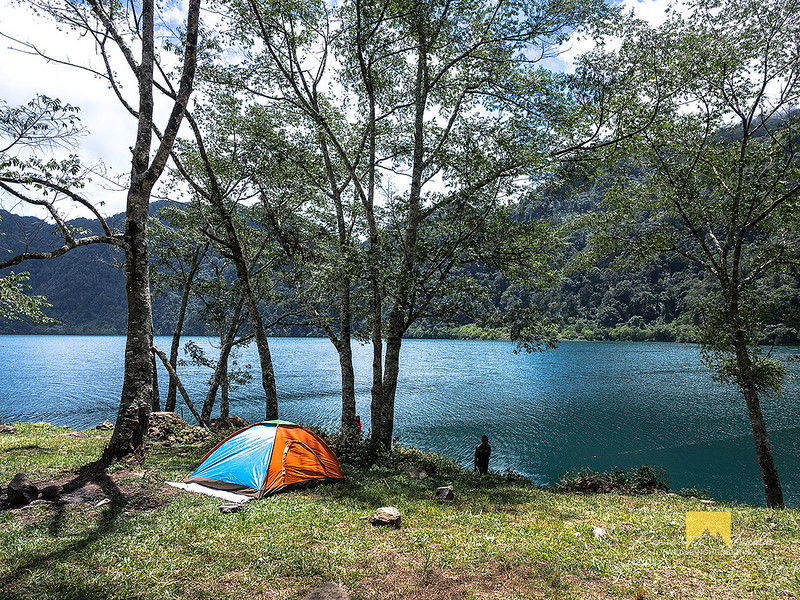
    holoncamping
    SECRETBEACH
    SAD
    bigsmile
    He has this puzzled look at me but smiled suddenly. “Crazy Gringo you are eh?”

    “I am. I am. Maybe.”
    Travel, shoot, work part time and live close to people, culture and nature I haven’t seen my entire life. Yes, this is the Ameridian leg of my vagabounding.

    Well, that was before I got admitted to college. An alternate verse I so feared of going, I would have tried this right after high school.  See Iceland’s Aurora Borealis, climb Kilimanjaro,  hike the Appalachian, photograph sunsets in the Sahara. Write a life hack book in the mountains of Tibet, motorcycle across China, all in search for awesomeness this world has to offer and what can I create to offer mine.

    That I realized after going through med school shit scared and got lucky. Again, only after. Funny how one discovers alterverses only after you thread one path and learn life skills.  When you’re done with one path, you discover that most of the patterns and frameworks you’ve acquired are familiar and replicable in other possible multiverses for you.  You only have to be human and cultivate the childlike fascination to creativity, mindfulness and simple living. Hence,

    Live simply
    Stay Healthy,
    Adventure often
    Hike farther

    That is my long mantra for living. And it is exactly replicable in all possible multiverses for me. Why would design my way of life to be that way? The simple truth is that I never lost hope that those alterverses will be in my life now or in the near future. Maybe. Just note the breadcrumbs in my life’s works. Looked familiar?

    “Will you take a look at mamita’s son leg? There’s a wound there that wont heal since 4 years ago”. Ricardo asked me. “Yes of course!” I replied.

    Ah, I am a physician, a travel and landscape photographer, blogger, hiker and serve humanity. All in one verse. Absolutely liveable.

    (Note: The story here is fictional, but what I do is not.)

  • FAQ: Blog Rounds 3.0 Physician Creatives

    Three things about the previous editions (1.0/2.0) of Blog Rounds:

    1. It was fun!
    2. I met interesting, creative people there. Take a look at this bloggers list!!
    3. The no holds barred, long form blogging is sooo cool!

    I still have the archive list of the weekly blog rounds, but some of the links are not active anymore. 🙁
    But, just this month, TBR alumni wanted to resurrect the weekly blog rounds.  Looks like I’m not the only one who missed the weekly blog challenge.

    Frequently Asked Questions (FAQ)

    What is Blog Rounds 3.0- Physician Creatives ?

    This is a weekly * online, grand rounds of blogs authored by Filipino* physicians. There was 2.0 and 3.0 version of TBR in the past, basically with the same format of weekly blogging rounds.

    What topic(s) does Blog Rounds 3.0- Physician Creatives write about?

    Physician bloggers write weekly about a healthcare related , creative aspect (content) of being a physician. This is usually based on a theme decided by the designated host each week*

    Who may join the blog rounds? 

    If you are a Filipino* physician and have a blog * you may join the weekly rounds and be a host* blogger too.

    What do I need to do to join the blog rounds?

    First, write an introductory post on your blog indicating why you’re interested in joining.
    Second, join this Facebook group and place your web and introductory post link there.
    Third, choose your hosting schedule in the scheduling calendar here*. The rest of the guides are given as we grow in this fun writing activity.

    Who are the “host blogger” and what does he/she do?

    Host blogger is a designated weekly “moderator” of the online blog rounds. He/she has the privilege of choosing the topic for that week.
    Host bloggers are listed on schedule announced each week via the group page.
    Once the topic is chosen, the host blogger post the “call for articles/blog post” on her blog (and the link on the group page) by Sunday evening (11:59 PM) Manila Time.  T
    he host gathers / reads/distills/synthesizes all the participating posts by friday evening at 11:59PM same week.
    He or she then writes the grand rounds synthesis in a blog and post it before Sunday morning.
    The host blogger has the sole authority and responsibility of choosing the topic, announcing it, receiving the post contributions, distilling it, and posting his/her synopsis of each post as he/she deemed fit for his/her topic of choice.

    Who are the “participant bloggers” and what does he/she do?

    Participating bloggers writes about the topic for the week, post it in his/her blog and the link to host bloggers call for articles comment portion*
    He/she takes note of the deadlines- both for the call and submission.
    Writes one blog post entry per rounds.
    Recent posts between 500 and 1000 words are preferred
    Posts are to be written for a general audience and may be medical or non medical, depending on the category or topic chosen by the host blogger.
    Participating bloggers are encouraged to comment on each others blog posts.

    Key points:
    Keep your topics and post interesting for everyone.
    Be consistent. Participate each week. Comment. Share posts.

    Lastly:
    If you got questions, or if you want to host TBR, comment below! TBR 3.0 is continually looking for hosts blogger!

  • Ten daily routines that help me balance my professional and personal lives

    “You don’t find time to do all these stuff outside of your physician’s life. You make time” as the cliche goes.

    Nowadays, I shy away from giving personal advices but instead “listen” until the advise seeker process his or her own personal thoughts and strategy. Knowing how different life circumstances are, my “personal” advices rarely work on everyone else on this planet.

    Yet there is a personal strategy I use everyday (or at least try to) in finding balance to the “tug of war” of my personal and professional life. Nothing in this strategy is original to me. I got most of it from people I look up to or books that I read.  The components of this personal strategy are mostly life tweaks, or hacks, a product of  daily hit and miss experimentations.  So if you are looking for a template to develop your own “personal” strategy, have at look at my daily routines. Pick the ones that would work for you or better yet, tweak to customize your own strategy. Enjoy!

    1. I meditate for 15-20 minutes daily. There’s evidence proving the benefits of mindfulness and meditation. My day would be a bit calmer, tasks and goals clearer and I react less to outside trivial triggers. The goal here is really not to create a state of mind and being but just to be self aware and mindful of everything that comes into mind. Consistency is key for me. The more I do it everyday, the greater is the benefit for me. I use a guided meditation app called Headspace.
    2. I journal everyday. Journalling makes my tasks and goal for the day clearer and simpler. My morning journal also centers on what not to do to weed out unnecessary stuff on my schedule. Journalling triggers a good portion of creative inspiration in me.  At night, journalling gives a sense of fulfillment for completing  small but meaningful tasks . My format is basically a tweaked 5 minute journalling although doodling sometimes eat another good 10 minutes of my time.

      An empty example of my daily journal.
    3. I talk to mentors as often as I could.  I have a set of personal and professional board of advisers I call to for advice. These are people who’s thoughts and advices on subjects add value to my my decision making process. Sometimes, “talking” means reading self help, life hack books to pick out skill sets or strategies and then customise it for my own purposes.
    4. I connect with my advocacies. I knew only a handful of lucky people who’s advocacy exactly coincides with a career that put food on the table. Mine is far from such although I strive daily to align my advocacies and work. An advocacy (like our at #HealthXPh) is self fulfilling while achievement is usually associated with “wins” in our professional lives. Advocacies also steer me directly to an aspirational self “who changes the world” for the better.
    5. I practice my hobby, everyday. Hobbies are not just a distraction but a life essential for me. It is my ultimate source for the creative juice for a life I designed for myself.  I love photography and hiking as well as blogging. So I invest time and money modestly in these to force myself into consistently practicing it. I have to or else my professional life will eat up more time of my daily schedule.
    6. I network with friends outside my professional circle. A nurturing community outside my professional circle is an essential for me. I found out that most of the personal “help” I had in the past was from people outside my professional circle. This network of friends are also a source of life hacks I listen to and emulate.
    7. I read books. Goes without saying that I consider books as mentors too. It is my gateway to new and exciting world beyond what my mind could possibly ponder alone. A good 15-30 minutes or even an hour is spent on reading pages of one or two books, then another 15 minutes for my “marginalia” or very short personal summaries of the pages I read. I also horde books. It’s a screaming bargain!

      Book hoarding for later read.
    8. I aggressively protect my personal and family time. Another very important non negotiable for me. I know this is very hard for most of us in the medical profession but I started out focusing on small day to day opportunities of saying “no” when my personal life requires me to. Key is being consistent on what constitute personal or family time. Sometimes industry will hate me for having such a immovable stance on this, but I felt somehow they’d respect me for doing so.
    9. I consciously build a productivity based and proactive professional practice rather than a reactive one. I can’t work effectively or productively for more than 4 hours each day, except while doing surgeries. I found this primarily beneficial to my patients, who deserved the best and most productive of my time. This translates to less income for me but greater non tangible benefits for my professional and personal life.
    10. I exercise 15 minutes each day. The benefits of regular, consistent exercise is well documented. Doesn’t matter what form of exercise is available to me so long as I move. I sometimes dance when no one else is looking. 🙂

    Well wait you might ask what the heck am I enumerating these for? First,  I specifically mentioned  “processes” or daily routines that help me “win” the balance to a  daily tug of war of personal and professional lives.  These routines help me make better choices or at least avoid the worst ones. Do I have proof that these work? On a personal level, yes or at least I felt it’s working for me. I think finding the balance in our life starts with the small, daily processes and decisions we make. So in this case, to win big, I start with the daily struggle and work from there.

    I hope you will find this useful. Feel free to comment below for your thoughts.