Blog

  • Managing Your Doctor Self

    Managing Your Doctor Self

    I’m having a conversation with a colleague when our talk drifted to how are we managing our lives. “How are you managing your physician life?” I asked. I am in the middle of pivoting professional directions, easing out on one an aspect of my physician life. So, maybe I could get an insight into how they balance all these amidst their very busy practice and learn something I could apply in my own life context.

    “You mean our academic, clinical and administrative life as a doctor? or all of that plus our family??!” She jokingly scoffed. The couple are surgeons, both taking masters degree, both professors at a school of medicine, have very vibrant surgical practice spanning several hospitals in the locality. “Plus,” she added, ” we have two adolescents who often ask about their whereabouts but eventually understood their professional and family “routines”. “We’re juggling, surviving and giving up something for another thing ! ” she continued. “How?”, I asked. While we were engaging in a lively discussion about how we manage our physician lives, it hit me. “Did they teach us managing ourselves in med school or training??” “No” was the unanimous answer. It was all a trial and error sort of learning. Imagine a physician, a noble profession, trained to treat, lead and managed people wasn’t trained to manage themselves.

    T1. Should physicians be “taught” how to manage themselves?

    The five star physician goal of WHO for any medical curriculum comes to mind. But nowhere you can find “manage self”. I mean sure, we’re clinical expert when managing our patients. Ironically, we were taught not to manage our own afflictions for fear of bias! Academic? thru some self directed learning maybe. How about administrative? like leaders or managers? Partly yes, but this is more on managing our patients or the community. What about formally managing our doctor self? Nada. Nitz. I went though my formal arts, humanities and social science courses in pre and med proper and that was the closes thing I could imagine to “managing oneself” I could remember. Art appreciation, really? a long shot yes.

    T2. Is there a negative impact to doctors who couldn’t manage themselves?

    Times have changed. The suicide rates for physicians is one of the highest among all professions. Apart from that, the mental health concerns among healthcare professionals are also, at all time high. Career shifts which was often unheard of in the profession, is becoming a commonality. Training institutions begrudgingly complain of resident burn out and low retention rate. This impact physician and patient relations as well as their communities of practice or training institutions. While it is rare that these would bring down the whole healthcare industry, it is disconcerting why such noble profession trained at managing others, wasn’t trained at managing their own, self. Not one physician ever thought of shifting, quitting or worst, committing suicide after med school, just because they weren’t able to “manage themselves” as doctors, academics and leaders and a family person.

    T3. What advice can you give a colleagues about managing our doctor self?

    Teach yourself how to manage your doctor self now! Learn from colleagues and mentors who went through the tough times. Take a coach, a mentor, a formal course if there are. Read a book about managing yourself even if that book is non medically related book. There’s parallelism and nuggets you can take from any other profession. If you can afford, get an assistant to manage some facets of your physicians life.

    Peter Drucker and Clayton Christensen mentioned one key ingredient of a successful professional career is that persons ability to manage oneself. I think that applies to physicians too. No amount of “field expertise” could cover up for someone’s ability to manage all facets of his or her professional and personal life.

    Join #healthxph chat on X/Twitter this Saturday April 20, 2024 PM Manila time. Don’t forget to append the hashtag #HealthXPh to you tweets during convo. See you!

  • #HealthXPh Tribute chat for Dr. Gia Sison

    I’m moderating this Saturday’s #HealthXPh chat and drafted a pre chat post for another topic. Then, Dr. Iris, still in shock, message our group about Dr. Gia Sison’s sudden passing. I went blank all of a sudden. I was talking to a colleague when I read that message I suddenly don’t know what to say, write, talk about to anyone. As Doc Iris would say, all of us were just scrolling on the #healthxph team pictures with Gia since hearing of that news.

    The team decided to host a “tribute” chat for Gia and in all of the 10 years of making #healthxph pre chat blogpost, this was the “hardest” I made. I’ve been staring at this blank draft, for more than a day already, unable to write anything since we received the news of our beloved Ate Gia’s passing. Not that I don’t have fond memories of Gia. Quite the opposite. We have lots of Gia memories that it is “strange’ (and I felt guilty about this) that I suddenly don’t know how to write about her. With the help of the #HealthXPh team we came up with the following guide questions for our tribute chat.

    Doc Gia always had a way with people, bringing her signature charm and cheer everywhere.

    T1. Tell us how you met Doc Gia?

    I met Gia virtually when our advocacies crossed path during Typhoon Yolanda 10 plus years back. I was working with some “Googlers” back then to locate missing persons and tag areas badly affected by the typhoon. She was calling for volunteers and help for Yolanda missions. We collaborated and that was the start of so many shared advocacies, building up to the founding of #HealthXPh with Drs. Iris and Buboy. Below was our first ever #HealthXPH team meeting picture.

    Doc Gia was a kind friend, mentor and teacher, among other things.

    T2. What was your favorite memory of her? Share a tweet of hers that made an impact on you.

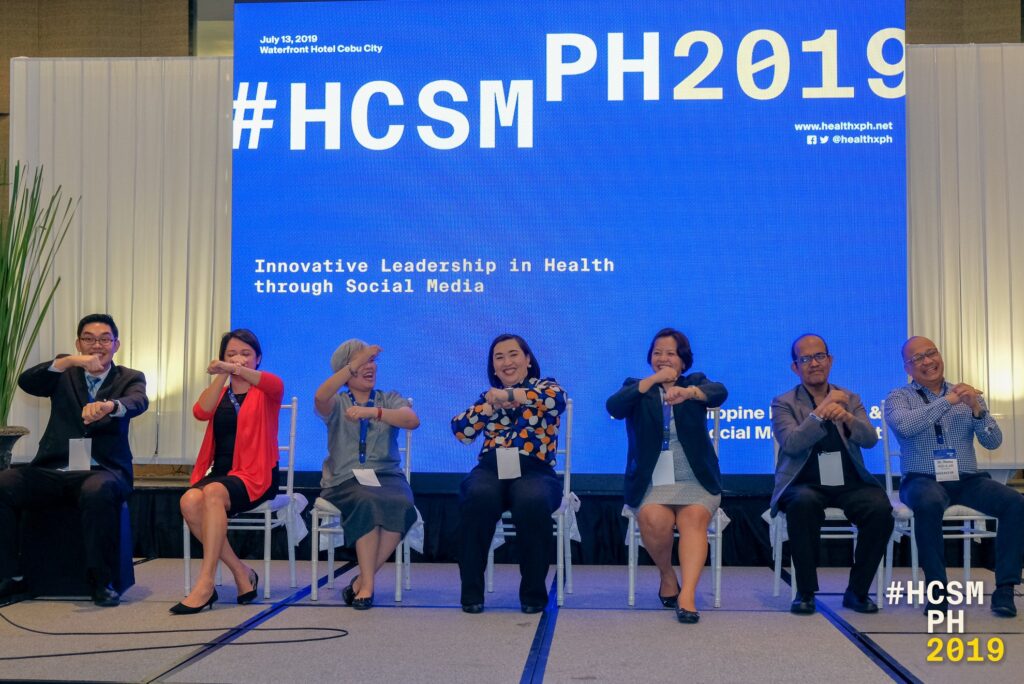
    This was the hardest, as I have many fond memories of Gia. I remember during our first #HealthXPh Healthcare Social Media Summit in Cebu, we were tasked to improvised or at least make a skit, sort of an impromptu entertainment to liven up a session. She just jokingly told us to follow her cheerfully sing, dance and have fun. That was it! it was super fun and we were laughing at ourselves and what we can improvise at her cheerful cajoling!

    Ate Gia has interacted with many of us in person. I lost count of Gia stories and advocacies we share. There’s even more memories that will not fit in this space. So here’s one that immediately connected with what I’m supposed to do this Saturday. I am scheduled to visit USTH Dept of Orthopedics this Saturday for their accreditation. I remember Gia welcoming me to her med school alma mater every time I posted my UST visits on socmed. So as a tribute to my our dear friend Gia, I wore UST’s colors during this accreditation. Go UsTe! says your Maroon friend Ate Gia!

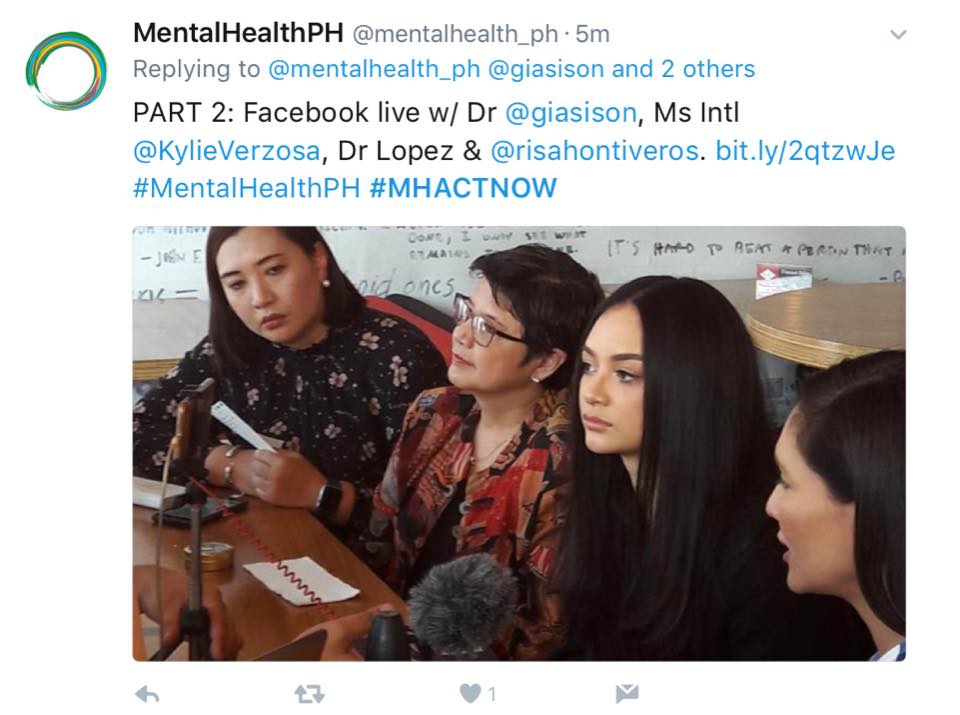
    It is an unspoken understanding amongst the #HealthXPh community that Gia relentlessly pursued a lot of advocacies. She was our soc med “maven”, the most entertaining, a global icon and relentless influencer. She is in every platform imaginable just to pursue her advocacies. No wonder like that “midas touch”, any advocacy she pursue has always been a success. The picture below is one of the rare moments where Gia is “serious” despite being surrounded with celebrities like her. Iris kiddingly posted picture on facebook with the caption “Ang serious ni Gia!” and Jim replied, “fierce!” I guess it shows how serious Ate Gia is with her advocacies.

    Let me ask then,

    T3. What is an advocacy will you take or pursue as influenced by Gia? Why?

    Please join us in this tribute chat. It will be at 9PM Manila time today March 23, 2024. Let’s celebrate Gia’s life with our fondest memories of her and all the advocacies she pursued!

  • Mitigating the “Burn”,  “Out” of  Healthcare Transformation.

    Mitigating the “Burn”, “Out” of Healthcare Transformation.

    Lisa, a nurse’s assistant manager suddenly approached her supervisor and calmly handed her resignation paper. The surprised supervisor led Lisa to their office and immediately asked her, “Why?Something wrong? What happened?” Lisa, close to tears, answered in a terse voice, “I’m tired. As in really tired. You know I love this work and I knew this is my calling, but I can’t seem to finish any significant work on my program and my own people is close to collapsing in disagreement and project stasis. Moreover, I’m having family issues with my frequent over times and missed events. I think, I’m going to take that “remote work” offered to me months ago by a healthcare network.” she continued, as tears swelled in her eyes. Lisa was promoted to her current post barely a year ago. She has a lot of potential and was an achiever in her previous post as a unit head. So this came as a shock to her peers.

    We’ve seen so many Lisa’s in healthcare nowadays. In fact, I’ve been through the same in almost every ladder of my career I felt It was just me resistant or unable to adapt at the rapidly changing and complex healthcare system. Burnout is so common among healthcare workers nowadays that we simply label it as an individual’s inability to cope with the complex and fast changing healthcare, as if it is the healthcare workers fault alone. But, is it? Is it really the individual healthcare worker’s fault?

    Lisa’s case though is more than just a burnout. It was an accumulation of a problem that wasn’t diagnosed and unaddressed early on. It was a systemic challenge and there were telltale signs already before the resignation- project stasis, team collapsing, family concerns etc. Lisa thought that it was she who is the problem and thus felt she needed to leave work.

    While the signs of burnout is quite classic among individual healthcare workers, its telltale sign at the group, institution or organizational level is much much more difficult to identify and mitigate. At such level, the ramification of a burnout are catastrophic. Medical errors could undermine quality patient care resulting to morbidities and mortalities. Thus it is very important to identify and help mitigate burnout at an individual and organizational level. This is the topic of #Healthxph chat this saturday February 10, 2024 9M Manila time.

    The Burnout in Healthcare Teams.

    Thomas Huber in his book “Healthcare Transformation: From Burnout to Balance” identified initiative overload as an avalanche of expectations, demands and innovations that healthcare workers, managers, doctors and nurses face in their daily practice”. Huber also defined group attention deficit (group ADD) as the ” collective inability within a team to maintain focus on core tasks and goals amid constant change and complexity.” Huber posits initiative overload may cause and is interrelated to group ADD, I would also think that initiative overload could cause individual and team burnout.

    T1. What cause initiative overload and group attention deficit in healthcare teams?

    There are interrelated internal and external factors causing initiative overload and group attention deficit in teams. Many of the healthcare teams I’ve been involved in the past suffered partly or in a mix of internal factors such as leadership styles, team culture (resistant to change) and interpersonal relationships. Externally, regulatory changes such the UHC implementation (the intentions of which are truly noble) exerts pressure with redirected health financing and technological implementation (EHR, ugh!) that healthcare organizations frequently change mandate to survive. As healthcare become more patient centric and expectations soared amid technological explosion, revising and implementing new processes added more burden to a struggling healthcare organization.

    T2. What are the signs of initiative overload and group attention deficit in healthcare teams?

    Early signs include team losing focus and unmet objectives or goals. The team progress is static or its programs stalls. Late signs include the team organization and systems disintegrating or collapsing. Signs and symptoms may not be limited to just the healthcare team. The quality of care may also be impacted as medical errors or substandard care may put patients lives in danger.

    T3. How do team leaders mitigate initiative overload and group attention deficit?

    Team leaders should be able identify signs of initiative overload and group ADD. You can’t mitigate something you don’t know. Providing psychological safe space for health workers to thrive is easier said than done. At team or organization level, this is more reflected at providing safe, supportive and transparent working environment. I am currently working on developing my group communication skills like clearly conveying goals and feedbacking to support the many transitions teams experience in healthcare. With the so many healthcare initiatives now, I still struggle at prioritizing goals, as many of these initiatives are deemed necessary by the regulatory agencies and the public in general.

    T4. What are the roles and contribution of team members in mitigating initiative overload and group attention deficit?

    Everything that works against burnout should mitigate initiative overload and group ADD. I found effective personal communication a challenge, but is doubling my effort to develop in this area via continuous learning. Continuous learning also help me adapt to the ever changing demands of healthcare. Self awareness isn’t easy and ironically it takes someone else other than yourself to be “self aware”. I also have an “off and o” relationship with effective prioritization and task management as reflected on the many books on such topic at my shelves. My bottomline here is that whatever I learn as an individual, as healthcare professional, imperfect as the case maybe, I share and teach these to our teams, to mitigate initiative overload, avoid group attention deficit and help transform healthcare without running my team to burn out.

    Image by jcomp on Freepik

  • The Impact of Healthcare Professional’s Sports and Fitness Activities on Personal and Professional Life

    The Impact of Healthcare Professional’s Sports and Fitness Activities on Personal and Professional Life

    In 2010, a third of the world’s population was considered physically inactive. Back then it was estimated that approximately 5 million deaths were attributable to physical inactivity, making it the fourth leading cause of mortality worldwide.

    To address this global issue, a whole society approach consisting of “policy and environmental changes” to make physical activity “an easier choice for leisure and transportation purposes”. An example of this is the recent proliferation of bike lanes in many of our cities. We also need to adjust our social and cultural norms to promote physical activity rather than sedentary lifestyles.

    It is not uncommon that many patients see healthcare professionals as role models for physical activity. Several studies have shown that counseling by physicians and other HCPs, helped patients improve their lifestyles and physical activity levels. The impact of physical activity counseling by healthcare professionals on patients are well documented, while the physical activity levels of healthcare professionals and the its relationship to his or her overall health, is sadly not. This shall be the topic of the #HealthXPh discussion this Dec 2, 2023 9PM Manila time.

    T1. Do you regularly exercise or participate in any sport and fitness activities?

    The American Heart Association recommends, among others, that for adults “at least 150 minutes per week of moderate-intensity aerobic activity or 75 minutes per week of vigorous aerobic activity, or a combination of both, preferably spread throughout the week”. I would assume that us, being healthcare professionals aren’t exempted from these recommendations. So yes I do regularly cross train and play badminton each week mainly for the health benefits and some socialization as well as for my professional practice as a number of my patients play the same sport I do. The 2.5 hours spread across the week isn’t easy as it looks

    T2. What are the barriers to a healthcare professional regularly participating in sports and or fitness activities?

    The lack of time and geographic location of sports facilities in my areas are my greatest barriers to sports. The often unpredictable demands of my field- trauma orthopedics and clinical work often puts my sporting schedule in jeopardy. I got hooked to badminton because the court is just few blocks away from my home and we have a same age group of players committed to playing weekly. I also run and trail bike but I am still afraid of the absence of bike lanes and safe trails as well as the driving behaviour of motorist in our area. I wanted swimming but theres no pool near my area and getting into one may take me thirty plus minutes more. I do long hikes or trek mountains but thats not a regular weekly activity.

    T3. Do sports and fitness activities impact your personal and professional lives?

    Have it not been for sports or physical activity, I probably been obese or dead years ago given the many risk factors I have. My mental wellbeing is also tightly intertwined with sports and all these outdoor activities. I do curse by the pain and aching muscles everyday but I also am in a better disposition to confront my everyday tasks as a healthcare professional. The negative impact is the socializations and binges I have to refuse just top hit the court, or gym.

    Professionally, as an orthopedic surgeon, I have a number of patients coming up to me because “I play the same game they are playing”. These patients thought I do understand, can explain or help them better when it comes to their complaints.

    So there, join #HealthXPh as we discuss the Impact of Healthcare Professional’s Sports and Fitness Activities on Personal and Professional Life via Twitter/X this Dec 2, 2023 9PM Manila Time.

  • Mindfulness Based Interventions For Healthcare Professionals

    Mindfulness Based Interventions For Healthcare Professionals

    Healthcare professionals frequently experience stress and burnout in their work environment. Unaddressed, such stress and burnout sometimes lead to physical and mental health problems, including anxiety, depression, diabetes, fatigue, heart disease, hypertension, insomnia and obesity Burnout amongst HCPs has also been associated with reduced job satisfaction and negative patient outcomes, like reduced patient satisfaction and increased work errors.

    There is a growing evidence suggesting that mindfulness-based interventions (MBIs) can help decrease stress and burnout experienced amongst HCPs, increasing job satisfaction levels and improving an aspect of patient outcomes (Escuriex and Labbe 2011; Irving et al. 2009; Shanafelt et al. 2009).

    Kabat- Zin (1994) defines mindfulness as the quality of awareness that occurs through intentionally focusing on present moment experiences in an accepting and non-judgemental manner. It is fast becoming a popular psychological stress reduction intervention mong HCPs. Mindfulness and Mindfulness Based Interventions (MBIs) “causes a positive shift in perspective and an ability to objectively view one’s life experiences” often referred to as “decentering” MBIs also causes “Reperceiving” which facilitates an individual’s ability to observe their thoughts and feelings with greater clarity.

    In this edition of #HealthXPh chat, I would like to know the practice and impact of mindfulness and mindfulness based interventions among healthcare professionals.

    T1. Do you practice mindfulness or MBIs at work? Why or why not?

    I started practicing mindfulness sometime in 2012, hoping to reduce stress and focus my attention to work. I was introduced to the guided meditation technique in an app called “Headspace”. Of course, I really don’t know if there was any effect on me at all (let alone my work) but I liked the “decentering” periods that took me off my busy schedule.

    T2. What are the benefits or challenges of practicing mindfulness or MBIs at work?

    It took me awhile to notice the impact of practicing mindfulness in my life. The irony of course is that it’s rarely me who did notice, but my family, friends, or colleagues and you guess, patients. Sometimes you barely notice the impact at all. But, I think with MBIs, I was able to stretch my patience, self regulate emotions and empathize in a more compassionate way. In a very busy and hectic work environment, the challenge was finding time and consistently doing mindfulness.

    T3. Would you recommend mindfulness or MBIs to colleagues, friends or even patients?Why or Why not?

    I have recommended MBIs to a number of “stressed” and “burned out” friends and colleagues. I have recommended it to a few patients who asked and were interested. I have yet to fully understand some of its impact on others, but i do get self report of “better, optimistic attitude’, “non judgmental” “anger control” and varying degrees of focused attention.

    Today I am continually practicing mindfulness based meditation- at home, work, during travel/commute and most especially when I am outdoors. It is not exactly a glorious, effortless of a habit, but even with the meditative breathing alone, I can “sense calm” in times when I’m probably burned or something.