Category: Uncategorized

  • Should doctors give their cellphone numbers to their patients?

    In the few years I have been into practice, giving mobile contact number to a certain set of patients improved doctor-patient interactions and reduced overheads in the clinic.  In several provinces here in the Philippines where landlines are nonexistent,  the advent of mobile phones and SMS technologies provided easier and faster communication between physicians and their patients. Those that live in places away from their physician’s clinic reported a reduction in their  unnecessary clinic visits and ER consults. The perceived overall health care cost reduction (especially with the SMS technology ) is felt not only by patients but also by physicians who find it easier to decongest their very busy clinic schedules.

    On the other hand, some doctors has had a bad experience after giving their mobile number to some patients. Abuse of this privilege is related to the patients’ proper education on its use and limitations. Some patients avoid regular clinic visits and rely only on the mobile phone calls or sms messages to communicate with their physicians. Some patients even “shortcuts” and seek immediate attention even if their cases seem to be less emergent than other patients who are physically present in the clinic. The most common complaint among physicians is the total disregard of some patients for the doctor’s private life. It’s not uncommon for physicians to receive non emergent calls or sms messages even on unholy hours.

    A reduction in clinic visits (as a result of this mobile phone communication between physicians and patients) necessarily reflect a reduced clinic income if you are based on a service for fee system . Nobody (not even insurance companies) pays the doctor for any of the phone consults that patients incur. It’s all for the sake of better patient management and reduction of health care cost.

    But education is very crucial in engaging patients into this type of doctor-patient interaction. Reciprocating respect for the doctor’s or the patient personal private life is of paramount importance in such mode of communication. Put into proper use,  giving  your mobile contact number to patients  reduce the over all health care cost. It’s misuse however,  could end up a fruitful patient-doctor relationship.

    So, should  you give your mobile numbers to your patients?Why or why not? Or if you are a patient, would you want your physician ‘s mobile number?Leave your comments here.
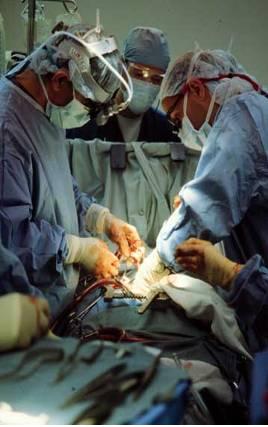
  • Going under a knife to mold a surgeon

    I must admit.I’m a bit compulsive and freaked whenever a close person get sick or will undergo a surgical procedure.

    In our family, I’m the only medically “knowledgeable” person. Being a  the medical guy in a family is a whooping responsibility.

    Yes it is.

    The three or four surgeries my mom and sis went through plus the numerous getting sick moments other family members experiences extract a heavy toll on my stress reserves. Of course my medical training helps, especially in the part where you plaster an emotionless face to keep a cool composure.  Yes,we play the hands of god to heal. For that, we need a calm, fluid, sewing, hands.

    But this time, not even my M.D. training could ever down play such stress on my composure. Ironically, being an MD fine tunes your senses and pushes you towards compulsion to details whenever someone close to you get sick.

    Why? Frankly, I don’t know.

    As one good surgeon mentor told me before..

    “you can never be a real surgeon unless you went through the knife yourself”..

    Then suddenly it dawned on me. The closest thing for me to go under a knife until now,  is for any of my my closest people to go under the knife.  And that for the nth time, my mom would undergo one soon.

    Her past surgeries were all emergencies. The decision making is emergent. The preparation is shorter and the options, close to nil.She’s left to a single emergent choice and then pray she’d wake up outside of the slim “margin for error”.

    So you’d think  cataract surgery is minor. If you have seen how the almost blind, seemingly helpless elderly gropes in the dark while being carried to the OR, you wouldn’t think so. Better preparation, more choices and therefore less risks? Heavens no! With such wider margin for error comes the greater responsibility and risk of not missing any slightest detail. You bought only time to prepare, and therefore reduce the risks. But after that, it is still a surgery. If you miss something on the preop, given the longer preparation you have chances are the results would be a catastrophic guilt for the family. In a closely knit family culture of th e Filipinos, the guilt is pretty much an issue. And If your mom is on the OR table, everything is definitely “major”…

    So never mind if my mom is diabetic with beginning retinopathy. Never mind if she has had 3 major surgeries before and countless other hospital admissions due to some sickness. Never mind she survived all of those. When your face by this same predicament and even on better circumstances, no surgery is still minor. Especially, if it’s your mom is on the receiving end of a surgeon’s knife.

    So I go on with my usual compulsion to detail,  to my often obnoxiously redundant reminders of doing this and that pre-op. To most this might be an overkill. But If I were the patient, I’d love my surgeon to do so the same for me. Take the extra steps of care. That extra effort gives me a little security about my surgeons care for me.

    This is one of the good  insights I learned from my mom’s procedures. You feel for your patients, you put yourself in their situation and imagine the best option your surgeon can offer. I always apply them to my patients. I teach this to my residents. Stressful? Yes it is. But who said the life of a surgeon is easy anyway?

    So thank you mom. For undergoing the knife for me. You help mold a better surgeon.

    (An update: I know my mom’s surgeon don’t read this write up, but I’m all praises for the guy. He didn’t just made an extra effort for my mom. Everything he did was a piece of his class. Masterful. Thank you..)

  • SurgExperience 3.10 Online Surgical Grand Rounds

    SurgExperience, the online surgical grand rounds,  is up already in Scan Man’s Notes. Surgexperience 310 enumerates a plethora of blog post that will definitely raise you brows on issues- from politics of health care to semantics of weird care!

  • Challenging teaching methods in Orthopedics

    In just about a year and half of teaching orthopedic residents, I became interested in finding out which of the more familiar teaching styles works best for our crop of trainees. Honestly, I’m still continually experimenting.

    The unique set up with which medical-surgical training programs thrive is continually changing. With the influx of medical information everyday, a program has to adapt to the call of time and for greater efficiency in preparing this ‘padawans into full pledged surgeons.It is not simple as it seems however since in this unique set up and unlike the usual academic, lab rat experimentation, a mistake might cost someone else life.

    The “Master-Apprentice” method ( probably the more popular and is what I’m familiar with) involves  the “master” (attendings) showing the “apprentice” (residents) his way of doing things (skill) for a certain given situation or problem. Such teacher-student relationship is basically anchored on the assumption that the master is more experienced and adept than apprentice. This is usually an “I teach, you follow” approach to learning. One advantage of this approach is the specific skill imparted by the master to his apprentice for any given orthopedic problem. The obvious disadvantage is its limited applicability and the temptation to spoon feed a resident.

    The rapid influx of modern technology and a deluge scientific evidence paved the way for a more radical, and holistic approach to learning in orthopedics. To the end of my training I was deliberately hammered by mentors to think rather than learn a specific skill, to criticize the validity of any information presented and above all, develop a logical framework for decision making process in any given orthopedic problem. Skills and techniques came in later as my mentors believe that modern technology will techniques change every 5 or so years. I am not an expert on education or teaching styles, but the latter method seems to work best for me. To my understanding, this sort of teaching style fall into the Socratic method of teaching. I’m really not interested into that. What I’m interested now is, if it’ll work too for my residents?

    In every opportunity I have with our residents, be it conferences and pre ops, I focus on continually challenging their minds,  make them think harder, analyze a given situation,  criticize an evidence, present facts properly and then develop a sound decision making process. Obviously, I’m not a fan of residents trying to impress attendings with techniques and implants when he can barely utter a word on the biomechanics involved in those implants. Often, the common excuse for residents (this is awful) is the absence of patients  logistics and financial support common among government hospitals. I actually do not contest that. What we want for residents however, is to incorporate these specifics into his decision making process so he can plan ahead for his patients surgery Lastly, I wanted my residents to empathize with their patients. One common question I throw in during pre-ops is this

    If you we’re the patient, what would you want your surgeon do to you?

     Usually this type of questioning gives the residents an idea as to the best option for the patient!

    All of these teaching style have one thing in come though. To pass on knowledge to the new generation of orthopedic surgeons . In short, were training them to be surgeons not residents.

    Will these teaching style work for our current residents? Personally, I don’t know.Not yet, but perhaps in the future.

  • Social networks and physician bloggers:Why some physicians blog and some others don’t

    In the recent years we’ve seen the rise of physician bloggers and physicians in social networks like Facebook, Tweeter, Multiply, online medical community like Recomed , Linked In or such online conferencing tools like Skype. While what constitute “sociable” data (those that can be shared or not shared on these networks) remains gray and debatable, this rising trend will continue for quite sometime at least in the first world countries I believe.

    Still, some physicians (especially in developing countries) isn’t taking advantage of these social networks and online health care tools to develop their practice and improve patient care. Obviously there are distinct advantage and disadvantages for physicians getting involve on these social networks. The recent suggestion of charging patients for online consults is gaining some discussion. While such non-conventional patient-doctor interaction evokes strong debates on ethical issues, it is putting affront alternative ways of improving health care delivery and efficiency. This is a clear indication that some physicians are opening their minds to “non-conventional” patient-physician interaction to improve health care delivery and practice. Its only a matter of time before ethical issues is resolved and guidelines set forth.

    What about the other physicians who don’t blog or join these social networks? What are the main reasons they don’t capitalize on these social networking sites?On these online health care tools? In third world countries like the Philippines, where technology is generally 10 years behind. Ironically, this is not limited to the more senior generation of physicians. Nowadays, I am not surprised when one colleague whispers the question  “what is an e-mail” or mumble “social networking are for teenagers”. Surprising, but I’m not entirely surprised.

    Here are some of what I gather as the reasons for this lackluster jump into blogging, online health care tools and social networking.

    As I pointed earlier,  in the Philippines, our technology is  generally 10 years behind that of first world counterpart.  Technology adaptation in medicine for developed countries is usually 3 years behind. Thus we know how developing countries delayed  “jump” into these online tools. If ever we have this kind of technology, it is usually limited to private tertiary hospitals in big cities who can afford to provide their staff with a suitable online tools to improve hospital services. Even in such centers, health care technology is limited to improving health care delivery inside the institution rather than collaboration with the online health care community . What interest me though is this.Majority of physicians in this country own a PC, a laptop, top of the line cellphones phones and an internet connection, but only a few capitalize on online health care tools!

    The next most common reason is that physicians are almost always busy attending to their practice and for that matter their patients. Some don’t bother to read mails, journals or online medical feeds much more write something to this effect. Others, believe online networking  tools isn’t useful to them they’d rather spend time in their clinics and on their patients. If you noticed however, that most physicians have leisure time activities, like outings, sports, etc on a regular basis which means time can be allocated if one wants to. Which brings me to the next reason.

    Social networking and online health care tools are not a priority to most physicians. There’s no clear cut benefits and advantages to them and hence the “wait and see attitude“. We physicians are always relying on personal experiences for technology adaptation. Look at what happened to cellphone and sms messaging. Philippines is the world’s texting capital. Slowly physicians adapted to this too. Now it’s common for Filipino physicians to use sms messaging to schedule patients, communicate information and what others.

    Basically that will be the path of social networking to health care professionals in this country. As soon as we experience the clear advantage and use of social networking and online tools, the jump will happen. Until then, we only hope some physicians gain interest and try to advantage of these available tools. Then we will see technology adaptation just like what we saw with the sms invasion.