Blog

  • Townhouse blogging: Will it be for real?

    Here’s a spin of my epic reawakening.

    When I started blogging about health care issues a year ago, I restricted my so called “online journal” to personal nuances that rarely touch anything substantial beyond my own epidermis. It was easier back then, having to simply blurt out personal experiences in order to keep the curiosity of my readers. It was this curiosity that enabled some readers a window into the often chaotic and enigmatic life of medical students, physicians, residents and the tears and glitter that came with our job. Grey’s anatomy, Scrubbs and House MD entertained more viewers rather than offering realistic solutions to health care debacles. But they did succeed in bringing health care personnel into some different form of popularity.

    When I stumbled on foreign medical blogs that espoused critical thinking on health care issues that affect their system, I became deeply interested and got hooked. The realization in my situation was not something of a “late bloomer syndrome” or this epic, numbnut, out of touch physician. It was rather a realization that I too failed to acknowledge (and kept it that way for so long) there’s something screwed with our health care system but I walled in myself saying it wasn’t my business after all. I chose to be blind and remind blind to these imperfections believing I couldn’t effect some change.

    That soon changed as I went by writing about whats happening “inside the system” and reading what “outsiders”(distinction mine) say about my health care system. It’s simply too much to ignore. I couldn’t simply box in myself to personal nuances and leave others to rot for themselves. One could not simply close thy eyes to the worsening health concerns just because we can afford to salvage our privilege arse. Thus, I slowly drifted into an opinionated blogger that criticizes anything and everything thrown on our health care system and our lives as heath care providers.

    Even political ones.

    I may not have the soundest and most elaborate dissertations on health care issues nor I profess to offer the sanest solution to any of these pressing problems. I hope though, that I can create awareness, encourage readers to criticize, to participate in the discussion and to offer reasonable solutions to issues affecting their health. That, is essentially what became of my erstwhile “blog for glamor” attitude-an advocacy.

    Admitting this is rather not easy as it looks. Nitpicking issues that are far more complicated than syndromes in medicines is not an endpoint in solving these issues. Simple solutions to complicated issues are as elusive as finding a cure for cancer. Nonetheless, it is still possible. This is where I pin my hope. That after I put forth health care issues affront, invite a melee of discussions(townhouse discussions of Obama) to such issues, a simplistic and reasonable solution may come out and be implemented to address our most basic health concerns. It takes political will to do that, but that is outside my advocacy at the moment. I leave the politics side to my political readers.

    One thing I can promise my readers though, that I will continually read, challenge, criticize or applaud works that tend to improve our health care situation in general. Of course expect me to give a wrath whenever something else take our stride to down turns. We has had our enough of health care screw up, we need none more to hammer a coffin nail.

    So, shall we start a discussion?

  • Should doctors give their cellphone numbers to their patients?

    In the few years I have been into practice, giving mobile contact number to a certain set of patients improved doctor-patient interactions and reduced overheads in the clinic.  In several provinces here in the Philippines where landlines are nonexistent,  the advent of mobile phones and SMS technologies provided easier and faster communication between physicians and their patients. Those that live in places away from their physician’s clinic reported a reduction in their  unnecessary clinic visits and ER consults. The perceived overall health care cost reduction (especially with the SMS technology ) is felt not only by patients but also by physicians who find it easier to decongest their very busy clinic schedules.

    On the other hand, some doctors has had a bad experience after giving their mobile number to some patients. Abuse of this privilege is related to the patients’ proper education on its use and limitations. Some patients avoid regular clinic visits and rely only on the mobile phone calls or sms messages to communicate with their physicians. Some patients even “shortcuts” and seek immediate attention even if their cases seem to be less emergent than other patients who are physically present in the clinic. The most common complaint among physicians is the total disregard of some patients for the doctor’s private life. It’s not uncommon for physicians to receive non emergent calls or sms messages even on unholy hours.

    A reduction in clinic visits (as a result of this mobile phone communication between physicians and patients) necessarily reflect a reduced clinic income if you are based on a service for fee system . Nobody (not even insurance companies) pays the doctor for any of the phone consults that patients incur. It’s all for the sake of better patient management and reduction of health care cost.

    But education is very crucial in engaging patients into this type of doctor-patient interaction. Reciprocating respect for the doctor’s or the patient personal private life is of paramount importance in such mode of communication. Put into proper use,  giving  your mobile contact number to patients  reduce the over all health care cost. It’s misuse however,  could end up a fruitful patient-doctor relationship.

    So, should  you give your mobile numbers to your patients?Why or why not? Or if you are a patient, would you want your physician ‘s mobile number?Leave your comments here.

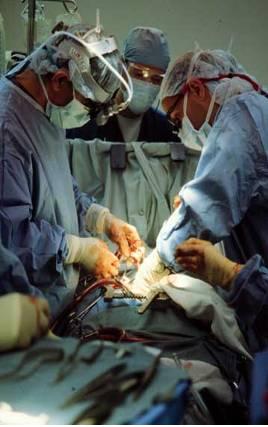
  • Going under a knife to mold a surgeon

    I must admit.I’m a bit compulsive and freaked whenever a close person get sick or will undergo a surgical procedure.

    In our family, I’m the only medically “knowledgeable” person. Being a  the medical guy in a family is a whooping responsibility.

    Yes it is.

    The three or four surgeries my mom and sis went through plus the numerous getting sick moments other family members experiences extract a heavy toll on my stress reserves. Of course my medical training helps, especially in the part where you plaster an emotionless face to keep a cool composure.  Yes,we play the hands of god to heal. For that, we need a calm, fluid, sewing, hands.

    But this time, not even my M.D. training could ever down play such stress on my composure. Ironically, being an MD fine tunes your senses and pushes you towards compulsion to details whenever someone close to you get sick.

    Why? Frankly, I don’t know.

    As one good surgeon mentor told me before..

    “you can never be a real surgeon unless you went through the knife yourself”..

    Then suddenly it dawned on me. The closest thing for me to go under a knife until now,  is for any of my my closest people to go under the knife.  And that for the nth time, my mom would undergo one soon.

    Her past surgeries were all emergencies. The decision making is emergent. The preparation is shorter and the options, close to nil.She’s left to a single emergent choice and then pray she’d wake up outside of the slim “margin for error”.

    So you’d think  cataract surgery is minor. If you have seen how the almost blind, seemingly helpless elderly gropes in the dark while being carried to the OR, you wouldn’t think so. Better preparation, more choices and therefore less risks? Heavens no! With such wider margin for error comes the greater responsibility and risk of not missing any slightest detail. You bought only time to prepare, and therefore reduce the risks. But after that, it is still a surgery. If you miss something on the preop, given the longer preparation you have chances are the results would be a catastrophic guilt for the family. In a closely knit family culture of th e Filipinos, the guilt is pretty much an issue. And If your mom is on the OR table, everything is definitely “major”…

    So never mind if my mom is diabetic with beginning retinopathy. Never mind if she has had 3 major surgeries before and countless other hospital admissions due to some sickness. Never mind she survived all of those. When your face by this same predicament and even on better circumstances, no surgery is still minor. Especially, if it’s your mom is on the receiving end of a surgeon’s knife.

    So I go on with my usual compulsion to detail,  to my often obnoxiously redundant reminders of doing this and that pre-op. To most this might be an overkill. But If I were the patient, I’d love my surgeon to do so the same for me. Take the extra steps of care. That extra effort gives me a little security about my surgeons care for me.

    This is one of the good  insights I learned from my mom’s procedures. You feel for your patients, you put yourself in their situation and imagine the best option your surgeon can offer. I always apply them to my patients. I teach this to my residents. Stressful? Yes it is. But who said the life of a surgeon is easy anyway?

    So thank you mom. For undergoing the knife for me. You help mold a better surgeon.

    (An update: I know my mom’s surgeon don’t read this write up, but I’m all praises for the guy. He didn’t just made an extra effort for my mom. Everything he did was a piece of his class. Masterful. Thank you..)

  • SurgExperience 3.10 Online Surgical Grand Rounds

    SurgExperience, the online surgical grand rounds,  is up already in Scan Man’s Notes. Surgexperience 310 enumerates a plethora of blog post that will definitely raise you brows on issues- from politics of health care to semantics of weird care!

  • Superspecialists or super generalist orthopods?

    This question was thrown to us by one former orthopedic mentor during our lively deli-beer-ations post surgery. The discussion came about as we were thanking them for extending time and effort to do an instructional course on their field of specialty. I added that these orthopedic courses should bring up the level of our general orthopedics training and entice some residents to go on a sub specialty training. I added that this is one of the training  thrust of our department  Commending our training program, he then posted these question to us:

    1. Does your locality need  super specialist orthopedic surgeons? Do we have sufficient orthopedics cases to sustain this super specialist field?
    2. How many (percentages)of these sub specialty cases are done by generalist orthopods themselves?
    3. Having trained in a general orthopedics program, can do these cases even without sub specialty training?

    The question went further into this. “Do you need a super generalist (should mean a generalist with a higher level of skills and expertise on all areas of orthopedics) or a super specialist (capable of doing rare cases but couldn’t do other general orthopedic surgeries) orthopedic surgeons?

    The super generalist is commonly a product of an institution with a multi specialty orthopedics in place. The various sub specialty rotation gave these residents an “edge” receiving a “higher” level of training in all orthopedic sub specialties. Some institutions only have a few of these sub specialty training and thus a general orthopedic can only gain more skills by training elsewhere where a specific sub specialty training is available.

    For sure, we wanted our program to produce better orthopedic surgeons, a super generalist in a sense. A generalist with a higher and broad level of skills not just in one orthopedic sub specialty but in all other as well.To do that, we need to complement our teaching staff with orthopedic sub specialist, a kind of irony but necessary step towards achieving this goal.