Tag: Learning & Development

Learning and development (L&D) is a function within an organization that is responsible for empowering employees’ growth and developing their knowledge, skills, and capabilities to drive better provisions of healthcare.

  • Web 2.0 tools and its (possible) use in medicine

    The application of Web 2.0 to medicine spawned the term Health 2.0 and Medicine 2.0. While the use of web 2.0 tools in medicine is quite unclear, recent research on internet usage among one population is revealing. One third of the American population said they’ve used the internet for queries related to medicine and healthcare. Also, some 250,000 physicians utilized web 2.0 tools for their practice. These usage data is changing the medical environment and web 2.0 tools is taking a large role in it.

    While most physicians barely scratched the surface of web 2.0 use some of us may have been using these web 2.0 tools unknowingly. The opportunity for clinical use is yet largely untouched for some reason. Others are afraid of losing the so called “personal touch” between physicians and patients – a clear misnomer because web 2.0 will probably never replace that set up. Most physicians simply don’t have the desire to.

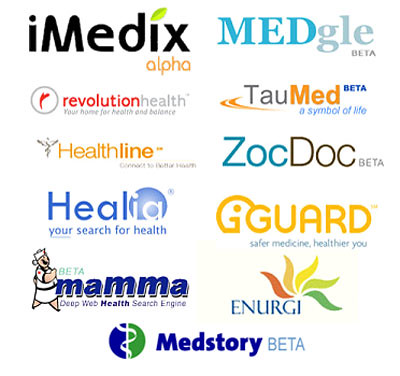
    Here are some of the web 2.0 tools that you might want checking out for its use on our practice.

    Wiki (Medical Wiki e. g. Ask DrWiki)
    An online collaboration of health care professionals who publish their articles, reviews and information to help end users (could be MDs or patients or both) about a certain health concern.

    Blogs
    Like this blog, is an online diary that chronicles ideas, discuss issues and publish viewpoints of a medical blogger. Publishing is almost immediate and venues for reader comments and reactions is encouraged.

    RSS (Really Simple Syndication)
    A method of rapidly receiving tidbits, summaries and news via subscription to a hundred interest sites. Acting like a filter and fine tuning the data received to where your interest lies.
    You need an RSS reader to read all these online subscription of yours.

    Podcast
    Another name for audio blogging. Recorded voice (using mainstream media) further broaden the reach and collaboration between different end users.

    Social Bookmarking
    Blogs, podcast or websites can be submitted to a social bookmarking sites like Digg to increase the likelihood of it being stumbled upon by same interest web users.

    Social Networking (e.g. Wellsphere)
    Sites for online collaboration between physicians is growing more and more with social networking. It makes communication and collaboration between like minded individual, such as physicians to create their online presence and pursue advocacies.

    Here is another example (taken from Health 2.0 Wiki) of web 2.0 use in medicine that is documented in literature.

    Purpose Description Case example in academic literature Users
    Staying informed Used to stay informed of latest developments in a particular field RSS, Podcasts and search tools[7] All (medical professionals and public)
    Medical education Use for professional development for doctors, and public health promotion for by public health professionals and the general public How podcasts can be used on the move to increase total available educational time [8] or the many applications of these tools to public health [9] All (medical professionals and public)
    Collaboration and practice Web 2.0 tools use in daily practice for medical professionals to find information and make decisions Google searches revealed the correct diagnosis in 15 out of 26 cases (58%, 95% confidence interval 38% to 77%) in a 2005 study[10] Doctors, Nurses
    Managing a particular disease Patients who use search tools to find out information about a particular condition Shown that patients have different patterns of usage depending on if they are newly diagnosed or managing a severe long-term illness. Long-term patients are more likely to connect to a community in Health 2.0[11] Public

    While web 2.0 and health 2.0 is here, its use is sometimes hampered because of issues which to some extent, web 2.0 is trying to overcome. The danger of inaccurate information and the loss of control over information tops this concern. The safety of online information is a constant subject of debates and research. But as web 2.0 evolve, perhaps the solution to these “problems” maybe apparent.
  • Obstacle to Health 2.0 in the developing nations

    A few minutes after finishing my previous post, I stumbled at one article citing the difficulties of physicians  in the developing nations in taking advantage of the internet to improve health care delivery. To quote one response from this article in an EBM Journal.

    All of this science sounds really good, doctor, but I practice in a small town where I see very poor patients. We don’t have computers and medical libraries, you know. In fact, we sometimes don’t even have electricity.


    Admittingly, the solution to this “obstacle” far extend beyond health care policies alone. Majority of our patients don’t have internet connectivity yes, but physicians should get connected and get updates. Recent studies showed physicians beginning to harness (emails, journal searches) the internet’s potential. and online collaboration between physicians has improved the quality of care we give to our patients.Maybe we can harness those potentials now.

    Other opportunities may come in too, like harnessing the powers of mobile connectivity in health since there are far more mobile phones penetratng our population than computers and internet.

    My point is this; Our poor patients may have an excuse for not harnessing the powers of internet or web 2.0. but as physicians, we don’t have that excuse. We knew better and should strive to improve our health care delivery services. At least, in my opinion, that’s how I put a mindset on harnessing the powers of web 2.0 for health.

  • Web and health 2.0 : What is web 2.0 to us physicians?

    I’ve been asked several times by colleagues and friends alike what do I get from blogging and joining social networks as a physician-surgeon. My honest to goodness answer was,

    I’m dabbling at web 2.0 tools to enhance my practice, my delivery of health care and sometimes, earn from sponsored ads.

    I get blank stares when I mentioned web 2.0 but the words “earn” seem to catch astute ears. I usually don’t get enough talking time to expound on this, especially with the web 2.0 and health 2.0 part. Thus, I am making a series of posts to elucidate what web 2.0 is to us physicians and how is it changing the medical practice and our delivery of health care. (Forget the earning part, the web is replete with how-tos on this topic)

    I must warn physicians reading these series of posts, that even if I try to be as concise and simple in my explanations, a few thoughts may sound technical to those unfamiliar with the digital lingo. Try copying the word or phrase that you don’t understand and place it in the Google search bar and click search. You will be surprised by the heaps of explanations and answers to your queries.

    I understand that despite the increasing trend of physicians using the internet, most physicians here in my country knew a little beyond emails, online medical and entertainment news (please correct me if I’m wrong here). A few, more engaging doctors knew about the powers of Google-ing. But learning web 2.0 (and its tools) to enhance your practice will need a lot more than line reading and the “I’m always busy I don’t have time for this” attitude most physicians here succumbed. If this is your learning perspective, I suggest you don’t bother reading this post and return to your usual mode of practice and lose an opportunity to enhance your delivery of health care. You wouldn’t even know what you’ve missed anyway.

    Going back, here are the basic questions I’ll try to answer:

    1. Whats web 2.0 anyway?
    2. How is it different from web 1.0?
    3. What are those web 2.0 tools you are talking about?
    4. Whats web 2.0 to medicine and how is it changing the medscape?
    5. Is it here to stay or will there be a web 3.0 and so on?

    I’ll answer the first two question in this post and the other questions in my succeeding posts related to web and health 2.0

    Web 2.0 is a concept (or a tool) describing the use of internet (world wide web) and web designs (or platforms) to ENHANCE creativity, communication, collaboration, sharing, security and functionality of the internet. I also must add that this concept imply that such tools will be used to attain certain goals that may differ (or converge) to many individuals or groups taking advantage of it. Improvement of health care delivery is just one of it. Here’s a sideshow of what web 2.0 is all about.

    Web 2.0

    View more presentations from satyajeet_02. (tags: internet 2.o)

    Ironically, web 1.0 ‘s definition is an offshoot of web 2.0- to contrast what web 2.0 is all about. But the salient points are ; web 1.0 is static, not interactive and is proprietary. Note the direct contrast of these two concepts. Nonetheless, it is safe to say web 2.0 is an evolutionary cousin ( or revolution) of web 1.0 in the net.

    Take note of the words internet collaboration, improvement and user empowerment. Democratization of the net is another personality of this concept. To some these are the distinction of web 2.0 to web 1.0. And that’s where the powers of web 2.0 lies. It is within our capabilities as physicians to grab this tool and opportunity to improve our practice and delivery of health care.

    This answer the queries what physicians can do with their online: No it’s not just about advertising your profiles and online directories. It’s not just emails and one way communication. It’s not even just the act of putting up a website for your practice and doing nothing about it. More than that,Web 2.0 tools allows us better collaboration, communication, feedback (between patients and physicians for example) and improvement of health services. And here in the Philippines, we haven’t taken off from web 1.0 yet!

    I’ll discus web 2.0 tools in my subsequent posts.

    (For additional readings on web 2.0 read the web 2.0 wiki or O’Reilly Media’s article on web 2.0. For articles regarding internet usage of physicians, kindly read the results of this research)

  • Ebola Virus Reston Strain in hogs: Should we be alarmed?

    Frankly, to some degree, I am.

    Had it not been for an item in one newspaper and Google Health Maps, I would have left this story to the epidemiologist and infectious disease experts and enjoy Pacquiao’s glamorous boxing stints. But this news pinched an area of my curiosity.

    Pigs in three Philippine hog farms have been found infected with the Ebola Reston virus, a strain not harmful to humans, officials say.-9News Australia


    This strain of Ebola virus (Reston) was previously known to infect monkeys and Department of Agriculture secretary Arthur Yap assured Filipinos this Ebola strain is non pathogenic to humans.

    However, following the news items “anchored” on the Philippines’ Google health map location, suggest that much is still unknown of this Ebola strain.

    1. Where is the reservoir host of this strain? The reservoir host has not been identified since it was discovered more than a decade ago.
    2. Why is there a cross specie infection now? It was thought to be affecting monkeys before and now it was documented to infect hogs!
    3. Years ago, some people tested positive for antibodies (seroconversion) against this strain of Ebola. They did not fell ill however. No explanations for this yet.
    4. This Ebola Reston Virus was detected from hogs coming from the Philippines and exported to US. The implication was, our DA and DOH did not detect the “recurrence?” of this strain until their US counterparts did!
    5. How come the US inspected and tested hogs from the Philippines when it was known to infect monkeys before? Is this routine testing protocol or were they suspecting something else???

    I can come up more with more scary questions but the bottom line is- we should be vigilant and take precautionary measures against this “potential” threat. While we don’t want to pull down the market of our hog industry because of bad publicity, we cannot let our guard off for some potentially unknown enemy. It has been recurring for decades, who knows what happened in between those decades.

    Update: The following news from The Wall Street Journal and ABS CBN News tell us that it was as early as oct 30, 2008 where the ebola virus was found but announcement by DA was only made Dec 10,2008. 

  • Mandatory Return of Service for Professionals: Closing the Pandora’s Box?

    In an unprecedented and controversial move, the UP College of Medicine (the state’s subsidized premier medical school) through its UPCM College Council,  approved overwhelmingly the proposed Return Service Mechanism for its UPCM graduates during the council’s March 11, 2008 meeting. (See the details of this new UP Medicine Admission Policy here).

     UP College of Medicine main entrance. Legacies that lived beyond hundred years..

    Simply put, starting academic year 2009-2010, all freshman medical students who enter the halls of this premier medical institution, will be required a three (3) year return of service after they graduate before they will be allowed to go out of the country for training, further studies or employment. This is way ahead of that House Bill 4580 authored by Rep. Ignacio T. Arroyo (5th District, Negros Occidental)  that if approved into law, will require all Filipino professionals to render service for at least 2 years before they can go abroad.

    In my previous post here, I was trying to determine if there was indeed a shortage of physicians here in the Philippines. The scary answer is yes we have communities who have not seen any physician at all. The average density estimates of 1.2 physicians per 1000 Filipinos (WHO 2002) or 1.2 physicians per 10,000 Filipinos (ADB 1998) is still among the lowest in Asia and globally.

    The debate on MD brain drain and MD-RNs going abroad goes protracted and ironically, is still unresolved or acted upon by major stakeholders. Majority of the Filipinos still suffer from the lack of physicians especially in the provinces. This fact still hounds us all and especially the physicians.

    Is the this move by UP College of Medicine, the government’s premier medical school and that of HB 4580 of trying to stop this “exodus” and lack of physicians by requiring doctors and professionals to render service to the countrymen a valid one?

    Will the provisions of these policies offer solutions to this half a century of professionals leaving our country?

    If you think so, maybe you can elucidate some more. If you think not, please say so and elaborate on your answers. In fact, you can give recommendations and suggestion to these policies and laws so your opinion(s) will be read!

    That will be the topic for the 17th edition of The Blog RoundsMandatory Return of Service for Professionals: Closing the Pandora’s Box?

    Submit your link and title to my email kokegulper(at)yahoo(dot)com or leave a link by commenting to this post!Deadline for blog articles will be on Tuesday August 26, 2008.