Tag: Learning & Development

Learning and development (L&D) is a function within an organization that is responsible for empowering employees’ growth and developing their knowledge, skills, and capabilities to drive better provisions of healthcare.

  • Diamonds in the Rough:National Search for Young Doctors in the Community Setting

    It is a search for unsung heroes in the medical field today: those who choose to serve the ones who need it most, by immersing themselves in the depressed, neglected, under-served communities in the country.

    Of unsung heroes we have a thousand of them…Of Filipino doctors serving the community, they are our “Diamonds in the Rough”.

    Honoring these unsung heroes does not only give due credit to the “doctor behind the rough”. More importantly, it gives glory to the very essence to which these doctors chose to live their lives- serving the often neglected communities in the Philippines.

    That’s why on its 75th year, the Phi Kappa Mu Fraternity, in its search for EXCELLENCE in the realm of community service launches “Diamonds in the Rough”, the national search for outstanding young community doctors in the community setting.

    Here is an excerpt of the mechanics, lifted with permission from the Diamonds in the Rough National Search website. (You can view all the details of the search from this website.)

    MECHANICS

    Award Categories
    There are three major Award Categories: Luzon, Visayas and Mindanao. These categories correspond to geographical locations of physicians who can be in communities with substandard qualities of life and very minimal resources for health care throughout the Philippines.

    Eligibility
    In order to be eligible for the award, the nominee must:

    1. Be a Filipino citizen 40 years old and below
    2. Be a duly licensed medical practitioner under the Professional Regulatory Commission of the Philippines
    3. Have actively served in the under-served community for which he is nominated for at least five (5) years
    4. Be currently practicing in the said community
    5. Not have been recognized by any award-giving body with similar objectives
    6. Not have been charged with any misconduct involving moral turpitude
    7. Not be related to any members of the Phi Kappa Mu or its partner agencies up to the 2nd degree

    Nomination Process
    Any individual, NGO, LGU or any organization based in the Philippines is eligible to nominate. Nominations may be made with or without the consent of the nominee. Requirements for nomination are as follows:

    1. Duly accomplished official application form. This form is available for download in http://diamondsintherough.ph.
    2. Pertinent documents including but not limited to testimonials, citations, commendations and other documents in support of the nominee.
    3. Written profile of the community in terms of location, demographics, and other information regarding the community.

    SENDING ENTRIES
    All nominations are to be submitted to the DITR Screening Committee, addressed to the DITR Secretariat. You can also submit your nominations to the Salamat Dok Current Affairs and News Office.

    Alvin Anthony P. Anastacio
    Unit 35 F2 One Adriatico Place
    Adriatico St. Ermita, Manila
    Philippines

    Salamat Dok: Current Affairs and News Office, Ground Floor,
    ABS-CBN Sgt. Esguerra Corner,
    Mother Ignacia Avenue, Quezon City

    Nominations can be directly sent to info[at]diamondsintherough[dot]ph or diamondsintheroughsearch[at]gmail[dot]com, with all pertinent documents scanned.

    All entries must be received by Phi Kappa Mu in the UP College of Medicine or any of our partner agencies on or before November 15, 2008.

    FINALISTS and WINNERS
    Diamonds in the Rough will have 9 finalists (three each from Luzon, Visayas, and Mindanao) selected by the DITR Screening Committee. The 9 finalists will be elevated to the Final Evaluation Committee who will select three winners of the Diamonds in the Rough Search (one from Luzon, Visayas and Mindanao).

    FINAL EVALUATION COMMITTEE
    The DITR Final Evaluation Committee will be composed of multi-sectoral representatives selected by the Phi Kappa Mu and its partner agencies.

    The finalists would be subjected to an intensive evaluation by the DITR Final Evaluation committee. This may involve on-site evaluation, gathering of testimonials, data gathering, authentication and evaluation of submitted documents. The final evaluation committee to ensure the impartial selection of the 3 Diamonds in the Rough winners.

    CRITERIA
    The Diamonds in the Rough criteria focuses on the doctor and his community.

    I.The doctor should be a man of integrity committed to selfless service to others in need. He should have made a significant impact on his community through his passion and dedication. He should be an effective leader and community organizer.

    II.The community will be evaluated based on its location, accessibility, and the availability of medical resources. The community should also have worked hand in hand with the doctor in initiating progressive change in the health and well-being of their shared community.

    The DITR Final Evaluation Committee will actively interpret the principles above and determine the final criteria for the final three winners of the Diamonds in the Rough.

    PRIZES and AWARDING
    Each of the 3 winners will receive PhP100,000 worth of total prizes. The community of the DITR winner will also receive PhP100,000 worth of prizes, to go to projects supported by the DITR winner. Awarding will be held on December of 2008.

    For Questions and Inquiries, you can contact the DITR Secretariat, Alvin Anastacio through e-mail info[at]diamondsintherough[dot]ph or through gmail[at] diamondsintheroughsearch[at]mail[dot]com or mobile phone 09162156336.
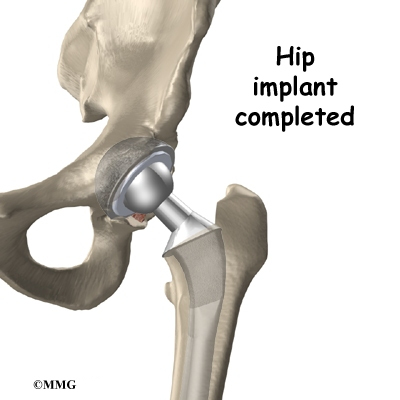
  • Hip or Knee surgery have excellent long term outcomes

    We knew these long term symptomatic relief (quality of life) offered by total joints surgery for quite sometime already. But why isn’t it given as an option to osteoarthritic patients 65 years old and above is not clear either.

    This study (” Joint Replacement Surgery in Elderly Patients With Severe Osteoarthritis of the Hip or Knee“) by doctors at Beth Israel Deaconess Medical Center in Boston, Massachusetts and published in the Archives of Internal Medicine (Vol. 168 No. 13, July 14, 2008) said so in their conclusion.

    Conclusions: Elderly patients who had hip or knee replacements for severe OA took several weeks to recover but experienced excellent long-term outcomes. Physicians often do not discuss joint replacement surgery with elderly patients who might benefit.

    So how many physicians actually give the option of Hip or Knee Surgery to patients with severe osteoarthritis?Or even discuss the option to their patients? Is it the cost?The knowledge about the surgery?Outcomes?

    If ever you need information on this, the author will freely discuss this options with you, their physicians.

  • Leveling the playing field on badminton courts and professional practice

    I’ve been playing badminton for almost a year now but never enjoyed any other sport as much as I enjoyed whacking shuttle cocks now. I have long accepted the limits of my innate athletic ability. But when my fitness level went off scale after med school and residency, I went berserk in panic search for a sport that would trim down excess calories.

    “I am awfully fat. Period.”

    I jumped at any sport that came my way- swimming, mountain biking, marathon, volleyball and even basketball, to name a few. I dabbled at a sport for some time and then moved on to another if it bored me to death already. But when my nephews invited me to a badminton game in our backyard, my affair with rackets and shuttle cocks never stopped since then.

    ” I gotta have one of those “Yonex” MP racket, promise!”

    I got hooked and seriously believed that being “geeky” on badminton would somehow improve my nominal athletic skills to competitive level and burn fats at the same time.

    I almost thought this was “MI 4”.

    I started training– albeit non formally, with the help of my nephews and friends. I read books, searched the net, watched training videos, international matches, and then applied what I saw on and off court. I stalked coaches, watched former national players’ matches, and asked endless questions to athletes often shunned as an obnoxious behavior.

    “That was an awesome cross court shot don’t you think?”

    Whilst a beginner, I joined matches and insisted taking on better skilled opponents. Obviously my ass got whipped left and right. I lost count of the times I was floored on court chasing shuttle cocks and losing balance. Most veteran players laugh at my mistakes. Some ridicule me at my clumsiness and shun off my competitive attitude on court.

    Like Rudy in Rudy.

    But I was serious not just on winning but also on improving my game and losing some extra calories. I took notes of my mistakes, applied new skills whenever possible and consistently improved tactics through drills and training. Results were barely tangible at first.

    Until, I first won my class E championships.

    Almost a year passed and I have improved a lot from where I started. Everyone seem to notice the “fit body” and weight loss (~30lbs) I incurred from playing this sport almost daily. Modesty aside, I learned a number of skills, improved my stamina and then pushed the limits of my athletic ability to levels I only dreamed of before. Given an equally skilled partner in a doubles match, I can deliver my previous court “tormentors” a smash past their speed limits or give them hard time winning matches against me. Interestingly, you gain more friends with more skills you learned!

    At the bottom of this improvement is the commitment to learn, accept, improve, train and apply new skills to beat your handicap and win friends. Have I started this type of attitude and training 30 years ago, I would have given Lin Dan a run for his spot in badminton world rankings!

    But that is purely speculative I guess. Thirty years later.

    >Professional practice in the business of medicine is analogous to learning and improving in a new sport, like badminton. Like it or not, when you are a newbie entering a competitive medical or surgical practice, chances are, you’d eat dust and be shunned away by “colleagues” for dabbling at “their craft”.

    Or crap.

    Medical practice is basically of skills and competition. Clinical and patients skills and the competition to earn one’s practice. You gotta learn some skills and improve on it. And almost always, it’s lonely being a newbie in the business of medicine.

    The field is not without “he-who-went-there-first” type of people, who have been comfortable in their share of patients’ pie, but forgot to acknowledge the need for “new blood” to be infused in the learning process. These ‘colleagues” will feel threatened by your aggressiveness and learning skills. Either they whip your ass or shun you away from “the practice”. Worst, you will be shot at first sight, and will offer you lots of excuses to do so.

    In one interview I attended, an interviewer admonished a training program applicant for signifying his intention of practicing in the same place where this guru is comfortably practicing. On surface, the excuse was “it’s too crowded”. Yet, on deeper prodding you’d find no clear evidence that it is in fact the status quo. The patient to specialist ratio is still wanting and that new skills have to be learned for specific type of diseases. This is where the newbie trainee is hoping to fit in. He has new skills, an updated learning, a conscious effort to improve and a love for the community. In my opinion that’s all he need to be in this “game” of competitive medical practice.

    My take on this and my advice for newbies ? Learn your craft, improve your skills, create a market for your expertise, stay on the side of the patient, and just ignore the rants thrown at you. I’m pretty sure that later, when you have grasp firmly on new found skills and niche, you’ll never be threatened by anybody on account of “overcrowding”.

    And maybe shame them all by extend help to newbies entering into the practice.