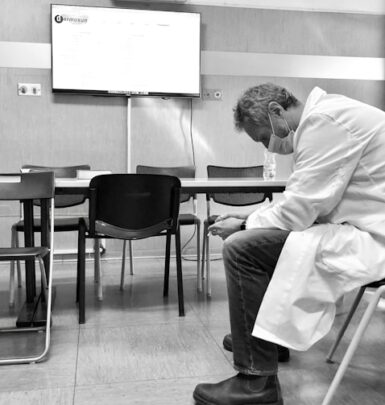
Healthcare change does not always begin with large reforms. Sometimes it starts when someone close to a problem becomes curious enough to understand it better and improve the part of the system within reach.
“If there is one thing that will definitely change about our complex healthcare system, practices and behaviors are rarely among the easiest.”
One question I often hear whenever I talk about creating a learning organization in healthcare is:
“I like these ideas about change, but what can I do if many people in my organization do not embrace that same philosophy?”
I usually think about stories like Rina’s.
Rina was a new resident physician helping manage patients with more senior residents in one healthcare institution.
Still learning the details of cast application and monitoring, she was asked by her senior resident to apply a cast to a young patient who sustained a forearm fracture after a fall.
Before leaving to respond to an emergency call, her senior advised her to review proper cast application and monitoring techniques.
Rina proceeded with what she knew — textbook knowledge, guidance from seniors, and the limited experience of seeing the procedure done before.
She finished the cast and sent the patient home after giving instructions about monitoring.
Less than two hours later, the patient returned to the emergency room crying in pain.
“My arm hurts. It feels like it is being squeezed and twisted.”
Suspecting that the cast was too tight, Rina immediately opened the cast.
The patient felt relief.
But Rina was shaken.
She tried to do what was right for the patient and still ended up facing a possible complication.
During a mentoring discussion with an attending consultant, Rina brought up her experience.
“Is there a certain level of competency a resident needs before being allowed to apply casts and prevent these complications?”
The consultant answered:
“If you mean how many times a resident needs to apply a cast before becoming competent, there is no exact number.”
Complications may be uncommon, but prevention depends on something harder to measure — judgment, awareness, and knowing which signs should make you concerned.
Rina started asking more questions.
She talked to ward nurses about how they monitored patients with casts.
One nurse explained that they documented observations but were not always certain which findings required immediate referral.
She talked to patients and their families.
One parent understood that increasing pain was a warning sign but explained that living far from the hospital made returning quickly difficult.
A simple complication was no longer just about cast technique.
It involved training, communication, systems, access, and patient education.
Rina eventually started studying ways to improve cast monitoring and prevent similar problems.
She worried that because these complications were considered uncommon, her experience and research might eventually become another story people talked about but never acted on.
I smiled.
“Just keep doing what you are doing,” I told her.
“Maybe your work will change policies and practices. Maybe it won’t. But at least you will have improved something for yourself, your patients, and then some.”
That is usually my answer when people ask:
“What can I do when my organization does not embrace change?”
Do what Rina did.
Start with a problem close enough for you to understand.
Ask the people involved.
Study what is actually happening.
Try to make that part of the system better.
Maybe it changes a larger system, maybe it does not. But it changes how we understand and care for the people in front of us.
Sometimes, that is where change starts — with someone deciding a problem is worth understanding better.


 By
By