Tag: learning

  • Addressing the Healthcare Learning Transfer Gap Post Pandemic

    Addressing the Healthcare Learning Transfer Gap Post Pandemic

    It’s not uncommon to hear healthcare professionals complain about work performance of new graduates who were recently integrated into the clinics, hospitals and the healthcare system. We heard reports of medical errors and patient safety concerns because allegedly, the newly integrated grads still lacked skills and competencies but were “hurriedly” hired to work in a severely undermanned healthcare system. The three years of pandemic was blamed for the learning disruption. Learning transfer though isn’t only affected by the healthcare providers competency but also by the workplace environment.

    While these allegations needs to be properly validated and documented, it is important that we bring this “elephant in the room” up front and find solutions, as patient safety is a top priority for healthcare providers. The healthcare academe and our healthcare system seem to have forgotten this learning “gap” in the midst of addressing other post pandemic healthcare system problems. This will be the topic of the #HealthXPh chat this Saturday April 15, 2023 9PM Manila time. Here are the chat guide questions:

    T1. Have you encountered patient safety issues lately that might be attributable to the lack of healthcare professional competency or an unsafe workplace environment?

    T2. As a healthcare professional/ student, how did you react to such patient safety issue?

    T3. What recommendations can you give to our healthcare educational system and our work environment to address this patient safety issue?

    To join the #HealthXPh chat, just append your answers to the three guide questions above between 9-10PM Manila time this Saturday April 15, 2023. See you there!

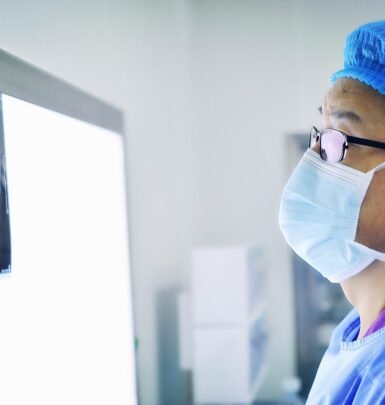
    Image by Drazen Zigic on Freepik

  • Future of Healthcare Work and Learning

    Future of Healthcare Work and Learning

    It was never easy for healthcare professionals shifting to online learning and hybrid work during the pandemic. I never imagined though, that going back to pre pandemic set up, is equally challenging.

    I am one of those who wish we’d go back to pre pandemic healthcare work and learning once this pandemic is over. Alas, we’re two (2) and a half pandemic years and the end isn’t in the horizon. Something tells me we ain’t going back to where we used to be, no matter how hard we try.

    When our COVID cases went down in one institution for example, we tried face to face conferences again. Our OPD also resumed (albeit slower) seeing patients. Our OR also slowly reverted back to its old routine. Despite all the requisite precautions and vaccinations, some medical staff contracted COVID-19 two weeks into the resumption, prompting us to go back to online learning and hybrid work again.

    Trying to go back to an old routine should be easy, I thought. I’m one of those who once profess adaptability and flexibility as my strongest point. But the two years of traumatic, pandemic struggle probably ingrained an aversion to change in many of us, me included. And I am discovering how hard it is to go back now. Is it the design? Strategy of going back? Perhaps, before we can strategize going back or adapt we need to forecast what part of healthcare work and learning is here to stay, fade away or will be in demand in the future.

    Share your thoughts on the Future of Healthcare Work and Learning by joining the #HealthXPh tweetchat this Saturday July 23, 2022 9:00 PM Manila time. The guide questions are as follow:

    • T1. What will FUTURE healthcare work and learning HAVE that doesn’t exist today?
    • T2. What will FUTURE healthcare work and learning NOT HAVE that is common today?
    • T3 Is there a specific part of healthcare work and learning that will become more common in the future? ( e.g Zoom/ Hybrid learning, conferences, remote guided surgeries?)
    • T4. Where should healthcare look for inspiration in adapting to the future healthcare work and learning?

    (Note: This post is inspired by the #HCLDR chat on Future of Healthcare Facilities)

    Image by Freepik

  • Rebuilding social connections, learning and finding purpose in the new, “post pandemic normal”.

    Rebuilding social connections, learning and finding purpose in the new, “post pandemic normal”.

    Two days ago we operated a fully vaccinated, asymptomatic RT-PCR + patient for a totally unrelated injury. Two years ago, treating a SARS COV 2 (+) patient is too risky and dangerous. Treatment is necessarily delayed until patient is deemed non infective. That could take weeks or even a month if the patient luckily survives COVID. Now, with vaccination, precautionary protocols and PPEs, we can proceed with the treatment with little delay. And I felt rather dull, apprehensive and weird. After struggling to adapt to this pandemic, I am once again witnessing another disruption. One that more is desirable but not necessarily easier, than its predecessor- adapting to the new, post pandemic normal.

    We all bear witness to our struggles in the new pandemic normal. We all prosletized that the “new pandemic normal” of COVID 19 restrictions will be the “new normal”. We painstakingly used and adapted to digital and electronic communications to carry us through this pandemic. When vaccines and safety protocols came minimizing the risks of COVID among us, we’re now looking at a face to face interactions soon. And there’s anything but the “old normal” in what I saw. A blended lecture, a new weird looking OR with all spacesuits, or dining with friends al fresco (but wet by the heavy rains), I felt weird. And now, I have this conundrum (albeit a lot desirable than its pandemic predecessor) on how to adapt to this emerging, post pandemic normal.

    COVID-19 severely disrupted the way we connect socially. Almost all of our social connections were built and maintained digitally during the pandemic. “I lost a few good people this pandemic and all I can say is RIP over the internet” said Dr. M. “That’s too damn shameful for my standards”! Now that we are emerging from this pandemic, I’m still apprehensive about physically, socially mingling even with my family. The mask-less, physical hugging I’m used too is a bit awkward now. I still avoid family dinners for fear of spreading the virus!

    T1. How will you rebuild social connections in the new post pandemic normal?

    As a distance education student, I am very much comfortable teaching and learning “from a distance” . Yet, I miss giving out face to face talks and the “hands on” teaching at the clinics. At a recent training workshop, I had this awkward dilemma – I don’t know how to talk to a camera and a face to face audience at the same time. I ended up talking to myself.

    T2. How will you continue teaching and learning in the new post pandemic normal?

    “I’m thinking about retiring early or maybe another less risky career” said one colleague. “I lost my purpose right there when I was gasping for air at the COVID ICU” he lamented. I can empathize with him. My mom died not of COVID but her healthcare needs was severely limited by this pandemic. And I not once blamed my inability to provide all her needs even if I am busy taking care of others. That, tested my career purpose. Finding your purpose in the new post pandemic normal would be difficult for many of us.

    T3. How will find or continue your purpose in the new post pandemic normal?

    Experiencing how we lived through this pandemic and hopefully soon, a post pandemic world, I had so many questions and realizations. In all these, adaptation has been our greatest ally in rebuilding in the post pandemic normal. The concept is easy to understand but is much harder to implement. This will be the topic of the #HealthXPh tweetchat this March 12, 2022, 9PM Manila time. Join us and share your thoughts!

    Image by pressfoto on Freepik

  • How Do We Measure Learning in the New Normal?

    There’s no denying learning changed a lot this COVID-19 pandemic. The impact of this pandemic has gone deep and wide into our everyday life. We never had “enough” time to contemplate a learning strategy and measurement for our personal, career and academic life. As one doctor academician said:

    “the struggle is real and frustrations borders depression! As if, I’m learning backwards!”

    Learning and learning measurement awareness were already limited to “formal” schools even pre pandemic. We rarely stopped for a moment and asked ourselves ” Am I learning from this experience?”, as if learning is something subconscious and automatic for us. We never bothered to check if we are indeed learning. It was never a habit or behavior in the first place!

    Pandemic changed all that and now there is an ongoing debate as to the best learning methods and measurement during pandemic. I asked these same questions at the start of this pandemic and got good responses from #HealthXPh chat. Understandably, we were in darkness that time, experimenting this or that in the hope we stumble at something concrete and effective while fighting COVID at the same time. One year into this pandemic, we have learned much about COVID-19 and have tried several learning strategies but have yet to get a clearer picture of ending this pandemic or the learning strategy that should works best for this new normal. Many hoped for a return to pre pandemic learning status quo simply because that’s what we’re good at. That is yet to be seen though. This is the topic of our upcoming tweetchat and twitter Spaces discussions this saturday May 15, 2021 at 9PM Manila time.

    T1. What personal learning methods have you used since the start of this pandemic?

    Self directed learning. While many of my pandemic education still relies heavily on the cadence of the formal academic institutions, most of my learning strategy now is really self directed. Many of the learning objectives I set during this pandemic stem from external inputs of formal academe, a lot of teaching learning activities I do are a hodgepodge of strategies from everywhere-personal, friends, parent, best friends, social media, books etc. Lately for example, I embarked on trying to learn how to weld metals and construct a simple flower base stand. Before you have to go to technical school for this so you dont get electrocuted. Now, after watching a youtube video or two, I went directly trying it out. without a mentor or a teacher. Social media also a played a big chunk of my education feed and source. Not because all that it produce are valid or accurate, but i have learned the hard way of discriminating which ones are fakes or validated accurate. Vaccine information for example couldn’t have reached me fast if not for social media.

    T2. How do you determine the best strategy that worked best for you?

    In academe we talk about models for measuring if the learner “learned’ something. Bloom’s taxonomy and Kirkpatrick Models are the more familiar ones. Personally I like the Kirkpatrick model for personal learning. The endpoint I’m usually looking for is the formation of new behaviors (3rd level) or best if i get actual results from these learning (4th level). A very common example here is handwashing and mask wearing. The simple learning objective here is to make handwashing and mask wearing a habit and the 4th level results should be prevention of COVID transmission.

    T3. What proved to be least/ most effective learning strategy?

    I am not saying I do not learn from webinars or online presentations, because I do. The learning I get in this mode is tiny in comparison to the volume of information bombarded to me in all online presentations. I still learned dancing from actually dancing than just watching someone dance on youtube. In other words, learn best applying, incorporating or having a “hands on” experience. In my case a surgeon, I learn more about new ways of mending bones by actually cutting and practicing on sawbones given the limited exposure to cases we have during this pandemic. On a personal level thus, I could learn better if vaccines works by actually taking one and not just listening or debating lengthily on social media if it works.

    Learning is always personal to me, be it in academe, career or personal life. The context and environment may change but the overall governing principles are the same. We continue to learn because we wanted to adapt, to exist, to survive and above all make an impact whatever the context we have.

    Join #HealthXPh and tweet Spaces discussion this May 15, 2021 at 9PM Manila time as we discuss how we learn in the new normal. These are our guide questions.

    • T1. What personal learning methods have you used since the start of this pandemic?
    • T2. How do you determine the best strategy that worked best for you?
    • T3. What proved to be least/ most effective learning strategy?

    Image by Md Azam from Pixabay

  • How health workers learn and take care of patients in the new normal.

    COVID 19 pandemic forever changed the way humans live. Healthcare it seems, has to bear the burden of fighting this pandemic (and all other enemies of health ) while continually learning about this little known enemy. These we have to do at the same time and at a speed unheard of in the past.

    An Unknown Enemy

    The hardest enemy to fight is the enemy you knew little or nothing at all. In medicine, our chances of neutralising a disease weighs heavily on knowing the disease and its behaviour. That is, if there is literature about that disease and if we have time digesting this literature. Unfortunately, this novel coronavirus caught us all unprepared and there is, but little time for most front liners to learn this disease. Our knowledge of this pandemic is rapidly increasing per science’s standard, but we are still a long way to go for a standardised prevention and treatment modality.

    Learn, We Must.

    COVID-19 is far from over and the we may be looking already at the new normal. Nonetheless, we must learn and treat patients at the same time or we’d be repeating mistakes made in the past. Fortunately, I see beacons of hope from stories frontline on how health workers continue to learn and treat patients in unique ways. There’s an outpouring of collaboration and sharing of ideas and a healthy dose of criticisms too. I have seen learning technologies taking front and center of this effort. Suddenly, alternative ways of learning went mainstream in a matter of months.

    Alternative ways of learning.

    As an educator, I am interested in how our health front liners continue learning amidst this pandemic. More importantly, I’m interested in making the process of learning more efficient, adaptive and more impactful to our current scenario. This way, we might be able to unburden our front liners and increase our chances of neutralising this enemy as well as the other diseases we’ve been fighting for years. This will be the topic of our discussion at #HealthXPh twitter chat August 1 9-10 PM Manila time.

    T1. How do you continue learning in the new normal?

    What changes- knowledge, skills or behaviour you had to acquire or change to do this? What was your top objective? What was your strategy or approach if any?What resources, technologies did you use? How do you balance your time learning and serving in the frontlines? What were your difficulties?

    T2.What are your metrics for measuring learning success?

    Metrics are a way of knowing we actually achieved the objectives we set earlier- that we learned something and that learning is what we aimed for in the beginning. For example, I usually set an objective of ” to learn diagnosing COVID-19 at the end of this 45 minute Zoom teleconference”. My key metric will be ” to get 75% of the correct answers on the post lecture online assessment related to diagnosing COVID-19″. Im usually dead tired after hospital work, so I use very specific metrics to have an impactful, realistic learning success.

    T3. How did this learning approach impacted your practice of healthcare?

    This pandemic already wreak havoc on everything we know existed, more so in healthcare. Guess were I learned about donning and doffing PPEs before actually attending a formal training on doing so? I also had to invest time, finances to alternative ways of learning. I also had to redo health processes inside the hospital and clinics to incorporate learning I got from these alternative pathways.

    Log in to your twitter account and don’t forget to join our discussion at #HealthXPh twitter chat August 1, 2020 9-10 PM Manila time. Append #HealthXPh to all your tweets around these three questions:

    • T1. How do you continue learning in the new normal?
    • T2. What are your metrics for measuring learning success?
    • T3. How did this learning approach impacted your practice of healthcare ?

    Change does not happen overnight in healthcare but this pandemic pushed us to disrupt healthcare in scale and speed un heard of in the past. This include learning how to learn.

    Image by Freepik